
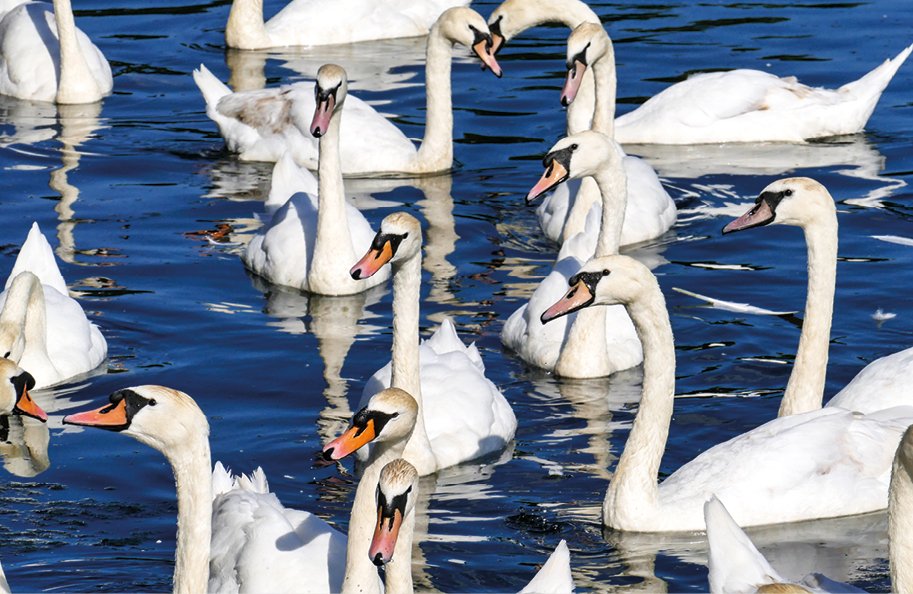
With a recent outbreak of bird flu in the Docklands, local swan rescue volunteer Gill Walker encourages residents to follow simple safety precautions while continuing to feed our feathered friends
There have been confirmed cases of Avian Influenza in some parts of England. Since the threat of bird flu seems to be getting higher and nearer, it may be the right time to remind ourselves about health and safety measures we can all take whilst visiting, feeding and enjoying our local swans, geese and ducks.
As bird flu is transferred through contaminated bodily fluids secreted from the beak and nostrils and is found in droppings, do not feed wild birds by hand. But please do keep feeding the correct, healthy foods to keep the birds fit and their immune systems strong. Feeding will also stop birds from moving to new locations in search of food and potentially spreading the disease. Grain, oats, peas, sweetcorn, swan pellets and brown bread are suitable. Put food in shallow water or use floating food in deeper water. Do not put food on the ground where the birds will be in direct contact with each other’s saliva, mucus and faeces.
Contaminated droppings can be spread on footwear, wheels, walking-stick ends and food containers, so disinfect anything that has been in contact with the ground where you visit waterbirds after each and every visit, and, of course, clean your hands. I recommend plastic-free Safe4 disinfectant and hand wipes, which are DEFRA approved as effective against the bird flu virus.
Please keep dogs out of the water and on a lead near waterbirds to avoid contact with any sick or dead birds.
If a bird is infected, swans, juveniles and cygnets will be lethargic, sleepy and may not want to feed. They will likely be on their own and show signs of a droopy neck and glazed eyes. Swans frequently present with neurological signs, including head shaking, twisting of the neck and swimming or walking in circles, and breathing distress, such as a gaping beak, coughing and gurgling. Other species of ducks and geese may show minimal clinical signs of the virus.
Many smaller wild birds can carry the virus without showing symptoms. So, if you feed garden birds, remember to clean your feeders weekly with warm, soapy water and rinse thoroughly. Rotate feeding spots to prevent the build-up of droppings in one area and keep water sources fresh and clean.
These precautions can help to prevent the spread of the virus. But please also remember not all birds that look or seem unwell have Avian Influenza. They may have been in a flying accident, a territorial fight, suffered a fishing-related injury or may be unwell for another reason. As always, please call me if you are concerned about the welfare of any local waterbird.
To report an injured or sick swan or other waterbird, call 07970 404 866