February 2025

News

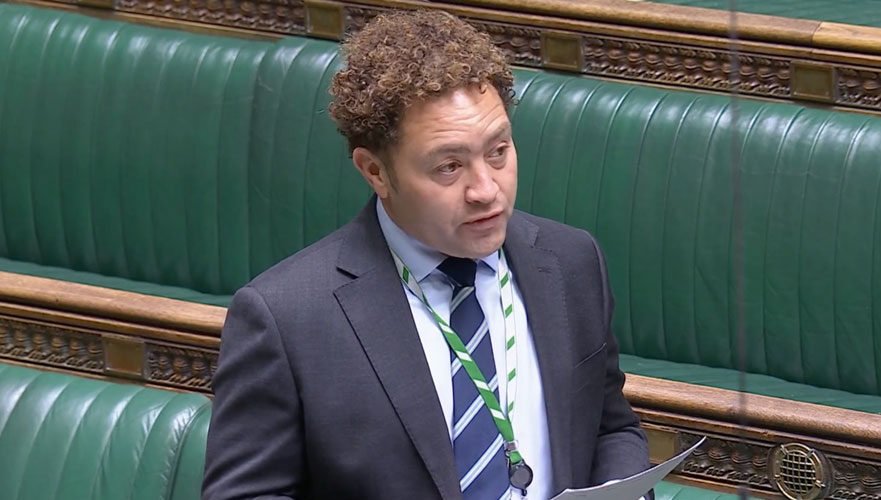
Leyton and Wanstead MP appointed UK Trade Envoy to Southern Africa

Screenshot-2025-01-23-at-11.24.08

Calvin Bailey MBE, MP for Leyton and Wanstead, has been appointed as the UK Trade Envoy to Southern Africa.

“This is a source of particular pride for me because of my family links to the region. The connections to other countries many of us have in Leyton and Wanstead are a foundation of strength for the UK and can help our country to thrive and achieve greater security in this volatile world,” said Calvin, who was born in Zambia.

The role is unpaid and will run until the next General Election.

News

Wanstead Park’s cows move on after a season of grazing

Screenshot 2025-02-26 at 16.23.10©Gill James

Four English Longhorn cows finished their seasonal stay at Wanstead Park earlier this month and have now been moved to Roding Valley Meadows.

“These gentle grazers help remove excess grass, keep anthills open and create micro-habitats for dung beetles – all crucial for biodiversity. We’ve also found their presence helps connect people to nature, sparking conversations about conservation and putting smiles on faces! A huge thank you to all involved!” said a spokesperson for the City of London Corporation.

News

Tundra Bean Goose spotted in Wanstead for the first time

Tundra-Bean-Goose-10©Tony Brown

A Tundra Bean Goose – a rare winter visitor to the UK – has been spotted in Wanstead for the first time.

The bird was discovered on Wanstead Flats on 26 January amongst the resident population of Greylag Geese.

“It stayed for three days and many birdwatchers from across the region came to see this scarce goose from the taiga region of Scandinavia and western Siberia. Less than 300 sightings occur each winter in the UK and most of these are restricted to Scotland and the east coast of England,” said local birdwatcher Tony Brown.

News

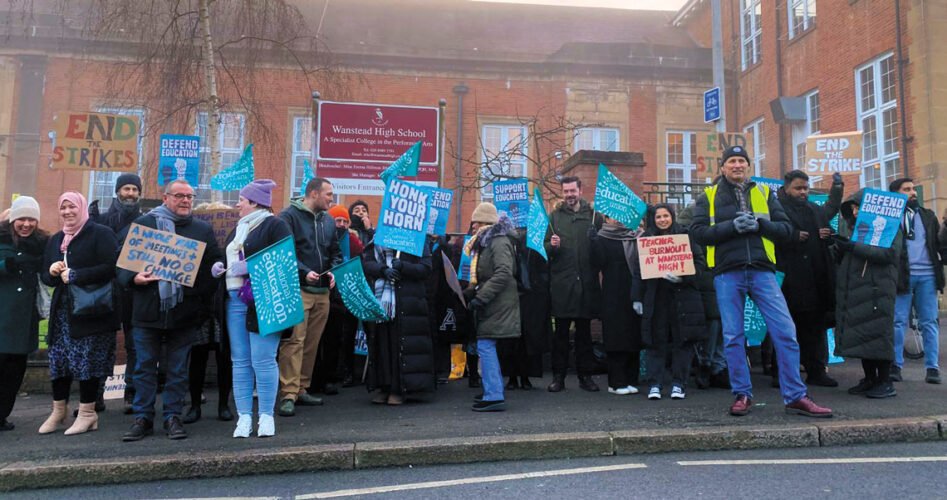
Strike action ends at Wanstead High School after agreement reached

1000022849Wanstead High School teachers on strike in January

An agreement has been reached between Wanstead High School and the National Education Union, bringing an end to recent strike action.

“After seven days of strikes and 32 hours of negotiation, our members at Wanstead High are pleased to announce they voted to suspend strike action following significant concessions by the school,” said a union representative.

A Redbridge Council spokesperson added: “We’re pleased students can resume their educational experience and studies without further disruption.”

Features

Life/Death/Choices

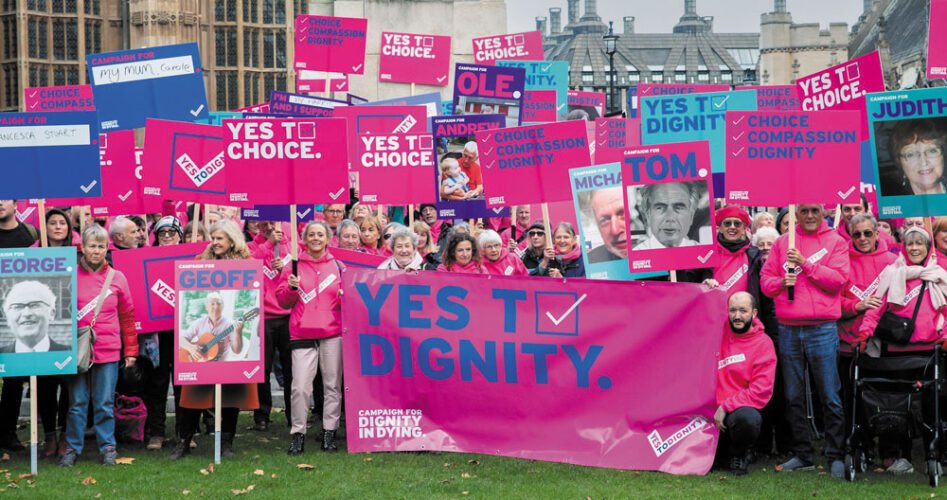
Oct+demo

Last month, Councillor Paul Canal explained his opposition to the legalisation of assisted dying. As a Humanist, Paul Kaufman is in favour of giving those suffering the choice

Paul Canal writes movingly about the “unpredictable beauty of life” (Wanstead Village Directory, January 2025 issue). Humanists agree life is precious. The case for assisted dying embodies the most life-affirming values: the dignity of every human life, bodily autonomy and responding to suffering with humanity and compassion – values shared by many, religious or not. 

Humanists have campaigned for assisted dying for over 100 years. The first bill was laid before the UK parliament in 1936. Since then, advanced countries around the globe have passed assisted dying laws. The first was Switzerland in 1942, followed by Luxemburg and the US states of Oregon and Vermont in 1997. More recently, laws have been passed in Spain and several other European countries, and in most Australian states.

In his article, Paul Canal expresses fear of undue pressure on vulnerable individuals and that “what begins as a trickle of tragic cases, limited to those in insufferable distress, could, over time, become a flood.” This is simply not borne out by the evidence from countries where the law has been changed.

In 2012, our Supreme Court ruled in the case of Tony Nicklinson that only Parliament could change the law. The current Bill is therefore long overdue. It was introduced by Humanist MP Kim Leadbeater. Speaking at the second reading, she acknowledged the sensitivity of the issues and the passions it arouses. She outlined three cases which underline why reform is needed. One concerned a woman with inoperable throat cancer. It blocked her airways. She suffered unspeakably during the last four days of her life, gasping for air, unable to eat, talk or sleep while her husband looked on helplessly. Her end was predictable. Far from being beautiful, it was ghastly.

This tragic example illustrates the fallacy that the choice lies between better palliative care and assisted dying. Of course, we need better palliative care. But no amount of palliative care could have eased this patient’s suffering. There is no evidence that palliative provision has been adversely impacted in countries with assisted dying laws. On the contrary, we see how just having the debate here has helped focus attention on poor provision.

Kim Leadbeater MP also described a botched suicide, and a patient forced to travel alone to Dignitas, further examples of why a compassionate, regulated framework for the terminally ill is so badly needed.

Paul Canal cites two personal examples where, with hindsight, he believes assisted dying would have been the wrong choice. Those opposed to assisted dying will not have to take advantage of it. But they have no right to deny the rest of us the choice.


Paul Kaufman is a Wanstead resident and chair of the East London Humanists. For more information, visit wnstd.com/elh

Features

Forgotten work

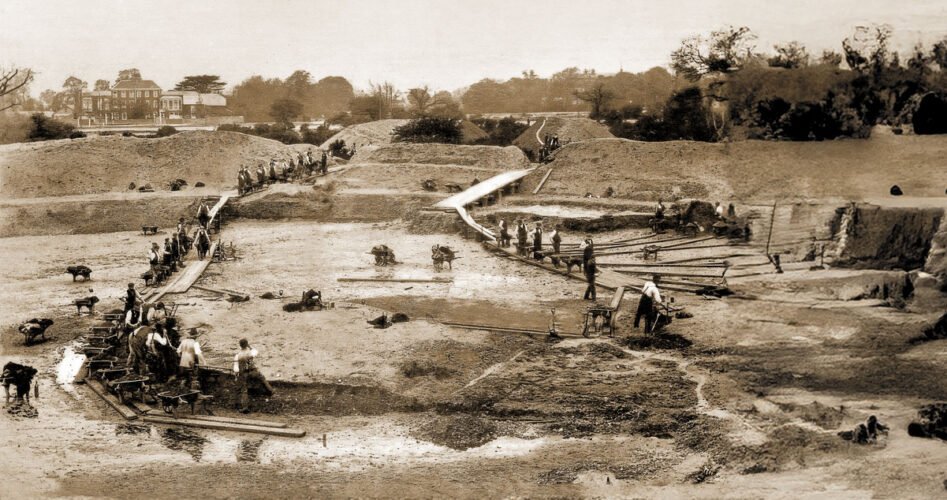
Whipps-Cross-Lido-Builders---BDropLabourers building Whipps Cross Lido, off Snaresbrook Road, in 1905. The lido closed in 1982

Mark Gorman is co-author of a new book exploring the almost forgotten work of unemployed labourers who transformed the local landscape in the late 19th century

Epping Forest is far from being a natural landscape. For centuries, people have been making use of the forest, and in doing so, have continually altered ‘the natural aspect’. The southern forest is no exception – from the 1880s to the first decades of the 20th century, the terrain we know today was created largely by unemployed workers.

When the City of London Corporation took over Epping Forest in 1878, they set about altering the landscape of Wanstead Flats, Wanstead Park and Leyton Flats. There was an economic depression in the late 1880s and 1890s and local worthies formed committees to support unemployed labouring men and women. There were public appeals for money and later, government grants began.

Local Distress Committees organised public works projects and all the lakes on the Flats, and several in the Park, were created or much altered. Heronry Lake was enlarged, the island created and the bottom concreted by hundreds of unemployed labourers working only with hand tools. The Ornamental Waters were de-silted and restored. Meanwhile, on Wanstead Flats, Alexandra Lake was created from scratch, and West Ham labourers built the Model Yacht Pond (now Jubilee Pond). Sports fields were laid out on the Flats and drained. The Hollow Ponds at Whipps Cross were also enlarged and a swimming lake created.

The conditions the men faced were back-breaking, involving levelling uneven heathland, planting and tilling, as well as digging and draining the areas that were to become the lakes in the southern forest. A Forest Gate resident, observing the work on Wanstead Flats in the late 1890s, commented that “it was positively distressing to see the poor ‘unemployed’, mostly men of miserable physique, engaged in the useless labour of turning over the heavy frozen clay.”

Not all the men worked willingly, but quite minor offences could lead to dismissal. Half a dozen men were removed in March 1907 for offences ranging from refusing to stop smoking and abusive language to “being absolutely lazy.” The works foreman declared: “We are drifting into the casual labour class,” comparing them unfavourably with previous batches of men. Although those dismissed could appeal against the decision, most appeals were rejected.

The work of these men is now almost forgotten, but we owe the modern-day environment of the southern forest, with its playing fields, lakes and copses, to the unemployed labourers of East London who, in the space of 25 years, transformed the face of this landscape.


Changing the Face of the Forest by Mark Gorman, Peter Williams and Andrew Cole is priced £6 and available from a number of local outlets. For more information, visit wnstd.com/ctfotf

News

Music on the Hill: monthly music recitals at Holy Trinity Church

piano

A new series of monthly music recitals has launched at Holy Trinity Church on Hermon Hill.

“Our next Music on the Hill event will feature Italian classical pianist Nicolas Ventura, who will perform a varied repertoire with classical pieces and some well-known crowd-pleasers,” said a church spokesperson.

The event will take place on 28 February, with doors opening at 6.30pm for an hour of socialising before the performance (bar available; tickets: £10; under-18s: £8).

Visit htsw.org.uk 

Features

Safety Screen

AdobeStock_601041471

Wanstead resident and media literacy expert Janette Ballard founded Be Smart Cookie to help children stay safe online. As a mother of three, she has first-hand experience of the digital challenges kids face today

Now the new year is well underway, can I ask; how are those resolutions going? One of my own resolutions was to reduce my children’s screen time. How’s that going? I hear you ask. Well, badly. I have triplets, aged nine, and it’s a daily battle to maintain screen downtime! 

But at least I know I’m not alone. As a consultant in media education – a ‘digital doctor’ if you like – I hear from people worried about their child’s online life every day. From online bullying to stranger danger, parents can feel overwhelmed and ill-equipped to tackle the tough tech challenges facing kids. And we’d all love a quick fix, right? The good news is that despite the scale and complexity, there are just three things I would encourage anyone to think about.

The first is to remember that many of the dangers we find online, we also find in the real world, and so the solutions are often much the same. Take strangers; you might tell your child to speak to a grown-up they trust if a stranger approaches them. It’s the same online. You can teach your child that if a stranger approaches them in a chat, for example, they should go and speak to a grown-up they trust.

It is also important to start getting your child cyber-smart early on. I’m not suggesting we give babies phones – when you introduce digital devices to your child is up to you – but at whatever age you do introduce a screen, make it a family activity you do together. And if your child is already using screens, it’s not too late to start making it a family activity. I get it; I know how tempting it is to hand over a screen in exchange for some precious time to get stuff done. But the risk is that, over time, you end up watching a digital circus from the sidelines – or through a closed bedroom door – with no real knowledge of what your child is up to.

So, just as you paint, draw, read and play with them, do screentime with them. Doing it together means the values and boundaries you are already teaching them in the real world will continue online. Sitting alongside them will help them feel more supported, while you will feel more in control.

This brings me to my third suggestion; model the behaviour you want to see. I remember one of my kids once drew a picture of our family holding hands. Except for me, as both my hands were holding a phone. When I asked about it, the answer was: “You’re scrolling, Mummy. What we do, they do.

One last thing; let’s not forget the internet has so much value to offer. For me, online safety doesn’t mean going offline. It means learning to be smart and savvy online, finding the good stuff and avoiding the bad. I am convinced the challenge of our kids’ digital lives is not beyond us; this is our moment to step up our game!


For more information and to contact Janette, visit besmartcookie.co.uk

Features

Good Friday Fauré

faureGabriel Fauré (1845 – 1924)

Royal College of Music professor Alison Wells is a much sought-after singing teacher who will be bringing the community together through music this Easter with a performance of Gabriel Fauré’s Requiem

The Parish of Wanstead is putting on a performance of Fauré’s Requiem at St Mary’s Church, Overton Drive, on Friday 18 April, which is Good Friday. The performance of this glorious and deservedly popular piece will begin at 12 noon and is part of the liturgical observations on this most important day in the Church calendar. 

Gabriel Fauré composed his Requiem between 1887 and 1890. Fauré wrote of the work: “Everything I managed to entertain by way of religious illusion I put into my Requiem, which moreover is dominated from beginning to end by a very human feeling of faith in eternal rest.”

Some of you may remember coming to St Mary’s two years ago on Good Friday for a performance of Stainer’s Crucifixion, which featured a choir of about 40 singers and two professional soloists, and was very well attended. It was a very moving occasion, and we are very happy to be able to put on another wonderful piece of music this year.

We’re especially happy to be joined by the choir of St Mary’s Woodford (Director of Music Douglas Knight) and we would love other singers from across the community to join us for this occasion. All we ask is that you commit to at least three out of the four rehearsals so we can give the best performance we can. We look forward to welcoming you, so please do sign up for this event if you would like to take part.

There is a strong musical tradition in the Parish of Wanstead and we have a choir of about 25 members regularly singing at Evensongs on the second Sunday of every month. The choir sang Evensong at Southwark Cathedral at the end of January, and we will be visiting our diocesan cathedral in Chelmsford on 5 April for Evensong, when we’ll be singing an all-female-composer programme of King’s College Evening Service by Joanna Forbes L’Estrange and A Prayer of St Columba by Cecilia MacDowall. We always welcome new members to the choir, so do get in touch if you would like to join us.

Our other singing group, The Forget-me-not Choir, meets on a Friday morning at St Mary’s, and new members are welcome here as well. The group’s repertoire ranges from folk songs and sea shanties to rock songs, pop songs, classical songs and some sacred pieces too. We have a lot of fun and the social aspect of the meetings is highly valued by our members. If you fancy giving that a try, just come along any Friday at 10.30am.

And don’t forget to look out for our third annual May Music Festival, which takes place at St Mary’s on the late Bank Holiday weekend in May. More information about that in the May issue.


For more information on the event and to take part, call 07802 701 268 

Features

Loss & Legalities

AdobeStock_984735713

Dealing with the loss of a loved one can be emotionally overwhelming, yet practical matters must still be addressed, explains Anna Orpwood from local solicitors Edwards Duthie Shamash

Following the death of a loved one, those closest will not only be distressed but also probably unable to think clearly. Yet, life doesn’t stand still and many practical, financial and legal matters concerning the deceased person will have to be resolved – some immediately and others within a few days or as soon as possible. The following information may prove useful at times like these.

Did the person leave a will?
If so, it will contain the name of an executor, the legal term for the person responsible for dealing with everything the deceased used to own (the estate). The executor will pay, from the estate, all the deceased’s debts, taxes and expenses, including the cost of the funeral itself.

The role of an executor carries great responsibility and can take up a lot of time. It is important for the person making the will to think carefully about who they choose to be their executor, and it is equally important if someone asks you to be their executor to think carefully before you agree to take this role on. 

If there is no will, the next of kin will usually be appointed to administer the estate – they will be known as the administrators. All the deceased’s possessions will pass according to the rules of intestacy (strict legal rules that apply in these circumstances). The legal rules will determine which of the next of kin are entitled to benefit from the estate and in what proportions.

What is the grant of a probate?
This is an official document, which you can show to anyone who needs proof of your authority to deal with the estate. It is required to deal with everything the deceased owned – this includes the value of any property, savings and possessions, such as cars.

Acting as an executor
All executors or, if there is no will, administrators, are entitled to have the assistance of a solicitor and to have the bills relating to the administration of the estate paid from the money in the estate. Solicitors are experienced in dealing with estates and their often complex nature. Seeking guidance can streamline the process and provide peace of mind during a stressful time.

Distribution of property
When all expenses, debts and taxes have been paid, the executor can then distribute what is left of the estate. If there is a will, the executor will follow the instructions contained within it to carry out the wishes of the person who has died.


Edwards Duthie Shamash is located at 149 High Street, Wanstead, E11 2RL. For more information, call 020 8514 9000 or visit edwardsduthieshamash.co.uk

Features

Listen and learn

Screenshot 2025-01-27 at 14.37.53

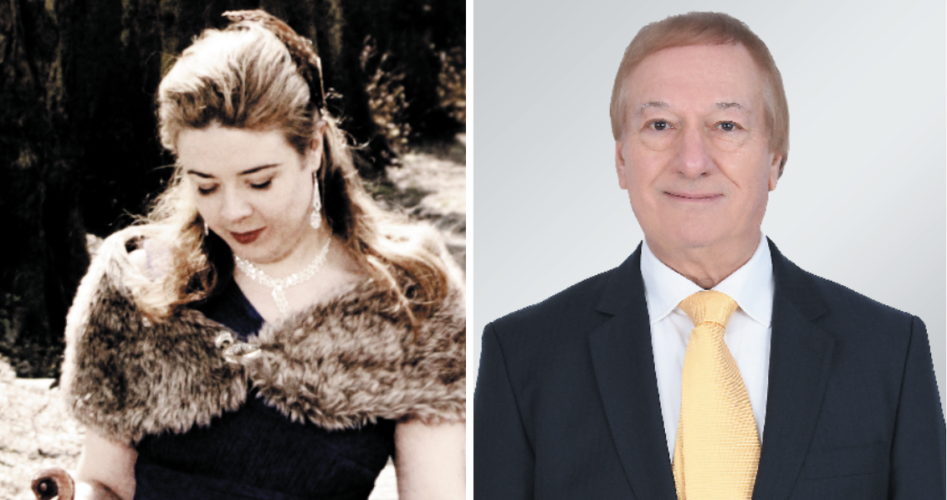
In the 43rd of a series of articles, David Bird discusses the work of Redbridge Music Society and introduces violinist Abigail Dance and pianist David Silkoff, who will be performing in Wanstead this month

Two essential aims of Redbridge Music Society are to bring high-quality live recitals to Redbridge and to champion musicians who live or work near or within the borough. This month, at Wanstead Library, violinist Abigail Dance and local pianist David Silkoff will perform violin sonatas by Mozart and Beethoven (the optimistic Spring Sonata), some well-known miniatures by Elgar, Kreisler and Massenet and some popular film music.

London-based Abigail Dance is a versatile and dedicated performer of the violin and viola. She enjoys an eclectic career spanning classical, jazz and popular music and has given many chamber music recitals, concerto performances and workshops in the UK, Europe and beyond. Recent and upcoming performances include those at Kings Place, Royal Albert Hall, Southbank Centre, St John’s Smith Square and Ronnie Scott’s Jazz Club. Her performances have been described as “passionate, emotional and inspiring” and have led to a number of awards.

Besides teaching in London schools, Abigail also works with educational charities using music as a tool for social mobility, community cohesion and for promoting health and wellbeing. In 2021, she was invited to participate in the Global Leaders Programme comprising the world’s most promising music leaders and change-makers in the arts; her group was awarded the prize for the most impactful social programme. 

David Silkoff studied piano with Lina Collins, a pupil of Mathilde Verne, a former pupil of Clara Schumann. He studied at the Royal College of Music under concert pianists Kendall Taylor and Cyril Smith, during which time he won a Martin Scholarship for those with exceptional musical talent. Later, he studied at the Royal Academy of Music where he won the Lloyd Hartley prize. His Wigmore Hall debut in 1975 was highly praised for his glowing technique and sensitive playing, and Benjamin Britten, on hearing David play Beethoven’s third piano concerto, described his playing as “electrifying.” David has performed at many London concert venues, including the Southbank Centre, and has performed as a soloist and accompanist across Europe. 

David has a very wide repertoire, ranging from baroque to contemporary classical and popular music. He entertains for corporate events and has played at many top London venues, including the Ritz Hotel. He is highly sought after as a chamber accompanist and for auditions and piano examinations. He also pursues a busy teaching career.

Please do come along and join us for this very special evening of music-making!


The recital will take place at Wanstead Library on 18 February from 8pm (tickets on the door; visitors £12: members £9). Call 07380 606 767. Redbridge Music Society is affiliated to Making Music.

Features

Reverend Reflections

flag

In the 11th of a series of articles, Revd James Gilder of Wanstead Parish invites the community to join him in planning how Wanstead can best commemorate the 80th anniversary of the end of World War Two 

What generation do you think of as being ‘old’? I think we all tend to have an internal view of what elderly people should resemble, perhaps linked somewhat to what such people were like in our childhood. For me, it always comes as a surprise that people in their eighties now probably enjoy Elvis more than they do Glenn Miller. A generation ago, it may have come as a surprise that the elderly liked Glenn Miller more than they did Gracie Fields! 

The vision I have of people like my grandfather, gardening in a shirt and tie, will probably remain with me forever – but now, even many of those who counted themselves hippies in the 1960s (and which represented almost unfathomable and frightening modernity to those besuited gardeners who grew up pre-war) are ‘getting on in years’.

Times move on, and now – a full 80 years after the end of World War Two – we find ourselves bidding farewell not only to the very last of the ‘greatest generation’ of people who saw action in that war but also those who could remember that time, even as children. Whatever one’s politics, there can be little doubt that, as we look back to VE Day, we ought to celebrate the bravery and fortitude of so many who gave up a very great deal to fight against tyranny and fascism. As the storm clouds caused by dictators and egotists gather once more over the world, never has there been a more important time than now to recall and re-instil the values that previous generations fought to secure for us. 

The 75th anniversary of VE Day would no doubt have been a very substantial celebration had a certain virus not got in the way of the world. So, as this 80th anniversary approaches, my thought is that the people of Wanstead could come together to do something special. One idea I’ve had is that we could get our schoolchildren involved in interviewing elderly members of our community about their reminiscences of the war, and that we could make a film of this which could be shown, perhaps in conjunction with a concert, at the church. The money raised could go towards professionally cleaning the war memorial and retouching the names (some of which have started to wear off) in readiness for Remembrance Day. You may have other and better ideas! Or perhaps you would like to volunteer in some way?

If you would be interested in joining me to plan something special to mark this 80th anniversary – possibly the last opportunity we will have to record people’s memories of Wanstead at war – I’d like to invite you to a special planning meeting in the vestry at Christ Church on 19 February from 7pm. We will discuss and set in motion what we can do as a community to celebrate this important milestone.


For more information and to register your interest in attending the meeting, email wansteadparishadmin@uwclub.net

News

Nightingale Primary School to join School Streets scheme

Screenshot-2024-10-09-at-17.50.09

Nightingale Primary School will join Redbridge Council’s School Streets scheme this month.

From 24 February, vehicular traffic will be prohibited from entering Ashbourne Avenue and part of South View Drive during term time. The restrictions will be in force from 8.30am to 9.15am and from 3.15pm to 4pm. “These schemes are critical to protecting children from traffic at the school gate, preventing accidents and keeping children safe,” said a spokesperson.

A consultation on the scheme was conducted last year. 

News

Free yoga classes for people with movement disorders

AdobeStock_1055218278

People living with Parkinson’s and other movement conditions are invited to join free seated yoga classes in Wanstead.

“The benefits of yoga, adapted for the chair, extend beyond improving mobility and posture, it also lifts the mood and supports the nervous system, which is important when managing a health condition,” said yoga therapist Yanar Alkayat, whose classes are funded by Parkinson’s UK.

The hour-long sessions take place at Christ Church every Wednesday from 12 noon.

Visit wnstd.com/freeyoga

Features

Laugh out proud

Rabiah_Stage_2022Rabiah Coon

Wanstead’s Laugh-Able comedy night returns with an all-LGBTQ+ line-up, including a UK Pun Championships finalist. The accessible event simply asks the audience to pay what they can afford, says Mark Nicholas

Hello Wanstead locals! This month, the only award-winning disability and mental health-themed comedy night will opens its doors once again for another fantastic showcase of talent! And you only need to pay what you can afford to be in the audience; you can even reserve for free if you need to!

For February’s performance, there is an additional theme. I am very proud to be working with Redbridge Rainbow, One Place East and Vision RCL to be showcasing the most up-and-coming and best LGBTQ+ acts on the UK comedy circuit. What a fantastic way to celebrate LGBTQ+ History Month with immense pride!

LGBTQ+ causes have always been close to my heart. I have learned so much from close friends in my life who identify as LGBTQ+ and have witnessed the trials and tribulations they have faced because of their identity. And so it is an honour to be with them as they celebrate who they are. I am, and always will be, an ally to such an important cause. So, when Rhonda from Vision RCL came to me a few years ago at the very start of this Laugh-Able venture with an idea to include an LGBTQ+ night as part of our monthly event, I embraced it with open arms. Over the years, so many incredible LGBTQ+ comedians have graced our Laugh-Able stage including Jen Ives, Andrew O’Neil and Rosie Jones. 

This month, we have Leicester Mercury Comedian Of The Year finalist Stephanie Laing closing the show. Stephanie began on the Scottish comedy scene in 2007 and since then has performed at the most prestigious comedy clubs in the UK, including The Laughterhouse, Frog and Bucket, The Stand, Komedia and The Comedy Store.

As this will be an all-LGBTQ+ line-up, I will be temporarily stepping back from my regular duties as MC to give a guest host the chance to shine. I will, of course, be there cheering everyone on (and helping Rhonda, Paul and Albert with all the amazing behind-the-scenes work they do to make this show run so smoothly). So, for this month, you will be left in the very capable hands of US comic Rabiah Coon, who is now based in London. After beginning her stand-up career in San Diego, she quickly developed a reputation for her unique style, blending storytelling with dry humour and a dash of self-deprecation. And last year, Rabiah was a finalist in the UK Pun Championships. 

Special thanks go to Vision RCL, One Place East and Redbridge Rainbow for supporting this month’s show and to Wanstead Village Directory for giving me the space to publish this article. See you in the audience!


The Laugh-Able LGBTQ+ comedy night will take place at Wanstead Library on 19 February from 7.30pm to 9.30pm (pay what you can afford). For tickets and details of future events, visit wnstd.com/laugh2025

Features

Non-stop stress

WhatsApp-Image-2025-01-14-at-09.59.16

Recent changes to local bus routes have impacted the lives of many local residents, including 13-year-old Lola Bullman-Borg, who now finds her journey to and from school more stressful 

My name is Lola. I am 13 years old and go to Woodbridge High school. For those who live in the Wanstead or South Woodford area, TfL’s bus route changes have brought us students nothing but stress and anger.

Before the changes last September, I caught the 549 bus (that shockingly only ran every 90 minutes) from South Woodford to Loughton at 8am to get to school by 8.30am. I took the 549 as it was less busy than the W14, which had a similar route and annoyingly would come a few minutes later, rather than being more evenly spaced out. However, with the 549 being so infrequent, I always caught the W14 to go home, but being a single-decker, it was inevitably crammed full with schoolchildren.

TfL’s changes mean the W14 runs hourly, so even though it’s more direct and I don’t have to change buses, I use the W12, which is timetabled to run every 15 minutes. That timetable is meaningless though, because the W12 route has been extended and the bus goes down all the busy main roads, getting stuck in heavy traffic. I and my friends often wait an extra 20 minutes after school every day because the bus is running late and with sometimes two, or even three, buses arriving around the same time. 

There is no worse feeling than seeing the bus go past because it is not running as scheduled and being left to wait in freezing weather or rain for the next bus, that then arrives late. 

Many elderly people have also been affected as the W14 does not go into Whipps Cross Hospital and does not stop at places that they need, such as the shops on Wanstead High Street, the supermarkets on George Lane or Wanstead Tube station. 

I remember taking my bass guitar and having to walk it all the way to school because I missed the bus. I was sweating so much my hair was wet. I ran halfway because I couldn’t risk being late. 

These changes are standing in the way of my education. The buses are essential transportation that gets me to school and home. I feel unsafe standing on the street waiting for a bus; I have no idea when it will come.

I remember the confusion and chaos when the changes came on 7 September. We didn’t know about them and people didn’t know which bus to take. Many children were late for school. The new service is a mess and I hear stories every day of how others are also suffering with the buses in the area.


If you are affected by the local bus route changes, submit your experiences to the Save Our Local Bus Services campaign. Visit wnstd.com/busform. To view the campaign’s petition, visit wnstd.com/bus

News

Plant donations needed to create Cherry Tree Café sensory garden

ctcafe

Cherry Tree Café on Woodbine Place – which is run by students with additional learning needs from New City College – is seeking donations of plants to improve its outdoor space.

“Just before Christmas, Daniel Windsor Landscapes donated their time to transform our garden into a lovely area where our students, customers and clients from the adult centre can enjoy sitting outside. We are now looking for donations of plants and herbs to turn this area into a sensory garden,” said Jayne Hart.

Call 0330 135 9000

News

Give feedback on draft designs for new education and youth hub

Screenshot-2025-01-27-at-14.27.10

Residents are encouraged to provide feedback on the draft designs for a new education and youth hub on the site of the former Wanstead Youth Centre, which closed in October 2023 for repairs.

The £6.5m project will see the facility remodelled, with the addition of classrooms, a café, playrooms and office space. Under the plans, the centre’s rear gymnasium will be converted into a dining hall and multipurpose space, which has sparked concern among campaigners.

The hub is expected to open in September 2025.

Visit wnstd.com/hubplans

Features

Roding Report

roding

Chair of the River Roding Trust Paul Powlesland reports on the results of the river’s first-ever comprehensive water testing programme, with some disturbing figures for the Alders Brook 

The water testing project – which ran between May and September 2024 – brought together the River Roding Trust, Thames21 and local volunteers (citizen scientists) in an excellent example of local coordination and action. 

The results are good and bad. There is clearly a serious problem with combined sewer overflows (CSOs) illegally spilling sewage into the stretch of the Roding between Loughton and Ilford. That being the case, the water quality as the river enters London is OK, and often good, so there is real hope that if these CSOs are fixed, the Roding could achieve bathing water quality status in London. 

To produce this report, local volunteers had a rota to collect samples in eight different locations along the river from Loughton down to Ilford. Originally, sampling was only going to go down to Ilford, but thanks to lobbying from the River Roding Trust, it was extended downstream to give the people of Barking information about water quality in their stretch of the river. These samples were sent off to be tested for E. coli in a lab. The results were then analysed by Thames21, plotted onto graphs and compared to rainfall data to begin to understand what was causing any raised levels of E. coli. Results were analysed against the Bathing Water Regulations (2013) standard for Faecal Indicator Organisms levels, which the Environmental Agency uses to classify designated bathing water quality.

In many ways, it is a damning indictment of the Environment Agency that such testing has never been carried out before. How can it be government agencies had no idea whether the water in the third-largest river in London, flowing through the middle of massive population centres, was grossly polluted?

Nine outfalls discharged untreated sewage for a total of 316 hours, causing clear spikes in bacteria levels at many sample points during the monitoring programme, at times in periods of very little rainfall. These discharges meant many of the samples collected produced results that were poor and showed E. coli above safe bathing water quality levels. 

The worst performing outfall was in the Alders Brook (a tributary of the River Roding with its source within the City of London Cemetery), which was causing E. coli spikes of up to 19 times safe limits. What makes this more infuriating is that I discovered this illegal outfall nearly four years ago and it still has not been fixed by Thames Water. 

It is heartening that, thanks to the efforts of local volunteers, we now have a picture of water quality on the Roding for the very first time. We now need the Environment Agency to do its job as guardian of the river and act on this report by stopping all illegal sewage spills into the Roding.


For more information and to view the report, visit wnstd.com/rodingwater

News

Share local World War Two stories with the Wanstead community

flag

Residents are invited to contribute to a series of Wanstead Village Directory articles documenting local memories, thoughts and feelings about World War Two.

“Calvin Bailey MP explored the importance of Remembrance in the January 2025 issue and Rev Gilder outlines his hopes for local VE Day celebrations in the February 2025 edition. With 2025 marking 80 years since the war’s end, I’d like to continue this theme. If you have a story to tell – yours or a relative’s – do get in touch,” said editor Lee Marquis.

Email editor@wnstd.com