February 2026

Features

Talking ADHD

WVD-JAN-2026-dhd

A new peer-led ADHD support group in Wanstead is creating a relaxed, non-clinical space for men to talk openly and feel understood, says group founder Hari Singh

Many men with attention deficit hyperactivity disorder (ADHD) go through school, work and adult life without really understanding why things feel harder than they should. Difficulties are often kept to themselves rather than spoken about openly. By the time a diagnosis comes, many have already spent years feeling behind their peers without knowing why.

I was diagnosed with ADHD as an adult after struggling for a long time in ways I couldn’t fully explain. The diagnosis helped things make sense, but it also made me realise how few spaces there are for men to talk openly about ADHD. Most support either feels very clinical or it starts to sound like therapy or coaching. For a lot of men, that can be off-putting. That gap is what led me to set up a small, peer-led group in Wanstead.

The group meets weekly and is kept intentionally small. That makes it feel more manageable and relaxed. Sessions aren’t clinical and there’s no pressure for anyone to speak. Some people come and talk quite openly. Others mostly listen, especially at first. Both are completely fine. The focus isn’t on advice or fixing things but on open conversation and shared experience.

Men who attend come from a wide range of ages and backgrounds. What connects them isn’t having the same lives but recognising parts of themselves in each other’s experiences. Sessions are structured so everyone has the chance to speak if they want to, without feeling put on the spot. Listening is just as important as talking, which helps keep the conversation balanced rather than dominated by one or two voices.

What has stood out most so far is the sense of relief people describe once they realise they’re not the only one dealing with these issues. Several men have said it’s the first time they’ve spoken honestly about ADHD with other men, without feeling the need to explain themselves or downplay it. For many men, just having that shared understanding can make a real difference. The group is still in the early stages, but it’s clear that simply having a space to talk can reduce isolation and make day-to-day life feel a bit easier to manage.

The group isn’t meant to replace clinical or professional support; it sits alongside it. Right now, my focus is on keeping the group consistent and making sure it’s something people feel comfortable returning to. I’m still learning what works and what doesn’t, and I’m not trying to grow it too quickly or turn it into something it isn’t. If having a space like this helps even a small number of men feel less alone or more able to talk openly, then it’s doing what it was set up to do.


The Men’s ADHD Support Group meets at Wanstead House, 21 The Green, E11 2NT every Friday from 7.15pm to 8.15pm (£5 per session). For more information, email wansteadadhdgroup@gmail.com

Features

Big Rail Story

WVD-FEB-2026-rail© Carole Edrich

One writer, one Interrail pass and a wildly over-ambitious, 37-stop journey to test railway accessibility in Europe. Wanstead-based travel writer Carole Edrich presents the second instalment of her Big Rail Story

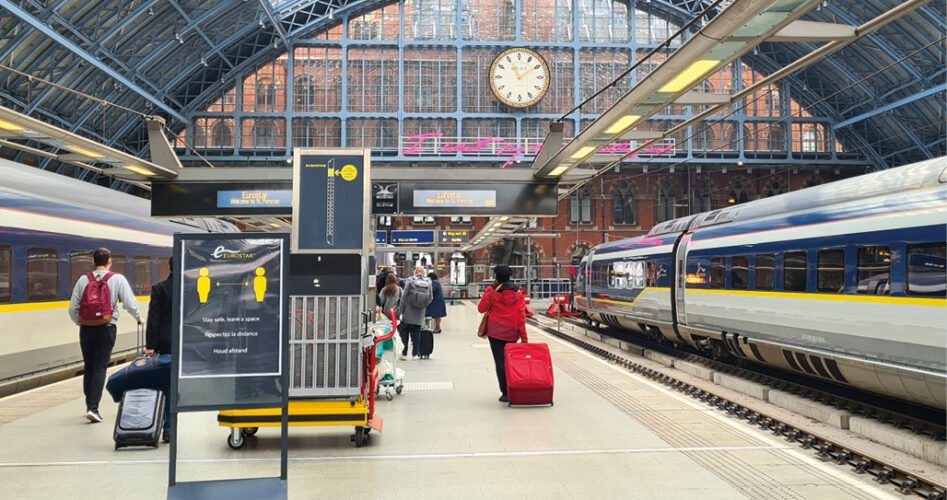
Unless you’re in the Eurostar Business Lounge at St Pancras, waiting is a noisy, uncomfortable experience. Before the Thalys takeover, my points would have earned me access. Now that ‘frequent traveller’ benefit requires 70 trips in a year. That’s not frequent travel; it’s living on the train. The quiet corner I’ve waited in since then – the only quiet corner in the waiting area – is roped off. Elsewhere, there’s not even wall space to lean on. Proving overcrowding for an £80 article would need applications to seven different authorities. I give up.

They’ve told us they’re planning to turn Channel rail trips into a ‘turn up and go’ experience, where passengers can arrive ‘minutes before departure’ without crowding or excessive queues. A previous Eurostar CEO said it’s only reduced timetables that prevent daily queues as big as the ones at the Channel ports. The new EU Entry/Exit system needs 75 minutes, so ‘turn up and go’ feels as ambitious as Elmer Fudd catching that ‘wascally wabbit’ and Mr Magoo finding the right door. Hang on, I can’t find their feasibility study either – add Wile E Coyote catching the Road Runner on a Warner Bros or even Netflix screen.

Anyhow, at this point I realise my carefully planned minimal luggage (including prized UV flask and emergency sugar-free lemonade) is way too heavy. When the Paris train leaves, I finally score a seat and repack, shoving as much as I possibly can into my wheely bag while hoping I can manage the backpack all the way to my first overnight. ME (chronic fatigue) is such an unpredictable bummer, but I won’t give up. I browse through Stylist and see a gorgeous lime-green coat I don’t need, and Dior Capture Pro-Collagen Shot serum for fatigue that I do, but can’t afford. I give up.

I get talking to a man with Parkinson’s. With my Disability Review Magazine hat on, I ask what might make his trip easier. He says since stress makes things worse, more signage would help. Lack of help lifting big bags onto scanning machines when you’re disabled and your belt is in the x-ray tray is also a biggie. And he read there’d be enough to do while waiting for the train. Apart from musical chairs for seating and dodgems for refreshments, there is not. He and his wife take organised tours to minimise travel stresses. But Turin by rail entails a cross-city transfer in Paris, and that is famous for its stress. I don’t have the heart to say.

Here’s a hint. Get on Eurostar first if you want to keep your luggage on the floor nearby, or last to avoid the crush. Eurostar platforms aren’t announced until after trains are disembarked and cleaned, but you can work them out from the lifts the staff use 40 minutes before departure. Because I’m first in the queue, I get to put my luggage in one of the very few gaps between back-to-back seats. This isn’t rocket science; it’s hard-won ME management tactics. Genius? Me?


For relevant links to the places, to read more of Carole’s work or to listen to her podcast, visit wnstd.com/edrich

Features

Listening

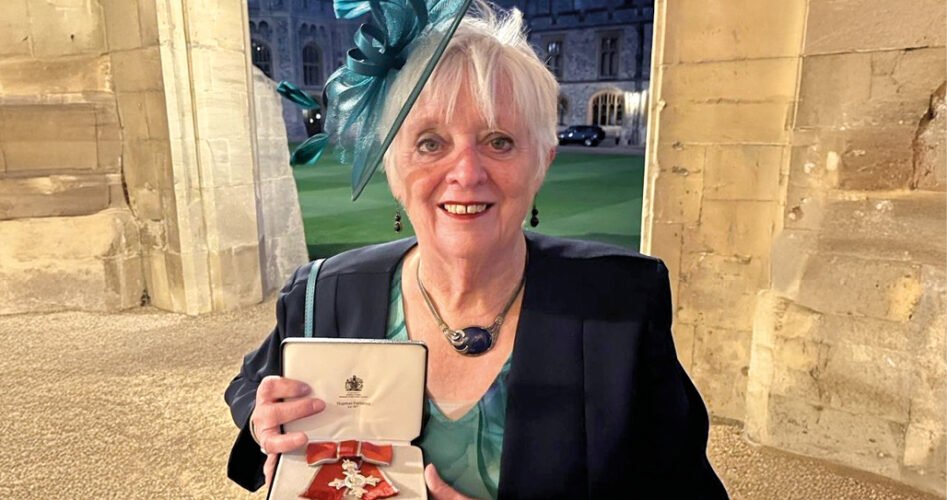
WVD-FEB-2026-maggieMaggie received her MBE at Windsor Castle last November

Local resident Maggie Mehta MBE reflects on 45 years of voluntary service with Samaritans, dedicating her time, compassion and expertise to helping those in need

Some years ago, I took a career break from teaching as I had two young children. I wanted to do some volunteering and knew a little about Samaritans. A day duty a week and a monthly night duty seemed fine, so I joined. That was over 45 years ago and I am still volunteering.

It has been one of the most important and rewarding parts of my life, and I am one of over 20,000 volunteers across the UK and Ireland in one of 200 branches. Samaritans have had a presence in Redbridge for nearly 60 years, and there are 85 listening and support volunteers at our branch.

So, what do we do? We support people in distress or going through a difficult time, some of whom might be contemplating taking their own lives. Some have been suffering in silence for a long period. Those who call us have many issues, such as relationship problems, mental health challenges, bereavement and loneliness, to mention but a few.

Suicidal thoughts can be complex, frightening and confusing. If a caller needs someone to talk to, we listen. We won’t judge or tell them what to do, and we’re not afraid of going into difficult areas with them. Samaritans is the charity that prevents suicide through the power of human connection.

A Samaritan responds to a caller every 10 seconds, and in a typical month, 70,000 people contact us across the organisation. Samaritans are available 24 hours a day, 365 days a year. February and March can be difficult months for many. Having started the New Year, things for some people can feel bleak as spring begins to arrive for others. We actively listen without judgement, in confidence and without giving advice, being empathetic and exploring their options. Many have no one else to talk to.

We don’t just answer the phone. We also go out to community events, such as the Wanstead Festival, where our gazebo and volunteers attract a lot of attention.

From my own experience, being in what seems like a bubble when everything else is closed in the early hours of the morning with someone who is thinking about suicide is a profound experience. One caller, who felt alone in the world and life not worth living, said at the end of a very long call that just by having a voice at the end of the line gave him the strength to carry on. He thanked me for respecting his feelings without saying things like “it will get better,” which would have been dismissive. He also said he felt able to contact us again if he needed to. I was left with a sense of calm and hope, something us volunteers feel after listening to and supporting callers.


For more information about volunteering, visit wnstd.com/samaritans

If you need someone to talk to, call the Samaritans for free on 116 123

News

Demolition proposal for locally listed Woodbine Place shops

WVD-MAR-2026-wpArtist’s impression of the proposals

A plan to demolish a row of single-storey shops at 12–15 Woodbine Place has been submitted to Redbridge Council.

If approved, the site – which is home to Best Turkish Kebab, Wanstead Hairdressers and Bambini – will be replaced by a three-storey building consisting of ground-floor commercial units and first- and second-floor office units.

The site is located within the Wanstead Village Conservation Area and has locally listed status, underscoring its historical and architectural importance.

Wanstead Village councillors have confirmed they will be objecting to the proposals. “In our objection we will be citing material planning considerations including: the effect on listed building and conservation area, layout and density of building and design, appearance and materials,” said the councillors.

The proposals are available on the council’s planning portal under ref 3335/25. Deadline for objections is 20 February.

Visit wnstd.com/1215wp

News

Ornamental Water lakebed mapping to assess capacity to hold water

WVD-FEB-2026-lake

The City of London Corporation has begun mapping the lakebed of Wanstead Park’s dried-out Ornamental Water.

“We will be conducting borehole surveys across the lakebed to assess the below-ground conditions. This will help us to assess the lakebed’s capacity to hold water… and guide future conservation efforts,” said a spokesperson.

The Environment Agency is currently considering an application to pump water into the lake from the River Roding, with a decision expected later this year.

News

Steel frame to support leaning Grotto ruins in Wanstead Park

WVD-FEB-2026-grotto2How the steel frame will look

Work is underway to install a steel frame to support the Grotto ruins in Wanstead Park.

“The top of the Grotto is leaning; we need to stabilise it to ensure it remains secure. The steel frame will have minimal impact on existing brickwork and can be beneficial for any future restoration work,” said a City of London Corporation spokesperson.

The pathway behind the 18th-century landmark will be closed until project completion at the end of March. “Due to ground conditions, we will not be able to open the path at weekends.”

Features

Listen and learn

IMG_8689

In the 51st of a series of articles, David Bird discusses the work of Redbridge Music Society and introduces Emilija Karaliute, who will be performing in Wanstead this month

Two main aims of Redbridge Music Society are to promote the work of younger musicians and to bring a range of musical styles and genres to the people of Redbridge via high-quality live recitals. Both aims will be evidenced this month at Wanstead Library when Lithuanian musician Emilija Karaliute will perform on the ‘kanklės’ (a zither-like instrument), playing a diverse range of music, including traditional Lithuanian folk music and works by composers such as Saint-Saens, Mendelssohn and the Belgian harpist/composer Alphonse Hasselmans.

The kanklės – the national instrument of Lithuania – is a string instrument belonging to the zither family where the strings are parallel to the soundboard (not perpendicular to the soundboard as with the harp) and do not extend beyond it (as with the guitar). It is usually rested on the player’s lap and is played by either plucking the strings with the fingers or with a bone or quill plectrum. It is an ancient instrument most probably dating back to the 15th century and is used in folk music, rituals, celebrations and, at one time, even warfare. It is related to the Latvian ‘kokle’, the Finish ‘kantele’ and the Russian ‘gusli’.

Emilija is a professional classical and folk musician who began studying the kanklės in Lithuania at an early age, developing a deep connection to the instrument and its cultural roots. She has been playing the kanklės for 16 years and has twice been awarded the title of the National Laureate of Lithuania.

The kanklės still remains relatively unknown to many and Emilija is passionate about popularising and showcasing the instrument, sharing it with new audiences and, at the same time, promoting the diversity of Lithuanian culture. She came to the UK in 2018 to fulfil this mission, and since completing her degree in London with first-class honours has now become a regular performer in the UK and Europe, with recent solo recitals in Paris and Berlin.

Emilija is well known for her ability to enthuse audiences with her commentaries about the nature, history and culture of the kanklės and for her prowess in skilfully integrating the instrument into diverse genres, including classical, contemporary and folk music.

Please come along to this recital; it will provide a unique opportunity to see and hear an unusual, fascinating and beautiful-sounding instrument being demonstrated and played.


The recital will take place at Wanstead Library on 17 February from 8pm (tickets on the door: £12; members: £9). Call 07380 606 767. Redbridge Music Society is affiliated to Making Music.

News

Wanstead Park’s visitor centre reopens following refurbishment

WVD-FEB-2026-temple

Wanstead Park’s visitor centre was reopened in January following three months of refurbishment work.

“This included repointing the brickwork and roof and repairs and redecoration to the windows, timberwork and the portico,” said a City of London Corporation spokesperson. Built around 1760, the building – known as the Temple because of its Classical temple design – is one of a few surviving buildings from the former Wanstead House estate.

The Temple will be open on 15 February from 11am to 3pm.

News

Residents invited to join Epping Forest walk in aid of cancer charity

WVD-FEB-2026-walk

Residents are invited to take part in a 10km walk through Epping Forest this month in aid of the Lennox Children’s Cancer Fund.

“Whether you take it on solo, with family, or a four-legged companion, this is your chance to get outside, move your body, and make a difference,” said a spokesperson for the charity, which supports families affected by childhood cancer, including a number of families in the Wanstead and Woodford area.

The event will start at the Bury Road car park at 10am on 21 February.

Visit wnstd.com/lccf

Features

Winning Verdict

Ilford-Awards-2025-Winners-117

Local solicitors Edwards Duthie Shamash was named Redbridge Business of the Year at the recent Ilford & Redbridge Business Awards. Julia McFall reflects on the historic firm’s success

The vibrancy and success of the London Borough of Redbridge’s business community took centre stage in December at the Ilford & Redbridge Business Awards, held at the Coliseum Suite in Ilford. This glamorous black-tie event welcomed over 600 guests, including local entrepreneurs, representatives from national chains with branches in Redbridge and officials from the council. The awards showcased the strength and diversity of the borough’s commercial sector.

The event was organised by the Ilford Business Improvement District (BID). The BID represents nearly 400 businesses in central Ilford and works tirelessly to create a welcoming, attractive and vibrant town centre. Its initiatives aim to boost footfall, support local shops, cafés and services and ensure Ilford remains a thriving hub for commerce. A strong town centre benefits the entire borough, and these awards highlight achievements across both Ilford and the wider borough.

The evening embraced a Strictly Come Dancing theme, treating attendees to a spectacle of entertainment featuring acrobats, ballroom dancers, magicians and comedy acts. Speakers from the local authority emphasised the power of collaboration between businesses and local government, reminding guests of what can be achieved when we work together to improve the borough for all.

One of the night’s biggest triumphs was Edward Duthie Shamash solicitors being named Redbridge Business of the Year, a tremendous accolade that reflects both the firm’s current success and its deep roots in the community. With a history spanning more than 120 years, the firm’s head office sits opposite Valentine’s Park in Ilford, alongside a branch on Wanstead High Street, plus offices in Stratford and Waterloo. Today, Edward Duthie Shamash stands as a nationally recognised law firm with a reach far beyond Redbridge, yet its heart remains firmly in the borough. The firm combines a strong private client practice – property, wills, civil litigation and court of protection works – with high-profile criminal legal aid, mental health and family departments working with local people. The firm is also a significant local employer. Senior partner Shaun Murphy expressed the firm’s delight at the win: “We are thrilled to receive this award and grateful for the support of so many clients and contacts during the nominations process. This recognition reflects our commitment to the community… We believe vibrant community organisations benefit us all.”

Events like these not only celebrate business success but also reinforce the importance of community spirit. The awards show Redbridge thrives as a place where enterprise and local pride go hand in hand.


Edwards Duthie Shamash is located at 149 High Street, Wanstead, E11 2RL. For more information, call 020 8514 9000 or visit edwardsduthieshamash.co.uk

Features

Street stories

WVD-FEB-2026-applegarthApplegarth on Nutter Lane, Wanstead

At the Woodford Historical Society’s February meeting, Jef Page will be exploring the origins of Redbridge street names, including Nutter Lane, home to one of the oldest houses in Wanstead

In 1653, Ilford stretched barely 100 yards along the High Road with just 53 houses, and Wanstead and Woodford probably had even fewer. This was, of course, because all the land was farmland, meadows and woods, with very few proper roads. For my talk this month, there are now many streets to choose from. I will start the talk with Ilford, then move on to Gants Hill (the derivation of its name), Barkingside (the cigarette estate), Wanstead and finish with Woodford.

Wanstead has a group of streets with connections to the former Wanstead House and the family names associated with it. The palace existed between 1715 and 1824. It was built by Sir Richard Child (1680–1750). George I ascended the throne in 1714 and granted Child the Irish title of Castlemaine, Kerry in 1718, so Child and his family were naturally loyal to the Crown. Road names with marriage connections include Draycot, Seagry, Mornington, Wellesley and Wellington. There’s no road named for Child (nor his wife Dorothy, née Glynne), but Tylney Road is south of Wanstead Flats. Catherine Tylney Long, eldest daughter of Sir James Tylney Long of Draycot, Wiltshire, married William Wellesley-Pole in 1812. He was the nephew of Wellington, and the Earl of Mornington was Wellington’s father. Catherine inherited the Wanstead House estate and was wealthy beyond words. She and ‘Wicked’ William bankrupted the family; the court’s judgement was that, in 1825, the house was to be “erased from the face of the earth” and so erase memory of the shame.

In 1880, the Cowley family owned large tracts of land and sold 184 acres of Wanstead Park to the Corporation of London for preservation as part of Epping Forest, and the rest was sold in 1920 to Wanstead Sports Grounds Ltd.

Nelson, Rodney and Victory roads and Trafalgar Place are close to Snaresbrook and Hermon Hill. Admiral George Rodney was a famous admiral when Britain ruled the waves. Admiral Lord Nelson won the Battle of Trafalgar, leading his famous ship HMS Victory to victory in 1805, though it cost him his life. No doubt residents were pleased to have these names selected and extol those heroes.

And, of course, we can’t ignore Nutter Lane. Originally George Lane, it was renamed Nutter Lane in 1934 following the construction of the Eastern Avenue. Richard Nutter was churchwarden of Christ Church (1853–1861) and lived with his daughters Mary, Gertrude and Jessie, who were great benefactors to Wanstead; in 1921, they gave the five-acre field opposite their house to the people of Wanstead for recreation and leisure. The sisters lived on the road until 1926 in a house named Applegarth, which is thought to have been built around 1710, making it one of the oldest houses in Wanstead.


Jef’s presentation will take place at All Saints’ Church hall in Woodford Wells on 12 February from 2.30pm (visitors: £5). For more information, visit wnstd.com/wdhs

Features

LGBTQ+ history lesson

WVD-FEB-2026-jack

Ahead of an LGBTQ+ History Month event at Wanstead Library, author Jack Parlett reflects on his work on Fire Island in New York and explains why it’s important to learn from the queer icons of the past

As a writer and scholar of queer culture, I spend most months of the year thinking about LGBTQ+ history. That said, February and June tend to be my busiest times.

While the summer months are ushered in annually by Pride Month – and all of the parades and protests that entails – the winter equivalent is February’s LGBTQ+ History Month. It presents an opportunity not only to reflect upon and celebrate untold stories and rediscovered histories, but also to look at the present more clearly. There is a lot to learn from the queer icons of the past, whose lives and loves, victories and losses, impart a simple lesson and a warning: don’t get complacent.

This was a common refrain in the research I did for my first non-fiction book, Fire Island, which looks at the story of the thin strip of land off the Long Island coast, near New York City. Like a more rebellious (and only slightly less moneyed) sibling to the Hamptons, Fire Island has been known since the 1930s as a hip and glamorous destination. The island is famous for its two queer-centric communities, Fire Island Pines and Cherry Grove, which each grew in reputation in the first half of the 20th century. A wide array of queer cultural figures have visited these communities in search of a holiday, a refuge and a place to write and think. WH Auden lived for whole summers on the island with his younger lover in the 1940s, while Patricia Highsmith spent numerous tumultuous weekends in the island’s lesbian bars in the 1950s. James Baldwin wrote some of his beloved novel Another Country from a beach house there, preferring seclusion over the sexual free-for-all of the party scene.

My interest in the island’s queer literary history drew me deeper into exploring the resilience of these communities. The queer people who made a home on Fire Island weathered many storms, both before and after Stonewall and the liberationist era of the 1970s, which was swiftly followed in the 1980s by the devastation of the HIV/AIDS epidemic and the homophobic backlash that ensued. The fragility of social progress, and the ease with which old prejudices could resurface and turn the clock backwards, would be no surprise to the generations who experienced this as a lived reality.

The current political moment is dark and uncertain, and in the face of continued attacks on trans people in this country, and the wider ramifications of President Trump’s second term, the hard-won freedoms of the queer community can seem rather precarious. This LGBTQ+ History Month, it seems more important than ever to reflect on the bravery of those who came before, both the challenges they faced and the flamboyant, unapologetic ways they responded to those challenges. In looking backwards, we can also find new ways forward.


Jack will be in conversation about LGBTQ+ history at Wanstead Library on 11 February from 6.45pm. Visit wnstd.com/parlett