featured

Features

Naturally Curious

WVD-AUG-2025-vwr

From diving beetles to jumping spiders, James Heal from the Wren Wildlife Group reports on the highlights of this year’s Wanstead Wildlife Weekend, which revealed the diversity of life thriving on our doorstep

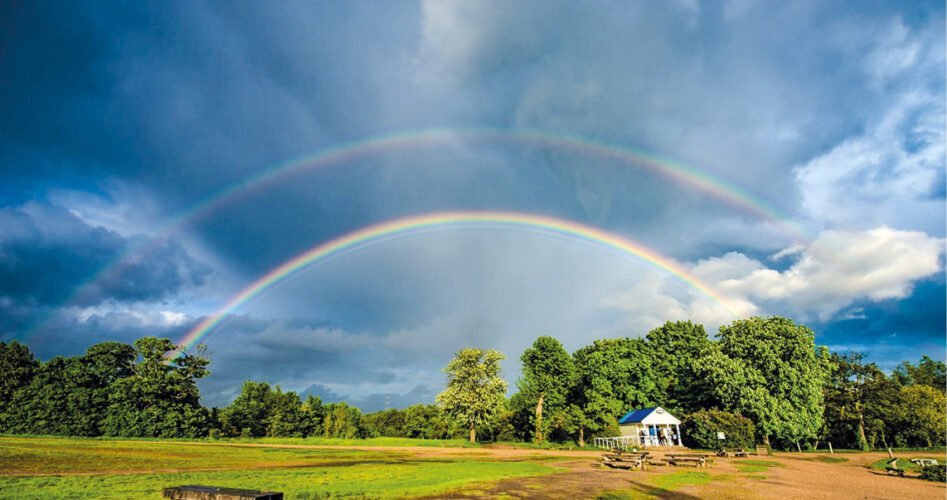
We have been organising the Wanstead Wildlife Weekend or something like it for almost a decade now. The original intention was as a slightly more formalised bioblitz where we counted every species – a mass citizen science natural history survey of sorts. The purpose has since morphed into more of an opportunity to showcase the amazing biodiversity we have locally through family-friendly activities. And there were some great highlights from this year’s event at the end of June.

Almost 50 people came out on the Friday evening and were rewarded with some very active bats, mainly Pipistrelles. Tim, who led the bat walk, was also back in Wanstead Park a few hours later for the annual moth trap reveal near the Temple. This is always one of my favourite activities, and lots of moths gently emerged from the egg boxes in the light trap, including crowd pleasers such as Buff-tip (Phalera bucephala), which looks exactly like a hewn-off section of Birch twig or small branch.

Bob led a walk along the transect (technical term for specific surveyed area) which a small team has been regularly surveying for butterflies. Some of the regular summer species were on show, including Essex Skipper, Small Copper, Meadow Brown, three of our ‘White’ species and a bonus from a well-showing Purple Hairstreak. This latter butterfly is often hard to spot as it is small, quite nondescript on the oft-seen underside of the wings, and likes spending time in the canopy, but one or two came down to ground level.

Another highlight was the rather overwhelmingly well-attended pond dipping at Shoulder of Mutton on the Sunday, where Louis and Gosia shared their knowledge and infectious enthusiasm, with young people wading out and finding Great Diving Beetles, water snails and dragonfly nymphs.

Despite the numbers at the pond dipping, there were still plenty of people who joined local bee and wasp expert Tony Madgwick, who helped an engaged crowd observe the drama of life and death unfold around nest holes of both bees and wasps on the dry and dusty pathways near Heronry Pond.

Amongst other activities – those which looked very closely at some wildlife many might miss – were the spider walk on Wanstead Flats and the lichen walk in Wanstead Park. Species highlights included a minuscule jumping spider found on tree trunks that looks like our common Zebra Jumping Spider (Salticus scenicus), but is much smaller and scarcer (S. zebraneus), and a Cladonia type of lichen (lichens are not a single species!) found not on bark or stone, but on soil.

If you would like to take part in Wren activities or if you have enough knowledge to lead a future walk, please do get in touch.


For more information on the Wren Wildlife Group, visit wnstd.com/wren

News

Join the Big Butterfly Count 2025 in Wanstead Park

WVD-AUG-2025-bflyEssex Skipper (Thymelicus lineola)

Residents are invited to join the Wren Wildlife Group in documenting the butterflies in Wanstead Park.

The event on 9 August is part of the UK-wide Big Butterfly Count 2025. “We will be leading a walk around the park to look for butterflies and to help you identify them. All ages are welcome; we’ll meet by the tea hut at 10am. Handouts will be provided so you can do your own count afterwards in your local area or garden,” said a spokesperson.

The national survey is run by the charity Butterfly Conservation.

Visit wnstd.com/bfly25

News

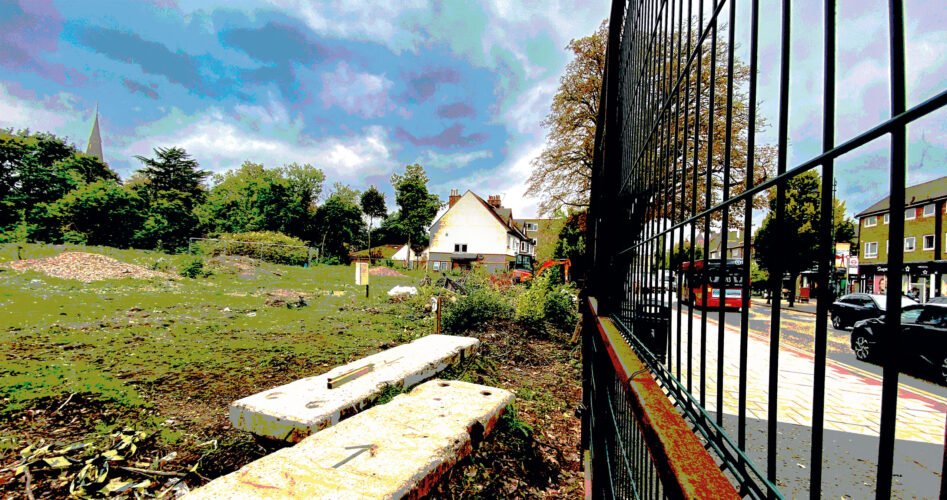
Wanstead’s mobility hub and parklet damaged and its future questioned

WVD-AUG-2025-pklet

Wanstead High Street’s mobility hub and parklet was damaged last month after being struck by a vehicle.

“We have secured the area and are currently identifying the materials required for repair,” said a Redbridge Council spokesperson.

However, some residents have called for the seating space – installed in June 2021 – to be removed entirely. “Before the crash, this structure had fallen into disrepair. We have plenty of seating and bike racks, and it uses up valuable car parking spaces,” said Katriye Ibrahim.

Features

Bungled Buses

WVD-AUG-2025-bus

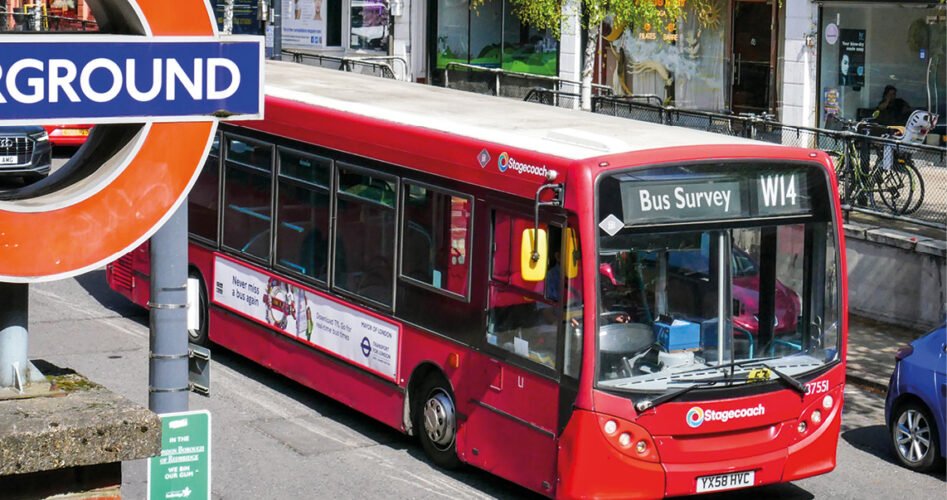
Wanstead residents told a public meeting, called by a London Assembly member, how TfL’s careless bus reorganisation is wrecking lives and needs urgent action. Donna Mizzi and Millicent Brown report

On one of the hottest days of the year, about 60 local residents packed a meeting, called at short notice, to speak of the dreadful effects the area’s bus changes have had on their lives, livelihoods, health and children’s education.

Caroline Russell, deputy chair of the London Assembly’s Transport Committee, explained she called July’s meeting at Wanstead House to understand why there was a continuing outcry about the changes imposed last September. The London Assembly holds the Mayor and TfL chairman Sadiq Khan to account. Her eyes widened as, over 90 minutes, she heard emotional accounts of ongoing impact – particularly about the W14, which has created major hardships at every level. “Children can’t get to school and adults can’t get to work.” “Patients can’t reach the hospital.” “The whole thing is a disgrace. We can’t wait for a bus that doesn’t come,” said residents. The W12 and W13 buses have also been problematic for many.

Residents told Caroline the infrequency and unpredictability of the ‘hourly’ W14 services, where there is no alternative public transport, has left elderly and disabled people isolated and lonely – common causes of depression. Meanwhile, carers have had trouble reaching residents. The W14 also avoids the most useful sections of South Woodford’s and Wanstead’s shopping streets, before terminating at Whipps Cross interchange, half a mile from the Outpatients and A&E departments.

Lucille Grant (86) was confined to her Nightingale Estate home on a number of days over the winter, forcing her to sell up and move to a more convenient location. “Now I worry about all the elderly and disabled people I’ve left behind,” she said. Elderly residents, including some using frames or walking sticks, have gone out and not been able to get a bus back home.

Actor and Green Party member Ashley Gunstock said: “TfL is either grossly inept, thoughtless or callous.” Caroline suggested there might have been some planning oversights; the response was a shaking of heads. A resident said it appeared TfL was taking a “sneaky wrecking ball” to the W14 as it hasn’t been as profitable as other routes.

A local elderly woman apologised for arriving late after a one-and-a-half-hour journey. Caroline said she understood because it had taken her that same length of time to reach the meeting, including Tube replacement buses. Immediately, several people chorused: “But this woman hasn’t travelled from Islington!” The exhausted, apologetic resident had just come from nearby Nightingale Lane, but her bus didn’t turn up.

Caroline is a Green Party member. Fellow London Assembly member Keith Prince, Conservative member for Redbridge and Havering, also attended the meeting. He mentioned that the local Labour MP Calvin Bailey has been involved, presenting a parliamentary petition in January. Meeting organiser Syed Siddiqi said the seriousness of the issues meant that parties needed to work together to bring about the necessary bus changes. Keith said he is also arranging to get the Deputy Mayor down to the area and to the badly affected Woodbridge High School in September. Later, he explained he has also visited badly impacted retired residents in Eagle Lodge, Snaresbrook, and has arranged a meeting with the Director of Buses and to ride the W-buses with residents. He has raised direct questions with the London Mayor and says he is having ongoing meetings. Wanstead’s Labour councillors have also been raising the issues at Redbridge’s External Committee meetings. Save Our Local Bus Services campaigners say they will be meeting Deputy Mayor Seb Dance soon, and they were urged to work together with councillors and officers. But then a TfL officer spent much time telling the committee how difficult it was for TfL to make any changes. Councillors responded saying their own objections had been ignored in the first place.

Other residents have been drawing attention to the lack of essential bus information at local stops, including the Whipps Cross stand, even though the extensive changes took place almost a year ago. A TfL officer apologised, without being challenged, and said renewed details should appear this month.

Meanwhile, residents complained the apps were frequently useless. Director of Wanstead Mental Health Clinic, David Sleet, said: “You’re told to check an app for information. If you are a vulnerable person, you are already a target, and TfL is making them do something which makes them even more vulnerable.”

The wrong type of vehicles…
At the meeting, residents mentioned the much-too-large W14 buses running through the Nightingale Estate, dominating the roads and struggling on corners. Meanwhile, the W12 buses serving Woodbridge High School are far too small to serve the number of students. Very strong evidence points to TfL having got the two bus orders the wrong way round. Plus, major design flaws with the new electric buses are also starting to be highlighted. Main complaints cite the lack of space and difficulty of movement for wheelchairs and prams, and the elderly using trollies. Some residents complained of struggling to get off crowded buses, particularly on the new smaller buses with one set of doors instead of two. Some have seats for the disabled and elderly near the driver, but with a large box construction in front giving insufficient space for legs.

To share your W-bus stories, email donnamizzi@btinternet.com

News

Celebrate National Playday in Wanstead with games in the park

WVD-AUG-2025-vplay

Local children are invited to celebrate National Playday on 6 August.

Wanstead Library will be hosting a teddy bears’ picnic for under-5s on Christ Church Green from 2.30pm, followed by an hour of games and activities suitable for four- to 10-year-olds from 3pm. “Please note, these free events will take place in the park, weather permitting, but will be held in the library hall if it rains,” said a spokesperson.

National Playday events first began in 1987 as a response to cuts in funding for playgrounds and play centres.

Visit wnstd.com/play25

News

Village Vouchers return: save money and support local businesses

bonus-3

A new edition of Village Vouchers has been jointly published by the Wanstead Village Directory and South Woodford Village Gazette.

“Next time you head to the High Street, make sure you have Village Vouchers in your pocket. There are over £500 of savings available at local shops, salons, cafés, pubs and restaurants. Plus, every copy sold includes a donation to Tin in a Bin,” said editor Lee Marquis.

Valid until June 2026, the booklets can be ordered online (£5) and collected from the High Street.

Visit wnstd.com/vouchers

Features

Phone Home

L1330209© Geoff Wilkinson

Ninety years ago, Sir Giles Gilbert Scott designed the famous K6 telephone box. Wanstead’s own iconic kiosk has now been adopted by Wanstead House Community Association. Kathryn Stangaard reports

It has always surprised me when someone comes into Wanstead House for the first time and says they have lived in the area for years but never knew we were here! For nearly 80 years, Wanstead House Community Association has been part of the local community, here every day of the week providing classes and clubs for everyone from birth to 110!

As a charitable organisation, advertising is expensive; our website and social media work well but sometimes you need something more obvious that really stands out, so what could be better than that typically British London landmark, the phone box?

One of our art tutors, Brenda Coyle, brought to my attention that we could adopt the historic phone box outside Wanstead Station. It was a very easy process. I sent an email to the relevant department at BT and we answered a few simple questions to see if we were eligible. The phone boxes are only available for adoption by councils and charities, so we fitted the bill and were accepted straight away. Obviously, we do have to maintain it, keep it clean and free of graffiti, and we can then use it to advertise Wanstead House and all that goes on here. Around the country, these redundant phone boxes have been used as book exchanges, art galleries and to house defibrillators (we have one of those at Wanstead House now as well, thanks to Martin & Co). It is surprising what you can do with a small space.

This particular phone box is a special one. Known as a K6 kiosk, it was designed by Giles Gilbert Scott in 1935 to mark King George V’s Silver Jubilee. Positioned beside a rare Edward VIII post box, Wanstead’s K6 was Grade II listed in 1987 and is one of only two K6s in the borough (the other one is in Woodford Green, opposite The Castle).

Giles Gilbert Scott was a talented architect, best remembered for the Liverpool Anglican Cathedral. He stemmed from the famous Scott dynasty of architects whose patriarch was George Gilbert Scott (Giles’ grandfather), whose work includes Snaresbrook Crown Court and Christ Church, Wanstead.

This amazing opportunity, to be able to adopt and use a part of history, has cost just £1. That was all BT were asking for it, so all we would ask you is to please help us look after this piece of heritage and take the time to stop and have a look at what is going on at your local community centre. I guarantee there will be something that will be of interest to you to keep your mind active or your body fit. It’s never too early or too late to try something new and we always welcome new members. So, next time you are passing, don’t forget to make a quick call to the phone box and see what we have going on.


Wanstead House is located at 21 The Green, Wanstead, E11 2NT. Call 020 8989 3693 or visit wnstd.com/house

Features

High – and dry – hopes

IMG_7236

The future of Wanstead Park’s waterways and the River Roding are inextricably linked, so what will be the best outcome? Councillor Paul Donovan explores the options

The competing demands for water in the local area was one theme that came out of a recent session run by Epping Forest in Wanstead Park. Invited to the park, local stakeholders were shown around by Epping Forest staff. The focus was the Park Plan, with projects that had been undertaken and in some cases completed over the past couple of years.

On the completion side, there is the floating reed bed on the Heronry Pond. Work to restore the Grotto is underway, with refurbishment of the Temple about to start.

But perhaps the most interesting proposal is the plan to pump water from the River Roding into the adjacent Ornamental Water (pictured here, where there has been no water for some time), then onto the other lakes in the park. The new plan, in a way, operates the opposite way around to the originally designed water system. Then, the water flowed from The Basin on the golf course to the Shoulder of Mutton Pond, onto the Heronry Pond, the Perch Pond and finally the Ornamental Water. The old system no longer functions well, with different lakes drying up over recent years. The Ornamental Water in particular does not hold water for long.

The stopgap measure of recent times has seen the Environment Agency (EA) granting a licence for Epping Forest to pump water from nearby bore holes into the Heronry Pond and Perch Pond. But this is a short-term arrangement, not a permanent solution. Epping Forest is set to replace the old pumphouse with a new one to extract water from the River Roding in the winter months, though EA approval is required for this to happen.

The role of the River Roding in this equation is an interesting one to ponder. On the one hand, there are the warnings about rising river levels with the onset of climate change. This could put surrounding residential areas under threat of being flooded. A safety valve, like the extraction of water to expanses like the park, can relieve some of these pressures. On the other hand, at present, river levels seem low, with competing interests seeking to draw on already depleted resources. The EA has to decide which interests take priority.

There are many calls for water to be restored to the Wanstead Park lakes. Yet, others say why should the river be depleted to maintain a man-made structure in what was the playpen of members of the British aristocracy in past centuries? The park, though, as part of Epping Forest, was given to the people of London by the Crown in 1878. Indeed, the river used to run through the Ornamental Water before it was separated off and straightened as part of the 18th-century designs of the park.

So, there are interesting, competing narratives on the question of water supplies. Some imaginative thinking is required from all sides. Pumping water from the Roding into the lakes has a role to play, but there will be a question of how much? What will future water levels be on the Roding? Maybe going forward, there should be thought given to developing more reed beds and wetland-style terrain, as part of the long-term solution. Or some sort of restoration of the original design, with the river running through the Ornamental Water or controlled by a sluice gate?

The park needs to be viewed as but one part of the overall mosaic that includes the River Roding as well as surrounding residential and non-residential areas. A more holistic view is needed to ensure a truly sustainable long-term solution.


For more information on the Park Plan, visit wnstd.com/parkplan

News

Planning application for development at youth centre

WVD-JUL-2025-youth

A planning application has been submitted for the development of a new Education and Youth Hub on the site of the former Wanstead Youth Centre, which closed in October 2023.

The £6.5m project will remodel the Elmcroft Avenue venue to include classrooms, a café, playrooms and offices. However, plans to convert the rear gymnasium into a multi-purpose space have raised concerns among campaigners, who argue it will mean the loss of the last large indoor sports hall in the west of the borough.

Visit wnstd.com/yhp

Features

Tackle the Tags

WVD-JUN-2025-v2

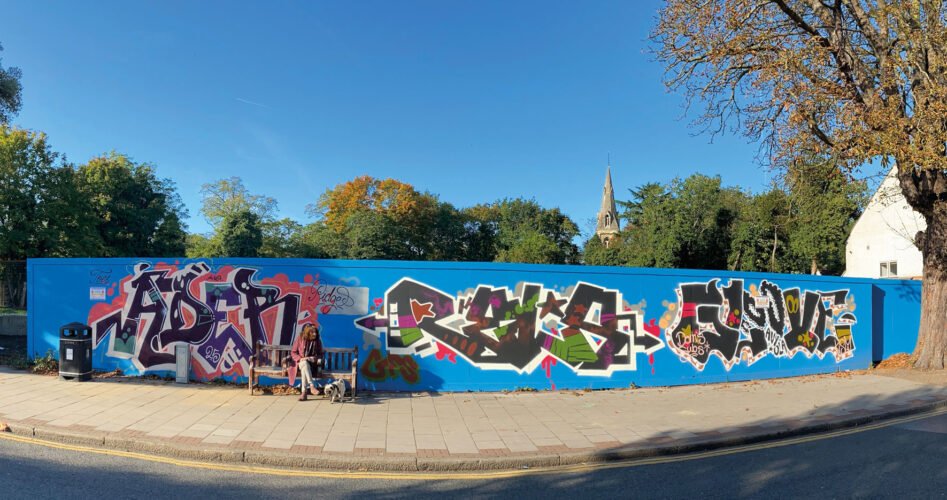
The rising blight of graffiti tags in Wanstead can be seen on our streets, subways and shopfronts, but with your help, we can report it, remove it and restore pride in our neighbourhood, says Katriye Ibrahim

Have you noticed the surge in graffiti across Wanstead? It’s hard to miss. From the sides of shops and bridges to subways and signposts, the spray paint is spreading fast – along the High Street, to the station and into Christchurch Green and beyond.

As a local resident who cares deeply about this area, I find it genuinely disheartening. This isn’t just about untidy walls; graffiti chips away at our sense of pride and safety. It sends the message that no one’s looking after our community. And when one piece of graffiti stays up, more often follow. It’s called the ‘broken windows’ effect – visible neglect that invites more antisocial behaviour. What message are we sending to our children when they see vandalism all around them? That this is just normal? That this is okay?

Many of us in Wanstead (and South Woodford, which has similar issues) are worried – and rightly so. This isn’t an occasional act of mischief anymore. It’s a growing problem that’s changing the look and feel of where we live.

In Redbridge, the Environmental Enforcement Team works to remove graffiti within three working days, prioritising anything offensive within 24 hours. That’s good news – but only if the graffiti gets reported. They’ve also trialled rapid-response cleaning and increased CCTV in hotspots. Offenders face fines of up to £5,000 and even prison time under the Criminal Damage Act 1971.

But here’s the rub: graffiti often reappears faster than it’s cleaned, and the burden falls on us – residents – to report it. And it’s not always clear who to report it to. Is it council-owned? TfL? BT? It’s frustrating, I know. Still, if we want change, we can’t walk past this anymore. We need to act, together and consistently.

Here’s what you can do: download the Love Clean Streets app from Redbridge Council’s website (for free). It takes seconds to upload a photo, add a location and report any graffiti you see. Whether it’s on a shopfront or a wall, report it. Every time. Your report will be automatically sent to the relevant team at the council to deal with. However, not everything can be dealt with on the app. The council do not deal with the green or black telephone cabinets, for example; that’s Virgin or Openreach. Anything on TfL property will need to be directed to them and telephone kiosks can be BT or private companies.

If we all take that extra minute to report what we see, we can turn this around. It’s what being a community is all about. Wanstead deserves better. Let’s fight back with action, not apathy.


To report graffiti to the right place, call:

Openreach: 0800 023 2023
Redbridge Council: 020 8554 5000
TfL: 0343 222 1234
Virgin Media: 0330 333 0444

To download the Love Clean Streets app, visit wnstd.com/cleanstreets

Features

Drawn to birds

P4160689

Artist Jaquie Feldman has a long-standing connection with Wanstead. In more recent years, she has developed an artistic obsession with birds

My association with Wanstead goes back many years. I was born and brought up close by and some of my happiest early memories are of being taken to Wanstead House Community Association for my weekly ballet lessons.

I loved that to my young eyes Wanstead House was ‘oldy worldy.’ I obviously felt it offered more character than the new-builds of the 1960s and 1970s. Today, it stands as a venue in the very heart of the community, still offering ballet lessons, but also various creative arts, crafts, exhibitions and meeting hubs.

These days, I run three classes in mixed media art, and in addition work as a freelance museum and gallery artist and creative facilitator for the British Museum, Sir John Soane’s Museum, Keats House, National Portrait Gallery, the London Museum, Royal Museums Greenwich and UCL. My own practice changed direction during the pandemic as I lost my museum work. During that surreal time, I wrote and illustrated a children’s book, which is due to be published later in the year. It was during the pandemic that I developed an ‘obsession’ with birds and began to incorporate them into my artwork.

My love of birds started when I was young; I recall taking an injured bird to the local park and setting it free. Recently, and perhaps because I’ve never witnessed one, I’ve become fascinated with the breathtaking spectacle of the starling murmuration. In my work, I try to encapsulate the feeling a murmuration might evoke. Initial studies were created simply in pencil, but I’ve recently developed a multi-layering effect using canvas, Indian khadi paper for starling shapes and a combination of pencil, charcoal and ink. Interesting things happen as each medium behaves differently on the surface. The thought of the time-consuming depiction of every single starling in that murmuration might sound unbelievably tedious to accomplish but combined with listening to Philip Glass and Max Richter, I find it all relaxing and hypnotic!      

Although I’ve now moved away, I visit Wanstead as often as I can, inspired by the joyous café society of the High Street and the vibrant community hub that are lucky enough to call Wanstead home… and, yes, perhaps I’m also a little jealous!


To view more of Jaquie’s artwork, visit wnstd.com/jaqfeld

Features

History calls

WVD-JUN-2025-v2©Geoff Wilkinson

Ninety years ago, Sir Giles Gilbert Scott designed the famous K6 telephone box. Wanstead’s own recently refurbished kiosk still stands proudly outside the station. Local historian Davis Watson reports. Photo by Geoff Wilkinson

In 1876, Alexander Graham Bell patented the telephone and by the turn of the century, small telephone kiosks – soon to be known more commonly as ‘boxes’ – began to pop up around England. The government altered the course of telephonic communication with the Telephone Transfer Act of 1911 which saw the nationalisation of the National Telephone Company, which was taken over by the General Post Office (GPO).

The GPO soon began a quest to design a standard public telephone kiosk that would be used throughout the nation. Their first version appeared in 1921 and was duly named K1, a shortened version of the simple Kiosk One. However, an updated style was quickly sought and in 1924, the Post Office organised a competition for a new design.

The winner was Giles Gilbert Scott, a talented architect best remembered for the stunning Gothic-styled Anglican Liverpool Cathedral. He stemmed from the famous Scott dynasty of architects whose patriarch was George Gilbert Scott Senior (Giles’ grandfather). Local readers will likely be familiar with George’s Wanstead Infant Orphan Asylum (now Snaresbrook Crown Court) and Christ Church, Wanstead.

Giles modernised his design of the kiosk on several occasions before the renowned K6 – commissioned to commemorate the Silver Jubilee of King George V – finally arrived in 1935. It was this design that is the most famous and predominant of England’s kiosks and which remains a British icon to this day. The first K6 hit the streets a year later, and the one outside Wanstead Station (at the time, yet to be built) likely followed soon after.

It was common for the kiosks to be placed near existing post boxes and the one at Wanstead was no exception, being located alongside a post box bearing the cypher of Edward VIII; a rarity in itself as few boxes are in existence due to the short reign of the monarch (325 days).

British Telecom (BT) was placed in charge of English telecommunications in 1981 and almost immediately declared their wish to paint all existing red telephone kiosks in yellow. After much public outcry, the decision was reversed and the kiosks gradually gained their status as national treasures. Many were promptly granted listed status, including Wanstead’s very own K6, which was designated as Grade II on 31 July 1987.

During the following decade, BT repainted many of the crowns that adorn the top sections of the kiosks, changing them from their original red colour to gold, and Wanstead’s kiosk also received that treatment. Another K6 to be amended in that fashion stands at Woodford Green, opposite The Castle; the only other surviving K6 in Redbridge.

Wanstead’s telephone kiosk was restored around the start of this decade, with works including a new door and missing glass replaced. Sadly, it again fell into a state of disrepair, with vandalism including graffitied and scratched glass, along with a much-dirtied interior. It was reported to BT, who completed another round of repairs and restoration last month. “We’re aware of the vandalism problem at this location… We’d urge anyone who witnesses criminal activity to report it to the police. And while crime and antisocial behaviour are police matters, we remain committed to working closely with the authorities and local communities to help where we can,” said a BT spokesperson.

With this year marking the 90th anniversary of Scott’s famous design, perhaps a call for the ongoing preservation of Wanstead’s listed landmark will not be left unanswered?


For more information on the story of K6 telephone box, visit wnstd.com/k6