
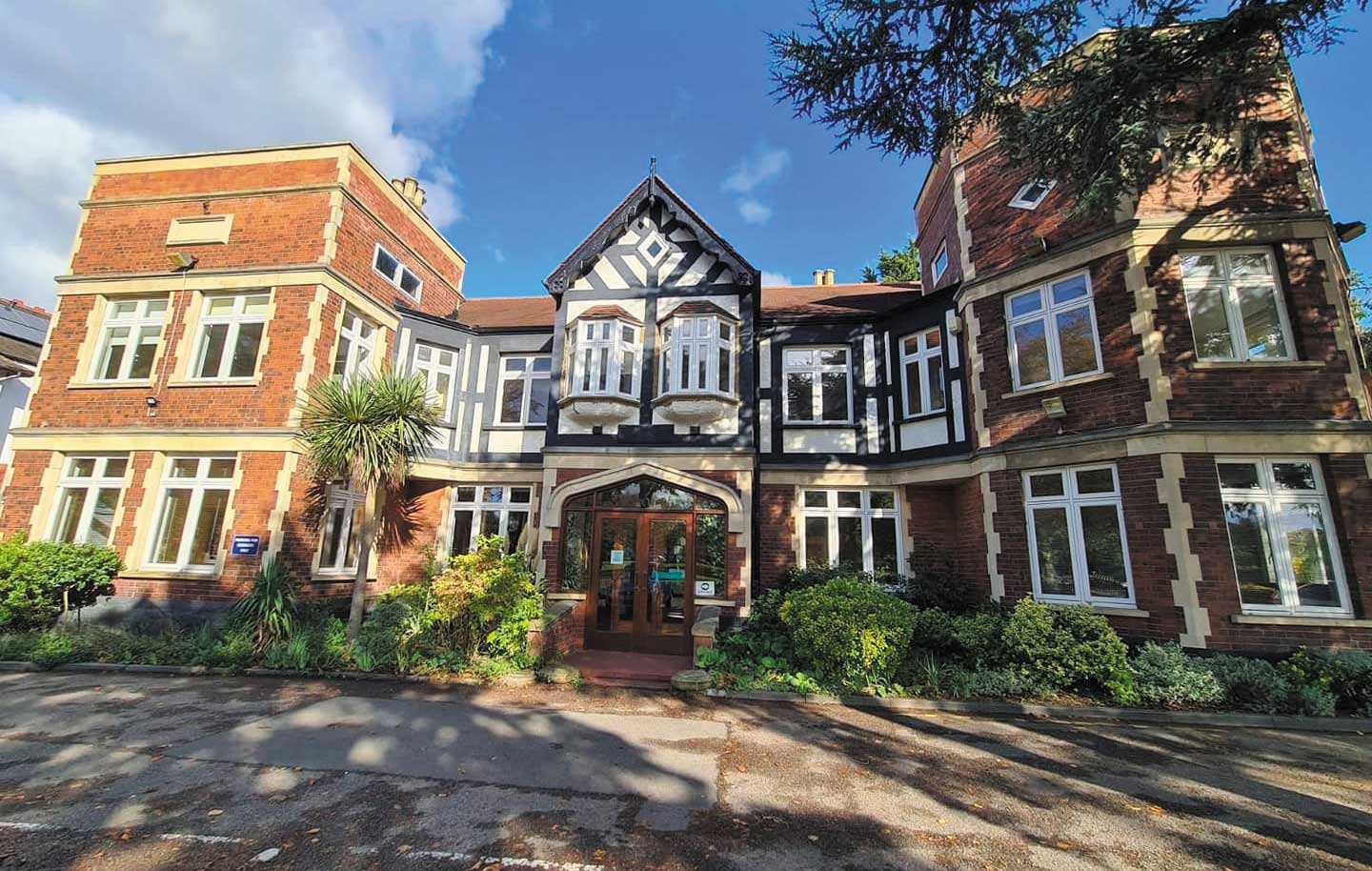
As Wanstead House Community Association celebrates its 80th anniversary, local historian Lynn Haseldine Jones talks about the building of the house and its first occupants
Wanstead House Community Association celebrates 80 years this month. It has for all that time been based in the building at the top end of The Green, now known as Wanstead House. However, the building was previously known as West Ham Hall, and before that, Ronceval!
The house was designed in 1911 by well-known theatre architect and local resident William Edward Trent (1874–1948). The work was later taken over by Stratford-based architect Charles Living (1877–1970), but most of the design is Trent’s. The house was finished in late 1914 or early 1915.
The man who had the house built was Thomas Kingham Catchpool (1850–1915), who bought the land on 22 March 1911. He had trained as a solicitor, but later became a hosiery and woollen goods merchant. For a while, he lived in Guernsey, in a house called Ronceval, and he brought that name with him for his home in Wanstead. Thomas and his wife, Florence Emma, had several children but lost two of their sons in a boating accident in Northern Ireland in 1904. The family were Quakers and their sons, Thomas Corder Catchpool (1883–1952), Egerton (1890–1971) and Henry Guy (1893–1987), were involved in peace work and Quaker activism throughout their lives.
Thomas, the father, died in 1915, so he had very little time to enjoy the house he had so carefully built. His widow and sons continued to use the house for a few years around the time of the Great War, but the time had come to sell in 1919. The house was up for auction on 17 September 1919 but failed to sell. Another sale was set for 7 May 1920. It was at this sale that the house was bought by Margaret Meekings Johnson OBE (1875–1940). I wrote about her as a woman of note in the April 2026 edition of the Wanstead Village Directory. It was Margaret who renamed the building West Ham Hall, after a house her family had previously occupied.
When Margaret died in 1940, it is believed the house was taken over for some sort of military use. Then, in February 1945, thanks to prompt action by local councillor and photographer Henry Cormacey (1891–1968), the house was acquired as a community centre and in just over a year, the Association was able to take possession. Meantime, a number of social activities were organised in the Borough of Wanstead and Woodford. On 21 September 1946, the house was officially opened by the Lord Lieutenant of Essex, Col Sir Francis Whitmore (1872–1962) of Orsett Hall. The attached hall was opened later and named after a long-serving warden, William Hendy Boaden (1906–1978).
After 80 years, the house is still providing a home for many clubs and societies, and the much-loved Wanstead House Community Association continues to thrive.
For more information on Wanstead House, visit wnstd.com/house