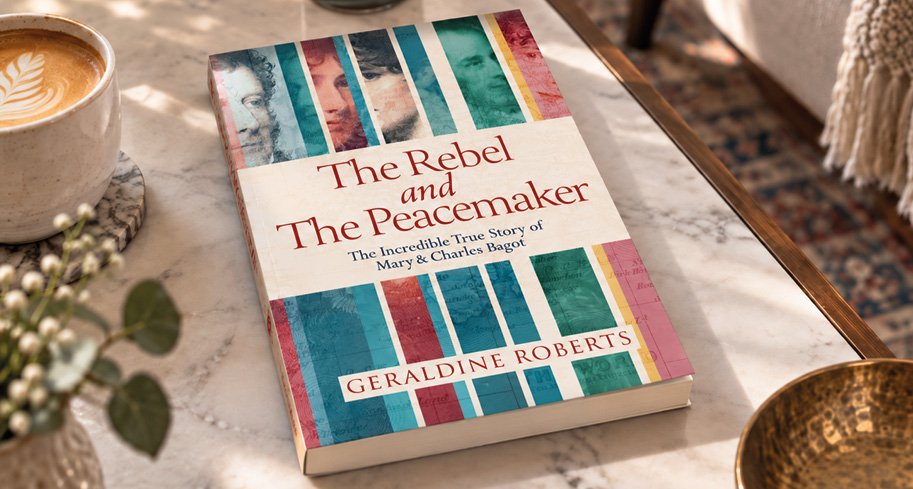
Geraldine Roberts’ latest book uncovers the remarkable lives of Charles and Mary Bagot, tracing diplomacy, politics and personal fortunes across Britain, America, Russia and Canada. Review by Paul Donovan
This fascinating book traces the lives of Charles and Mary Bagot through turbulent times in America, Russia and latterly Canada during the first half of the 19th century.
Local writer Geraldine Roberts’ second book follows on from The Angel and the Cad about Wanstead House and the antics of the Duke of Wellington’s nephew, William Pole Tylney Long Wellesley. In that case, Long Wellesley managed to destroy his wife Catherine’s life. Interestingly, it became the first case where a man was denied custody of his children (that duty going to the Duke of Wellington after Catherine’s death).
Roberts deploys a similar forensic style of approach in this latest book, which picks up with Long Wellesley’s sister Mary, who marries Charles Bagot. Bagot is determined to serve in the diplomatic sector. He becomes great friends with the future Foreign Secretary and Prime Minister George Canning, though also shares his rise and fall in fortunes.
Politically, Bagot is a Tory, at a time when the Whigs are seen as the coming liberating force. However, he excels as a diplomat. First, being sent as British ambassador to Washington in 1815. The British had just burned Washington in the war of 1812–1815. Post war, things are tense, but the Bagots charm their way around the diplomatic circuit. Important treaties are agreed, bringing peace. Bagot plays a key role in one of the few positive actions of the British Empire, helping secure liberty for some of the slaves who joined the British side during the three-year war.
Roberts provides a fascinating insight into an interesting period of history. Diplomacy, in a modern sense, is in its infancy. The period covered bridges the end of the Georgians and the beginning of Victoria’s reign (Queen Victoria is not a Bagot fan). The change in reigns is described in terms of a decline of the “vulgar ostentation” of the Georgian era. Whilst at times the author seems something of a fan of the Bagots, aka Hilary Mantel and Thomas Cromwell, she in the main keeps an objective observer’s pose. In many ways, she is setting the record straight, recalling how the online biography at the National Gallery is less than complimentary, failing to mention his role as an abolitionist for slavery. Bagot seems to have been more appreciated in the annals of the US and Canada.
Much of the book focuses on Mary, a vivacious, intelligent person, who does all she can within the many confines placed on women at the time. There are some other interesting social history titbits in the account, such as the wealthy having access to a form of condom in these times. Not that that seemed to affect the Bagots, who had 10 children. Overall, a very interesting read, especially for those interested in the history of this period.
The Rebel and the Peacemaker by Geraldine Roberts is priced £18. To order, visit wnstd.com/tratp