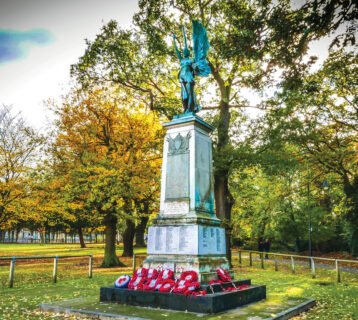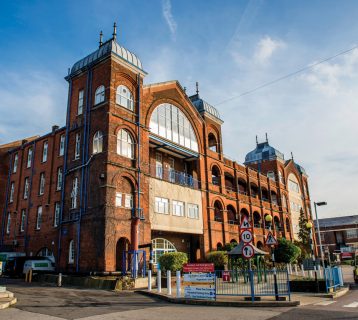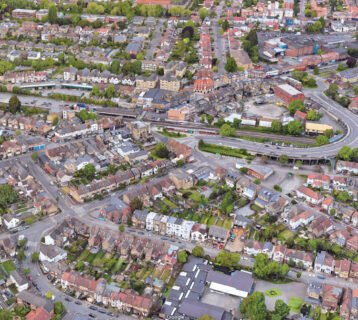
A talk about local war memorials was due to take place at the Woodford and District branch of the National Trust this month. As with many events, this is likely to be cancelled. So we invited Richard Speller to talk here about Wanstead’s own monument of remembrance. Photo of the Wanstead War Memorial by Geoff Wilkinson Due to the appalling death toll suffered in the 1914–1918 Great War, virtually every family in the land would have known of someone who had lost their life. Thus, within a very short period, war memorials of every different type – stone pillars, statues, windows, plaques – were erected all over the country. These were, in the main, funded by local communities. Of course, these memorials not only list those who died in the First World War but also the second (1939–1945) and beyond, and the Wanstead memorial commemorates Marine Tom Curry, who lost his life in Afghanistan in 2007. War memorials, as we know them, only really started appearing after the Crimean War in the 1850s. Prior to that, sadly, participants who had been killed were buried in mass graves without any identification at all. The movement gathered pace following the Boer wars, primarily due to...
Features
In the 21st of a series of articles charting the Wild Wanstead project, Iain Ambler considers the natural history of George Green and its future as a special site for wildlife in Wanstead. Photo by Geoff Wilkinson George Green has an interesting environmental history that we can see many remnants of today. It appears to be a fragment of old acid grassland or heathland, probably in or at the margins of Epping Forest. In 1683, John Evelyn visited Wanstead and recorded the costly planting of avenues of trees by Sir Josiah Child around his recently acquired estate. The remaining massive sweet chestnut trees standing on the Green today (four in a line, three together, one towards the St Mary’s end of the green) formed part of one of these double avenues of trees radiating out for some distance from the focal point of the grand house, which was located on part of what is now Wanstead’s golf course. With the break-up of the Wanstead Estate in the 19th century, the Green remained as a patch of poor quality pasture surrounded by buildings. It is owned by the City of London Corporation and protected by the Epping Forest Act of 1878. The day-to-day...
Richard Arnopp was one of several participants in last month’s Museum of London Archaeology workshop exploring the history and secrets of Wanstead Park’s Temple Anything to do with the history of Wanstead Park is almost guaranteed an audience and, with that in mind, Epping Forest hosted two free archaeology workshops in the park last month as part of Layers of London, an interactive online mapping project. The events – led by Paul McGarrity of Museum of London Archaeology – took place in the Temple, a building dating from about 1760, originally constructed to house a menagerie. Paul explained that archaeology isn’t just about digging - archaeologists record buildings which are still standing too. He said that the analysis of buildings is based on the same principles as other archaeological fieldwork. In excavations, archaeologists use the sequence of buried layers to reconstruct the history of a site, while the development of buildings is phased using the relationship between 3D structures. Paul began by saying protection for archaeology had increased since 1990 with measures which had greatly increased the level of recording. In the case of a standing building, this would depend on its nature and the purpose for which the record...
There’s a team of dedicated Wanstead folk working on a daily basis to help local rough sleepers and those less fortunate than many of us. Could you help them? Samantha Earl reports John Wagstaff of Petty Son and Prestwich is one of these dedicated folk who can often be found sorting, organising and distributing various donations to different shelters and food banks. And until recently, John was helping out Wanstead charity worker Frank Charles and T-Space’s Jason Harris every Friday by giving out clothes, sleeping bags and other much-needed items at the Stratford Centre. Every week, John, Frank and Jason would arrive at the Stratford Centre at 6am – early because those sleeping rough are moved on by security. But out of sight shouldn’t ever be out of mind, so the team arrived with a large estate SUV full to the brim with bags of donations, generously provided by the amazing Wanstead community. Frank brought a huge bag of food to hand out, while John and Jason set up a large table of the clothes. The team encountered 20 to 40 rough sleepers each week, and one in 10 were female. In the team’s experience, these people were often timid...
As the Wanstead Winter Night Shelter project comes to an end, Revd Canon Ann Clarke reflects on 13 weeks of community generosity, local business support and numerous grateful guests The Wanstead Winter Night Shelter closed its doors at the end of March after a successful inaugural season. This is down to the excellent organisation and experience of the Forest Churches Emergency Night Shelter (FCENS) model, and the wonderful number of local volunteers who ran the shelter each week. The volunteers came from many different backgrounds, some of faith and some of none.The amazingly generous donations, both financial and in kind, made it possible to give the very best we could to our guests. We gave a warm welcome, food, shelter, clothing and toiletries to up to 30 guests each week (mostly men, but a few women). We have also discovered that Jenga, Connect 4 and chess were very popular with our guests! Local support has been exceptional; businesses turned up with bread, pastries, savouries, even complete meals for 30. Among those who have donated are Horizon Patisserie, Leytonstone; The Duke, Wanstead; La Bakerie, Wanstead; The Rotisserie Company; and Luppolo, Wanstead. When we had excess, guests were able to take ‘packed...
Paul Kaufman, Chair of East London Humanists, introduces Leo Barasi, the speaker who was scheduled for the group’s April event and who would have been explaining why climate change apathy matters, and how it can be beaten Leo Barasi is a leading thinker, speaker and writer on climate change, politics and public opinion. Broadcast appearances include Radio 4’s The Moral Maze and World Tonight, Radio 5 Live, Channel 4 and Sky. His acclaimed book, The Climate Majority: Apathy and Action in an Age of Nationalism, addresses one of the greatest challenges we face today. Writing in The Guardian last October, Leo paid tribute to Extinction Rebellion for succeeding in using protest earlier in the year to transform public debate. But he predicted challenges for the next round of mass protest about to take place that month. The novelty of such actions would have worn off and the police would move more decisively. Perhaps the biggest challenge Leo identified is the public attention span. He points out that the overwhelming majority do now support the aim of zero net emissions. Many believe the argument is won and that blocking the streets serves little purpose. But few pay attention to policy detail or punish...
Local resident Rachel Jarvis is a business coach for ActionCOACH and is keen to make Wanstead’s business owners aware of the support available to them during the current crisis As you know, the UK is in the midst of the coronavirus outbreak and many small and medium-sized businesses are already feeling the effects. I encourage all business owners to read HMRC’s guidance for employers and business owners, which can found at gov.uk. Some of my clients have already contacted HMRC, who have been very understanding and have offered to defer all tax payments (including VAT) for two months. In effect, this is free credit to help with potential cash flow issues. Many businesses are following suit, and I would encourage others to do the same. The simple principle here is: once you’ve paid it, you won’t get it back! HMRC are likely to have to give further concessions if the effect of coronavirus is as severe as expected. Banks are also said to be increasing credit lines and overdrafts, and in some cases, they may even offer repayment holidays on loans. And many of my clients are contacting all of their suppliers to ask about relaxing payments. The government has...
In the ninth of a series of articles looking at the work of Age UK Redbridge, Barking and Havering, Janet West summarises the impact of coronavirus on their services and explains what they can still offer Due to the coronavirus (Covid-19) outbreak, here at Age UK Redbridge, Barking and Havering we are busy adapting our services so we can continue supporting older people in the three boroughs we serve. Whilst some services will continue as near to normal as possible for the time being, some will inevitably be more affected as we strive to follow the government’s advice to help keep people safe. Unfortunately, this means that since 17 March, we have had to close the Allan Burgess Centre – our activity hub in Wanstead – to comply with the current guidelines, meaning we cannot provide lunch or activities for the foreseeable future. The activities carried out at the Cherry Tree Cafe (Zumba and art classes) will also cease as the centre has to close its doors as well. We will be offering telephone communication to service users affected if they would like it, so we can at least give them someone to talk to and offer advice if they...
Volunteers across Wanstead have been delivering leaflets to their neighbours, offering help and support during the uncertain times ahead. Charlie Renwick explains why she got involved. Pictured here is fellow volunteer Mei Moore (Charlie was self-isolating and unable to be photographed at the time of writing). Photo by Andy Nutter By mid-March, I started to feel anxious about coronavirus; initially what it would mean for my family and me, but more importantly, what would happen to those older people who don’t have a support network in place. I knew other people must be feeling the same way, so I turned to Facebook and within minutes found the Redbridge COVID-19 Mutual Aid group, an organisation set up by three others to connect us all at this time. At the time of writing, the group has over 1,500 members and is growing daily. It offers clear information on Redbridge wards (areas within the borough) and recommendations on how we can all get involved in supporting our local community. I live in Wanstead Village, where we now have a WhatsApp group with 135 members and counting. Our priority to date has been reaching out to the elderly and those considered to be at increased risk of severe illness...
Classically trained soprano Nicola Cain is leader of the Wanstead and Woodford Rock Choir. With scientific proof singing makes you happier, is it time to open your mind – and vocal cords – to the power of music? Rock Choir has over 30,000 members participating in approximately 400 local communities. We offer all ages an alternative experience to the traditional classical or community choir, introducing members to feel-good pop, rock and contemporary chart songs. Rock Choir has an uplifting ethos of fun, and friendship and community spirit is a huge part of our attraction, with members enjoying a dynamic and busy new social life whilst connecting with their community. At an individual level, it helps improve people’s wellbeing by building their self-confidence, self-esteem and, in turn, improving their mental and general health. This was scientifically proven in 2018 when the BBC programme Trust Me I’m a Doctor used members of Rock Choir for an experiment to find out if singing, cycling and dancing boosted our levels of endocannabinoids – neurotransmitters thought to be the cause of the ‘natural high’. These chemicals are similar in structure to the chemicals found in the cannabis plant. As well as giving a ‘buzz’, they are also...
Conveyancing is a vital part of the process of buying or selling a property. Here, Debra Rose from Wiseman Lee Solicitors explains the steps and why it is important to choose a professional to do the job Conveyancing refers to the legal work that is carried out when ownership of a property is transferred. Most conveyancing is carried out professionally, but sometimes, buyers and sellers ask whether it is possible to do it themselves. Conveyancing without the use of professional help is risky because you may not be protected in the event you miss something which could have been revealed by conveyancers, meaning your property is not worth the purchase price. The other party to the transaction may demand you use a professional for the transfer of funds to ensure the appropriate money laundering checks are carried out and they have the protection afforded by the Law Society’s Completion Code. Additionally, many mortgage lenders will require you use a conveyancer to protect their investment. Once you decide you want to buy or sell, you will need to instruct a conveyancer. The estate agent will prepare a memorandum confirming the terms of the sale, which will be sent to the person...
In the second of a series of articles documenting the thoughts of local anti-bullying ambassador Elsa Arnold, the founder of the Spreading Kindness Through E11 initiative explains how dance has helped her I battled with myself for a long time after being knocked down by bullying and I didn’t see myself getting back up again. Bullying knocked my confidence and made me feel worthless. I honestly didn’t see a very bright future for myself. But something changed for me. I have always loved to dance, starting ballet and tap at the age of three and dreaming of being a ballerina. But this was always just a childhood dream. I never thought after losing my passion for years that I would find it again during the most difficult time of my life. I never liked dance from Year 7 to 9 (we studied it at school as a compulsory lesson), and I couldn’t wait to get rid of it. When I started secondary school, it was a lot easier to fall into the trap of comparing yourself to others and I always feared being judged. But at the end of Year 9, I decided to join our school’s dance club and ended...