
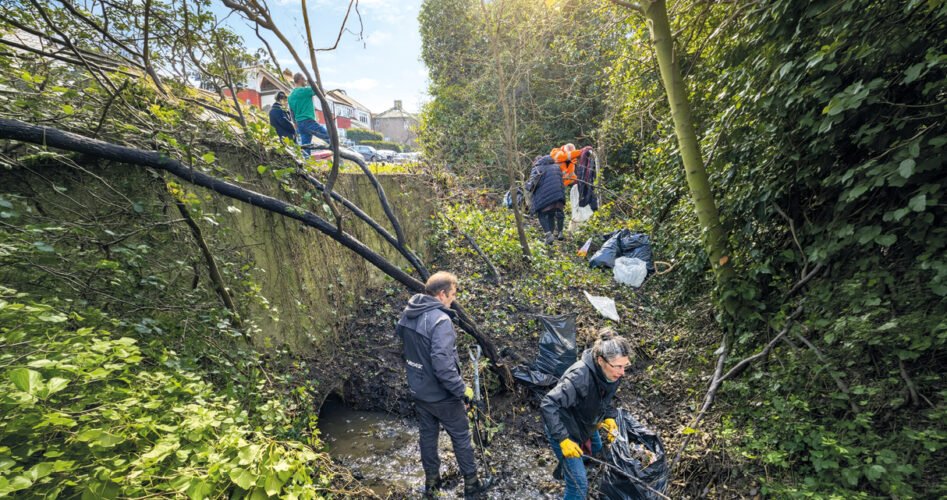
In late winter and early spring, river guardians such as the Friends of the River Roding can really get stuck into clearing up our blue spaces. Over the last few weeks, we have been hard at work, taking advantage of the seasonally reduced undergrowth before the nesting season begins.
In the Woodford and Wanstead area, we have been litter picking like never before, in particular, targeting the area around Charlie Brown’s Roundabout, which suffers from rubbish being thrown out of car windows from the flyovers overhead. This either gradually degrades the soil or blows around until it finally makes its way into the Roding, down to the Thames and ultimately out into our oceans. Our lovely little corner of the world here in northeast London is but a tiny part of a far wider ecology.
In our first four litter-picking sessions of 2026, we extracted some 114 bags of rubbish, but we are literally only scraping the surface. It will take several more sessions to clear the area even superficially, but sadly, the reality is there are no doubt several further layers of rubbish beneath the soil in places. Realistically, we can’t get to all of that – and indeed we must tread carefully so as not to disturb the species that have made their homes among our mess – but at the very least, we are striving to improve the aesthetics of the local area. If the eyesore is allowed to fester, so too does the impression that it’s acceptable to treat our green and blue spaces as one big rubbish dump. Litter begets litter.
Further south, between the river and Roding Lane South, we recently discovered a forgotten stream, hidden deep within woodland. Its source is unknown (we presume there is a spring somewhere that has been covered by a road or housing), but it meanders a short way through the woods towards the main river itself.
Our volunteers cleared the choked stream of rubbish and silt, dug a couple of pools to improve its flow dynamics and cut back brambles and ivy to allow more light into the water. Once we were satisfied we had brought the tributary back to life, we continued picking up litter around its vicinity, finishing the day with another 80 bags of rubbish. The stream – which we’ve unimaginatively named Redbridge Stream for want of an official title – already looks much healthier, but we will revisit it over the coming months and years to see how it develops and supports native species to thrive.
If you feel inspired to get involved and help us in our mission to restore the River Roding and its tributaries, please get in touch for information on future volunteer days and other ways you can contribute.
For more information on the Friends of the River Roding, visit wnstd.com/fotrr or email river.roding@gmail.com

Three centuries ago, Wanstead was a small township, where the wealthy and the well-to-do lived to escape the noise and diseases prevalent in the City of London. Amongst the inhabitants were the rector James Pound (1669–1724) and his nephew James Bradley (1692–1762). Both were astronomers of note, close friends of Sir Isaac Newton (1642–1727) and Edmond Halley (1656–1742).
Bradley was elected as the Savilian Professor of Astronomy at Oxford in 1721 and appointed as the third Astronomer Royal by Sir Robert Walpole in 1742. Newton referred to Bradley as “the finest astronomer in Europe,” being the first to discern that the three innermost of Jupiter’s large moons were in gravitational resonance with each other, constantly repeating their mutual perturbations in accord with Newton’s universal law of gravitation.
From August 1727 to December 1728, Bradley observed the annual motions of 70 circumpolar stars from Wanstead, discovering the aberration of starlight, the earliest proof of the motion of the Earth in orbit around the Sun, first proposed by Copernicus and supported by Galileo, thus vindicating both. Continuing his observations to 1747, Bradley also discovered the nutation of the Earth’s axis, a wobble induced by the action of the moon on the Earth’s equatorial bulge.
As Astronomer Royal, he completely reformed the Royal Greenwich Observatory, root and branch. He acquired the finest astronomical instruments in the world and built the New Observatory, the building through which the Prime Meridian passes. Here, Bradley, together with assistants trained to the same high standards as himself, produced precise and accurate observations of every notable star visible from Greenwich.
James Bradley was of modest origins, the third son of an obscure steward on a Cotswolds estate. He became the most celebrated astronomer in Europe. He was reader in Experimental Philosophy (Physics) at Oxford. He was admired all over Europe, being made a member of the Russian Imperial Academy of Sciences, of the Academie Royale des Sciences in Paris, and remarkably, that most Catholic of institutions, the Institute of Bologna, revealing the motion of the Earth had been accepted by the Church of Rome.
He was a kind, gentle man, much admired at Oxford, where he was given an Oration. He was a brilliant teacher of mathematics and loved by many in the university. He had an ability to explain difficult subjects in plain language. Bradley was admired by kings and statesmen all over Europe. He is buried in Minchinhampton in Gloucestershire, and memorialised by a headstone in the churchyard of St Mary the Virgin, Wanstead.
For more information on Dr Fisher’s book, The Life and Work of James Bradley, visit wnstd.com/fisher
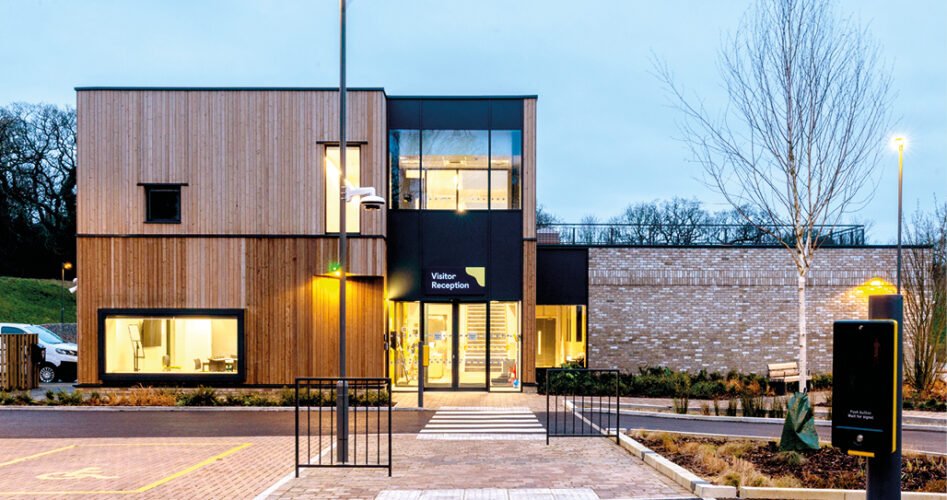
The Guide Dogs South East Regional Centre in Redbridge is celebrating an exciting achievement this year, having been shortlisted for the RIBAJ MacEwen Award 2026, a national recognition that celebrates architecture designed for the common good. The award highlights buildings that deliver meaningful social benefit, and the Redbridge site has stood out for its thoughtful design, commitment to accessibility and inclusivity, and its focus on improving the lives of people with sight loss and the dogs who support them.
Designed by Kay Elliott Architects, the Redbridge centre is located in Woodford Bridge and is Guide Dogs’ first net‑zero building, demonstrating the charity’s strong commitment to sustainability and responsible design. As a working hub, it can accommodate up to 75 dogs, offering state‑of‑the‑art facilities that prioritise dog welfare, support high‑quality training and meet the needs of both staff and volunteers. Nestled within a greenbelt landscape, the site also enhances local biodiversity by increasing plant and tree varieties – an important feature valued by the award panel.
This modern centre is vital to the charity’s work in the region. The South East Regional Centre trains nearly 250 guide dogs every year and supports over 600 volunteer puppy raisers, making it a cornerstone of services across Essex and neighbouring counties. Its indoor and outdoor training areas, community spaces and flexible facilities enable teams to deliver essential skills, information and support services to people with sight loss.
Being recognised on the MacEwen Award shortlist reflects not only the building’s architectural merit but also the profound social impact Guide Dogs continues to have in our community.
With the centre growing in activity and impact, Guide Dogs is calling on local residents to consider becoming a volunteer fosterer. Fosterers provide temporary homes for dogs in training, offering love, stability and day‑to‑day care, while the dogs learn essential skills that will one day support a person with sight loss. It’s a rewarding role that directly contributes to the life‑changing work happening at Redbridge. Information on how to get involved can be found through Guide Dogs’ website, where opportunities such as fostering, puppy raising and other roles are regularly updated.
As Guide Dogs in Redbridge gains national recognition, there’s never been a better moment for local residents to support this incredible charity. By volunteering, you become part of a mission that brings independence, mobility and confidence to people living with sight loss across our region.
For more information on Guide Dogs, volunteer fostering and other ways to help, visit wnstd.com/gdvolunteer

There has been much public debate about the suggestion that there should be restrictions placed on the Older Person’s Freedom Pass. A public spat saw TV presenter Kirsty Allsop taking issue with author Michael Rosen over whether someone as wealthy as him needed free travel.
There are two forms of free travel for the over-60s. The Oyster 60-plus card is available once someone reaches 60. It gives free travel on buses and trains and is funded by TFL. This card runs until state retirement age (currently 66), when an Older Person’s Freedom Pass takes over.
The Freedom Pass is funded by London Councils – which represents London’s 32 boroughs and the City of London – covering trains in London and buses across the country. It was this card that London Councils were looking to review.
That review began in January, quickly drawing a 60,000 signature petition opposed to change. The review was prefaced on rising costs that saw the Freedom Passes costing £333m last year and predicted to rise to £372m for 2026/27.
A rancorous debate quickly developed into an attack on the elderly. BBC London didn’t waste the opportunity to contextualise the story in terms of intergenerational conflict. This involved getting younger people asking why the elderly are getting such a benefit while they have to pay full rate for increasingly expensive public transport.
Leaving aside that elderly people have earned such rights by a lifetime of work and service, the bigger question surely is why cannot the younger group also have free travel. Indeed, everyone should be eligible. This direction of travel would couch the argument in terms of reducing inequality and improving the environment rather than stoking intergenerational resentments. In a country as rich as the UK, such things should be possible.
Cheap or free travel really is a no-brainer. It enables people to get out to visit loved ones as well as attending and spending at a variety of businesses across the capital.
There are also pluses for people’s mental and physical health that are not always easily quantifiable in the land of bottom-line economics. Add in the fact train and bus passenger numbers are still below pre-Covid levels, why would anyone want to restrict incentives to get people using public transport?
Fortunately, it would seem plans to cut the Freedom Pass have receded. However, the argument may return in an effort to chip away at another hard-earned benefit on the altar of austerity. Everyone should be prepared.
For more information on the Freedom Pass, visit freedompass.org
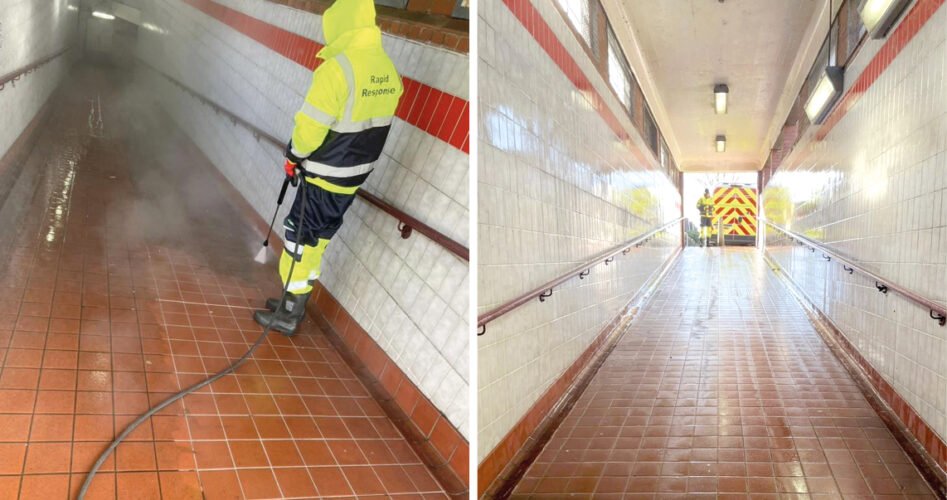
The new service uses a specially equipped vehicle. “The vehicle is designed to handle a wide range of issues, thanks to being kitted with a range of equipment, including brooms, cleansing apparatus and jet wash capability,” said a spokesperson.
The subway – which runs under the Central Line – will receive a weekly cleaning visit. Street cleansing issues can be reported online.
Visit wnstd.com/reportit
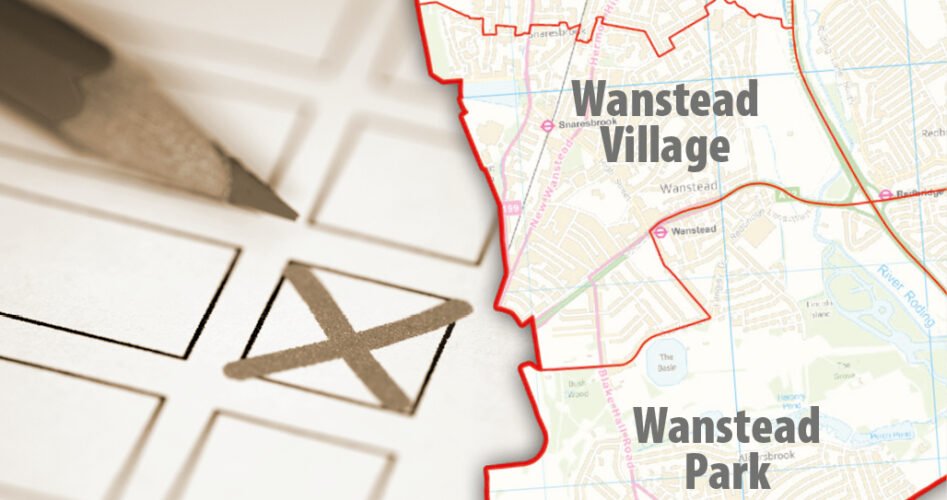
On 7 May 2026, Wanstead will join the rest of London in heading to the polls to vote in the local government elections. Except many of us won’t. Local council elections have notoriously low turnout: only 45% of the Wanstead Park ward electorate voted in the 2022 local elections, with Wanstead Village voters seemingly less engaged with a 43% turnout (although these figures were higher than many of the other wards across Redbridge). This is all despite the fact our councils have a huge impact on our everyday lives and our community.
As an MP, I know first-hand that local councillors often have a far greater ability to influence the day-to-day lives of constituents than I do. Your local council is responsible not only for waste collection and planning applications, but also for local education, social services, social housing, traffic management, environmental health and the provision of cultural services, amongst a whole host of other things.
Your local councillors represent the voice of your community when deciding how these services should be run. Councillors act as the link between the public and the council they are elected to serve. Despite this, many people don’t appreciate the enormous impact their local councillors can have on the quality of life in their community, and low voter turnout likely stems from a lack of awareness about the responsibilities of local government.
As with MPs, councillors are usually members of a political party, though some may choose not to belong to any party and are called independents. Redbridge is divided into 22 wards with three elected councillors for 19 wards (including Wanstead Village) and two councillors for three wards (including Wanstead Park), making 63 councillors in total.
Local councils across the country face significant financial pressures, limiting their ability to operate effectively. Outer London boroughs such as Redbridge have experienced pressures relating to population growth, housing patterns and demand for service. Despite these constraints, councils must continue to deliver vital public services, manage local infrastructure and continue to help shape and structure our communities.
No council is perfect, and that’s partly because far too many people disengage from local politics. If we want better local government policy, services and representation, we must take part in improving it. We can’t watch from the sidelines; we must use our vote. So, if you are not already on the electoral register, please register. The deadline to register for the May local elections is 11.59pm on 20 April, so don’t leave it until the last minute!
You can register to vote if you’re a British citizen or an Irish citizen. For more information, visit wnstd.com/register
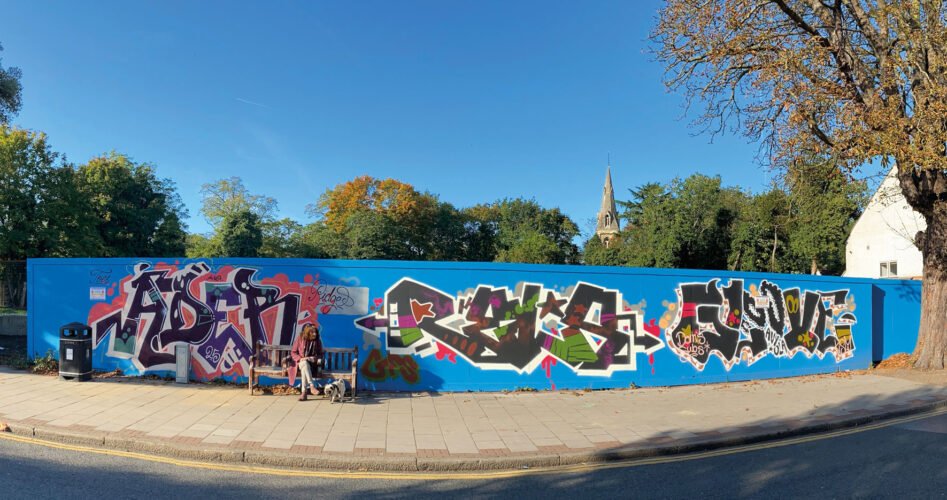
“The High Street hoardings could offer a canvas to reflect Wanstead’s character and creativity throughout the construction period. I’ve had some really good traction for the idea and would like to take this forward,” said local resident Bronagh Byrne, who is coordinating the initiative.
The meeting will take place on 21 March from 10.30am to 12.30pm at Christ Church.
Call 07906 541 789
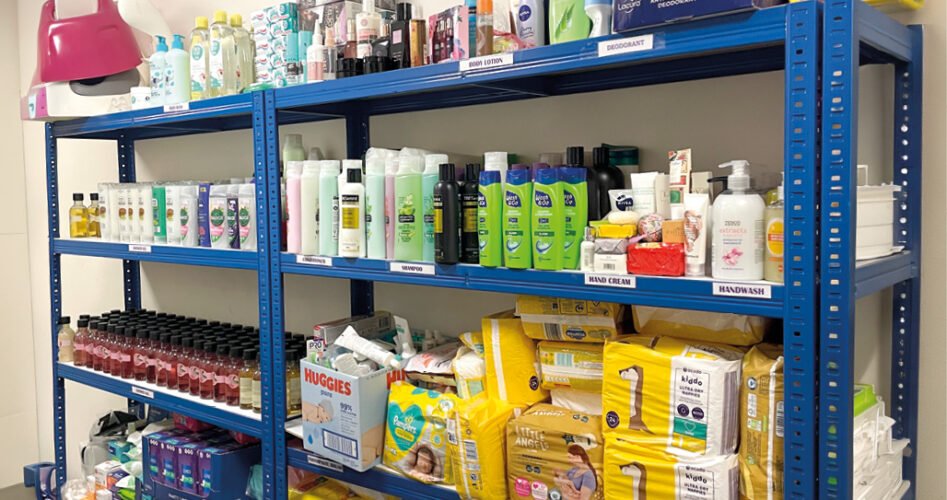
“We support residents in Wanstead and across Redbridge. As well as emotional support, the service also provides practical assistance through the Reach Out shop, offering free items for those in crisis. Community donations are vital to keeping the shop stocked. We welcome adult items, including toothpaste, deodorant and sanitary towels, as well as nappies and other baby essentials,” said a spokesperson.
Visit wnstd.com/reachout

One of Redbridge Music Society’s central aims is to introduce, promote and support new generations of young musicians. In Wanstead this month, soprano Madeleine Perring and collaborative pianist Matthew Clemmet will perform a variety of songs and arias, including those by Mozart, Debussy, De Falla and Grieg.
Soprano Madeleine Perring started her musical career as a chorister, and subsequently head chorister, at Wells Cathedral. Later, at the Royal College of Music (RCM), she graduated with first-class honours and, continuing there under soprano Rosa Mannion, gained a Master’s degree with distinction. She has been winner at a number of competitions, including the RCM Lieder Competition and the prestigious Royal Over-Seas League Singers Final 2025.
Madeleine has taken part in masterclasses with Sir Thomas Allen and tenor Nicky Spence, has performed operatic soprano roles, notably in Mozart’s Cosi fan tutte, and recently took part in the Wigmore Hall French Song Exchange, performing at Wigmore Hall and the renowned Salle Cortot in Paris. She recently joined the Royal Academy Opera Studio for which she will perform as Micäela in Bizet’s Carmen and will join the Academy Song Circle for performances at the Leeds Lieder Festival and the Wigmore Hall. Madeleine is currently a Garsington Opera Emerging Artist, an Andrea Bocelli Foundation Scholar and a Phillip and Dorothy Green Young Artist.
British collaborative pianist and chamber musician Matthew Clemmet read music at Christ Church, Oxford where he held academic and instrumental scholarships and graduated with a first-class degree in 2024. Whilst at Oxford, Matthew studied piano with Anna Tilbrook, worked as a répétiteur for student productions of Le Nozze di Figaro and Don Giovanni and frequently performed around Oxford as a soloist and accompanist. He made his concerto debut in 2024 playing Grieg’s A minor Piano Concerto with the Oxford University Philharmonia.
Matthew is a Shipston Song Festival Young Artist and won the pianist prize in the RCM Lieder Competition. He has performed in masterclasses at Wigmore Hall and accompanied Madeleine Perring’s winning recital in the Royal Over-Seas League Competition. He is currently pursuing postgraduate studies at RCM under the tutelage of Simon Lepper, Roger Vignoles and Kathron Sturrock, and is Russell Race Scholar for the 2025–26 academic year.
Please come along to hear and support these two outstanding young musicians.
The recital will take place at Wanstead Library on 17 March from 8pm (tickets on the door: £12; members: £9). Call 07380 606 767. Redbridge Music Society is affiliated to Making Music.

“Learn about influential women and draw inspiration from their words, stories and impact. You’ll be guided through simple embroidery techniques to create your own embroidered hoop featuring empowering quotes or original designs,” said a spokesperson. The family-friendly workshop will take place from 1.30pm on 31 March (£3 per embroidery set).
Visit wnstd.com/threads
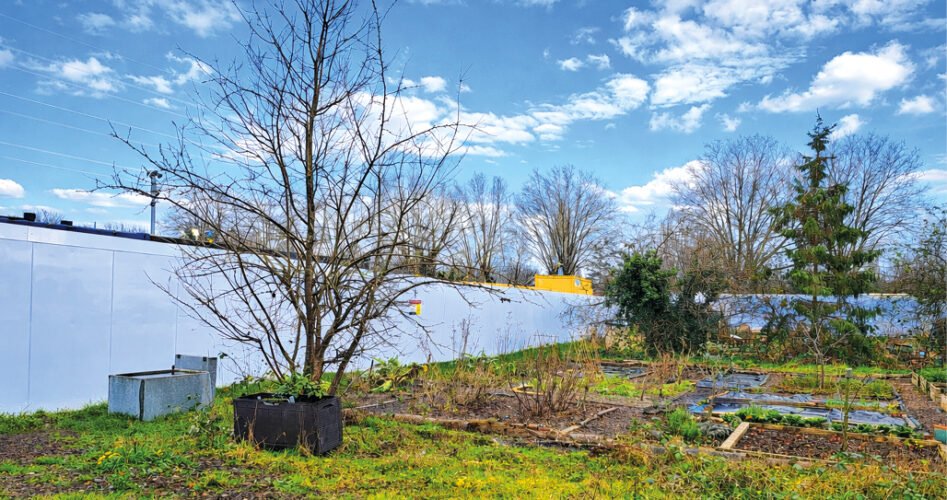
Five years ago, in March 2021, plot holders at Redbridge Lane West allotments were given the upsetting news that gas company Cadent intended to take over the site to carry out upgrade works to the adjacent gas compound.
After a campaign and very well-supported petition (more than 4,000 signatures in two weeks), Cadent had to change their plans to use the whole allotment site and instead were granted permission to use a smaller part of the site. After a while, plot holders learnt the upgrade work included the replacement of the security fence surrounding the Cadent site. This work required a slice of allotment land to be taken and added to the gas compound permanently. We were told the planned work would take two years to complete, during which time nine plot holders would lose their plots. Boundary trees and habitats would be removed and the whole area stripped and concreted over to provide Cadent’s works compound.
Planning permission was eventually granted in December 2022, although nine directly affected plot holders had to vacate their plots earlier in summer 2022. The abandoned plots quickly became overgrown, but clearance work and tree felling did not start until October 2024, well over two years after plot holders had been forced out. Three-metre-high hoardings were erected in April 2025 prior to ‘construction activities’ starting.
Four of the nine plot holders who lost their plots were comparatively fortunate. They were offered vacant plots elsewhere on the site. Others decided to leave all together and others agreed to take a ‘two-year holiday’ as proposed by Cadent. That two-year break has become four years and the displaced plot holders are still waiting for news of when they will be able to return. Cadent’s online timeline has not been updated since February 2024. It says ‘landscaping and planting’ will take place between January and April 2026, although there has been no sign of this happening.
In February, we received our first communication from Cadent since last August (despite a promise of monthly updates). It said ‘the majority of work has been completed on site. However, we are still undergoing work at the allotments to ensure the safe running and reliability of the gas mains’. There is no information about a completion date.
If the restored allotment plots are not available this spring, it will mean the displaced plot holders will have lost five annual harvests. Cadent previously told us that March 2026 was the end of the regulatory period for the work to be completed. Condition 13 of the planning approval says the allotment land must be reinstated to its former condition ‘within 20 months of commencement of the construction’. Sadly, the way things are looking, this does not seem likely.
For more information on Cadent’s plans, visit wnstd.com/cadent