
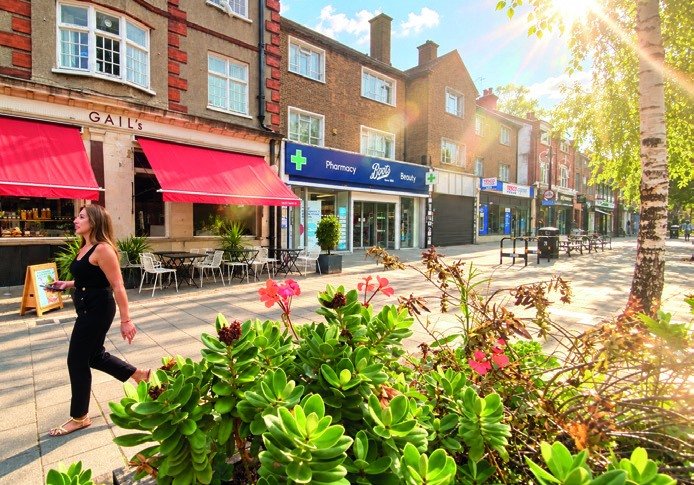
A survey by Wanstead Climate Action has revealed how this summer’s heatwaves affected local businesses. The group says better preparation is needed as extreme heat becomes more common. Sunil Kapur reports
Until recently, climate change tended to be seen in TV reports of melting glaciers or coverage from distant countries. Often, it wasn’t regarded as a direct issue for the UK, and when it was, it was often treated as something ‘in the future’. But in 2026, temperature records were repeatedly broken in the UK. From late May to late August, five heatwaves caused widespread disruption – school closures, extremely hot workplaces and transport disruption – and an estimated 2,700 excess deaths.
Wanstead Climate Action has conducted a survey to gauge the impact of the heatwaves on local businesses. A dozen outlets took part, including restaurants, a newsagent, flower shops and coffee shops.
Experiences varied: although one coffee outlet noted an increased demand for iced coffees, they also needed to close for several days until they received an air conditioning unit. Some reported lower footfall, resulting in much lower turnover. Other businesses found it difficult to keep temperatures bearable for workers, let alone customers. One restaurant had to close for 16 days, and when they did stay open, they faced other cost pressures, such as the price of tomatoes tripling.
One of the most significant findings was that local businesses and community organisations can become informal sources of support during extreme heat. Some shops reported customers coming in and asking to sit down because of the heat.
Extreme heat is already affecting businesses and community organisations in Wanstead in multiple ways. Heatwaves are affecting customer behaviour, turnover, staffing, stock, supply chains, operating costs and the ability of businesses to remain open. So, there is an urgent need to prepare before extreme heat arrives. Extreme weather is an economic, public health and community resilience issue. Local businesses can play an important role in community resilience: one outlet already had air conditioning and noted that some customers came in specifically for that reason.
The report will be presented to Redbridge councillors, Calvin Bailey MP, other Redbridge MPs and the media. It will also be shared widely with those involved in climate resilience – locally and nationally – such as the Fire Brigades Union. Wes Streeting, the Defence Minister and MP for Ilford North, has recently commented that the government is actively planning for extreme weather this winter.
Extremely hot summers are expected to become the norm in the future. As the report concludes: “The time to prepare for the next heatwave is before it arrives.”
MORE INFORMATION
For more information and to read the report in full, visit wnstd.com/hotst