One writer, one Interrail pass and a wildly over-ambitious, 37-stop journey to test railway accessibility in Europe. Wanstead-based travel writer Carole Edrich presents the sixth instalment of her Big Rail Story
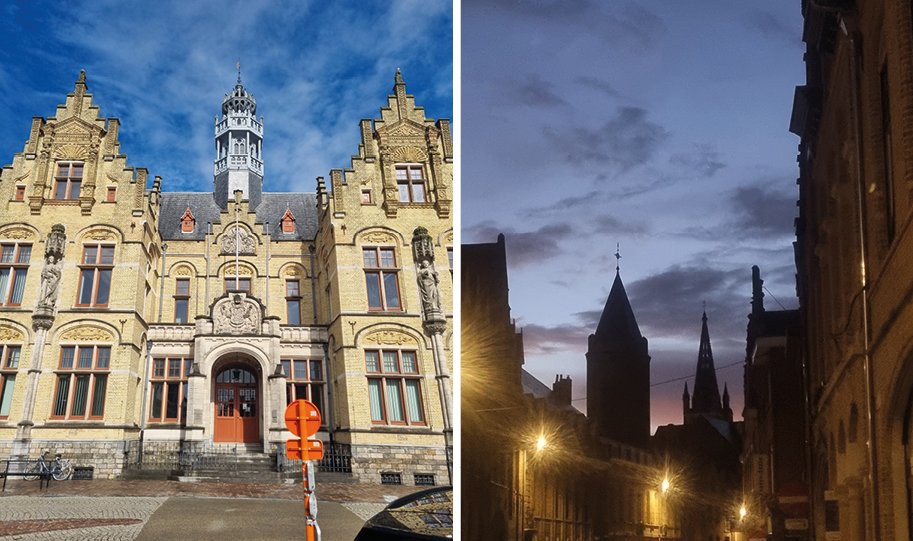
Ypres is my first proper stop. I mean, I know I’ve stopped and looked around at St Pancras, Lille Europe, Brussels and Ghent, but they weren’t proper stops, just little wanders. Tiny impromptu detours I could do because the Interrail app lets me change plans at the very last minute. I’m surprised as I walk to my hotel, having expected boring post-war buildings, not a vibrant city square with romantic renaissance and medieval architecture, and I guess I must have been wrong.
The super-accessible Flanders Fields Museum starts with a screening of Belle Époque splendour, wealth and optimism. The same screen’s back shows the era’s shadier side. My bracelet’s chip has matched me to four historical individuals; from my own region, of the opposite sex, of a different age and a ‘random’. I ‘meet’ them chronologically as I travel through the museum. One says the Tommies called this place Wipers! At the end of the hall is a row of long, simple banners. Each carries sequential lists of the wars we’ve had since the Great War, once expressed as the ‘war to end all wars’. They’re a lot.
In the same building (the Cloth Hall, rebuilt better post World-War-One onslaught) is the Yper Museum (yes, yet another spelling). As I learn about 11 centuries of rather eventful (and very accessible) history, I discover I was wrong about being wrong. While some wanted to rebuild their bombed city into something modern with clean 1920s architectural lines, those who wanted to rebuild in Flemish medieval and renaissance styles won. Unsurprising, since one of the latter was King Albert. Like with us and AI, their scope magically expanded, so the new Ypres (or Ieper, or Yper… whatever) holds medieval architecture where it never existed before. Inspired by local traditions and Bruges’ past, the highly planned new old Ypres was built back more medieval, more detailed, prettier and more creatively coherent than any real medieval city would be.
On the short walk back to my hotel (via the mandatory World War One themed coffee shop), I think of what I’ve seen. Of the interlaced history of the area, of the beauty of the architecture, of what I’ve learned of the city’s history, and the number of people with my surname who died in the Great War (not telling). I think of Ukraine-Russia, Palestine-Israel, America-Iran, Sudan, Myanmar, the Sahel, Eastern Congo-Rwanda, Somalia, Ethiopia-Eritrea, Cambodia-Thailand, Afghanistan-Pakistan, what’s happening to the Kurds, the Yazidis, in Colombia, Haiti, the Lebanon and South Sudan. Wars and insurgencies, genocides and betrayals… By the time I’ve been to the Menin Gate for the daily 8pm Last Post ceremony, I’m in tears.
That’s as it should be, I reflect, at far-too-early the next morning. Time to get up, get dressed, and move on.
For links to the places and to listen to Carole’s podcast, visit wnstd.com/rail