January 2020

News

Apprenticeship and training fair for local teenagers and young adults

12556656 - group of students in professional training12556656 - group of students in professional training

A local rugby club will host an apprenticeship and training fair on 8 February, for students aged 15 and over.

“There will be a CV clinic, interactive activities – including how to find your career online – and demonstrations by our members, from construction to forensics,” said a spokesperson for Eton Manor RFC. Wanstead-based North London Loft Rooms and Petty Son and Prestwich will be among the companies taking part. The event will take place at the club’s Nutter Lane grounds from 10am to 2pm.

Visit wnstd.com/skills

Features

How was that?

imagec1

Wanstead and Snaresbrook Cricket Club players Nanette Kritzinger and Saba Nasim reflect on their experiences representing England at the Indoor Cricket Masters Series in 2019

The 2019 Indoor Cricket Masters Series proved one thing: the England women’s team made their mark on the international stage in every possible way; performance, team spirit, sportsmanship, determination, friendship and courage.

Heading into the World Series 2019, England was considered the underdog and very much a developing country in the sport of indoor cricket, about to square up against the well-established masters of the game, Australia, New Zealand and hosts South Africa.

The fighting spirit of the England team could not be dampened, and it was soon clear that we are now becoming a force to be reckoned with. In our fifth appearance, we beat the mighty New Zealand by sticking to our game plan and ensuring the basics of the game were done right.

This moment was made even more special when we realised it was not just us celebrating this historic moment (this was our first ever win at a World Series competition), but also the local crowds and teams from other countries. Everybody there had an unstoppable passion for the sport and were excited by the prospect of the sport growing and developing in England.

The experience gained by each and every player in such a high standard tournament is immeasurable. Indoor cricket has many skill sets that can transfer and improve the players’ outdoor game. Players learn more control over the shots they play while batting by finding the gaps and scoring faster; their fielding becomes faster and more accurate; bowling becomes smarter, having to react quickly to the strengths and weaknesses of the opposing   batsman; and fitness levels increase drastically. All things considered, this is the ideal sport to play during the winter months in preparation for the outdoor season in the summer.

Wanstead and Snaresbrook Cricket Club is proud to say we had four players in the England Indoor Cricket Women’s Masters squad (Nanette Kritzinger, Saba Nasim, Natasha Bourke and Jen Liu).

We are now looking forward to our 2020 outdoor season, where we will be playing in the Essex Women’s Premier League for the first time since the Women’s Southern League removed the regional divisions. This is to allow the counties to create their own leagues (so teams have less distances to travel for matches) with the winner of each league competing in a semi-final and final for a place to go up into the Southern League Championship Division in 2021.

For more information on Wanstead and Snaresbrook Cricket Club, visit wansteadcricketclub.co.uk
News

Wanstead and Woodford Marie Curie fundraising group reach £100,000 target

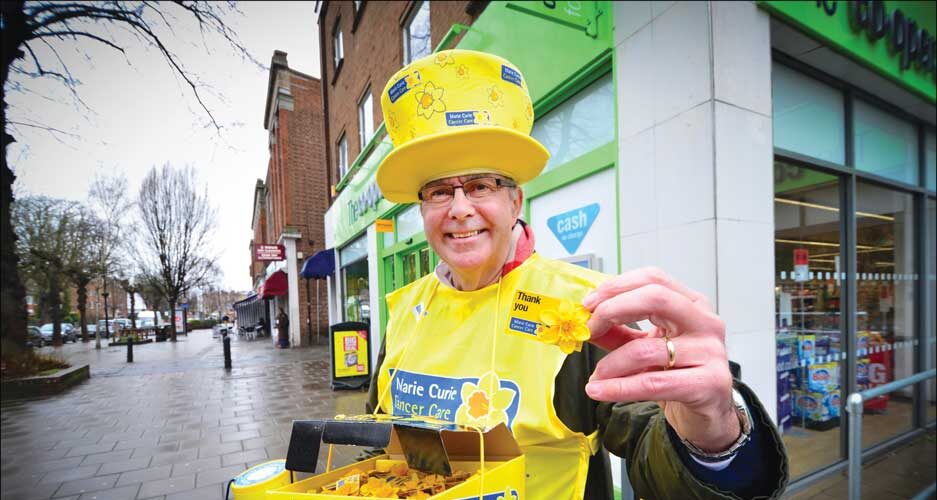
DSC_5178Marie Curie Fundraising on Wanstead High Street in 2013, the year the local group was formed. ©Geoff Wilkinson

The Wanstead and Woodford Marie Curie fundraising group has reached its target of raising £100,000 for the charity, which provides care and support to people with terminal illnesses and their families.

“This has taken six years to achieve, but we are finally there,” said a spokesperson for the group, which was formed in June 2013. To mark the achievement, a celebratory afternoon will take place at Wanstead House on 22 February from 2pm to 4pm. There will be a short talk on the work of Marie Curie, a cheque presentation and informal discussions over tea and biscuits.

“When we collect in the local area residents are so supportive and generous, and we would like to let them know how their small contributions add up and welcome them to celebrate with us if they want to drop in and meet us.”

Call 020 8989 2193

Features

Time to go digital

computer-1867758_1920

If the computing world has left you offline, make time for some digital discovery at Wanstead Library next month, says Rose Meredith, Development Librarian at Vision RCL

“I just can’t do that!” “That digital stuff isn’t for me, I can’t understand it.” “I’m a total failure at downloading.” “I can’t change!”

Do you sometimes feel the digital world has gone on without you and that you will never have a chance to get on board the digital highway? Ever found yourself declaring a story of your fate that cannot alter? Do you feel sure the digital world is really not a place for you?

Libraries have altered people’s perceptions throughout time, enabling people to access all kinds of information and participate in new worlds of knowledge. Public libraries have been in the forefront, more recently, in enabling anyone in the community to walk down the information super-highway, accessing books and knowledge, ideas and learning – for all age groups, no matter background or circumstances.

Stories are part of the human experience – shared in all kinds of ways amongst friends and families. At every point in the history of humanity, we have wanted to create new stories, travelling into a brave new world of knowledge. Today, the stories are changing.

Knowledge can extend into an untouchable digital world with a stroke on a computer – bringing to life books, images, maps, learning, movies, TV, radio, cartoons, drawing and art as well as bringing to our homes travel around the globe and indeed the universe, and allowing us to see the combined worlds of great libraries and famous museum collections (oh – and the very smallest local collections too!).

We can access a world of TV, music and entertainment from every part of the globe. The digital world introduces new ways of learning and discovering and using resources like online catalogues, biographies, art and dictionaries, as well as allowing us to socialise and meet new people, join groups and participate in our local communities. The internet enables us to reach out, have fun and build our knowledge in every aspect of human endeavour, culture and history.

Redbridge Libraries wants you to be part of this new digital world! To help you, we will be delivering sessions throughout February during Digital Discovery Time.

Having problems with accessing our online resources? Not quite sure where to start? We invite you to drop into one of our sessions and ask our friendly staff. They can show you our exciting and amazing range of digital resources. Let’s get digital!

Digital Discovery Time sessions will take place at Wanstead Library on 6 and 13 February from 11am to 12 noon (free; booking required; bring your own digital devices). For more information, call 020 8708 7400. To find out more about the digital services available at Redbridge Libraries, visit visionrcl.org.uk/digital
News

Now showing in Wanstead: two horticultural happenings

Screenshot 2020-01-27 13.05.00

The Wanstead Community Gardeners are keen to point out two horticultural happenings in Wanstead for the public to enjoy.

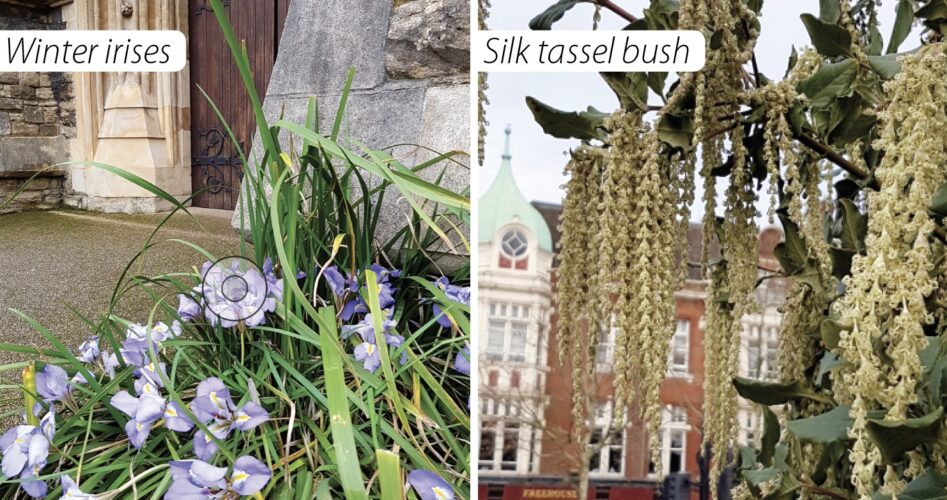
“There are winter irises at the Wanstead United Reformed Church on Grosvenor Road – four clumps of them. Originating in Algeria, they flower from October through to March and are exquisite! Plus, Garrya elliptica (silk tassel bush) – many shrubs around the station. They bear extraordinarily long catkins the whole winter. A sight for sore eyes!” said Marian Temple.

News

Caring for the resident swans of Wanstead Parklands

swan-2077219_1920

A charity dedicated to the care of swans will host an event in Wanstead Park on 2 February.

“Swan Sanctuary volunteers have been active in Epping Forest for many years…Last December, we rescued and operated successfully on one of the Heronry swans in Wanstead Park and returned him to the lake,” said a spokesperson.

The event – which will take place at the Temple from 2pm to 2.30pm (adults: £3; children: free) – will be followed by a guided walk to Perch Pond to observe the resident swans.

Visit wrengroup.org.uk

Features

Restoring Wanstead Park

p2Untitled-1©Richard Arnopp

In the ninth of a series of articles looking at the developing plans for restoring Wanstead Park, Richard Arnopp of the Friends of Wanstead Parklands reflects on the recent River Roding flooding

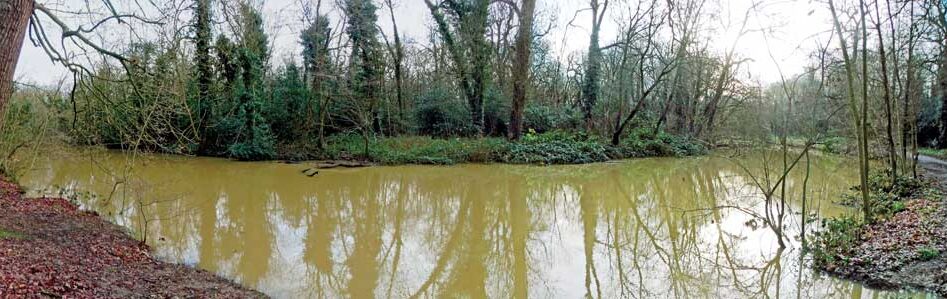
This winter, nature gave Wanstead Park an unexpected but very welcome Christmas present. On 21 December, after days of very heavy rain, the water level in the River Roding rose to its highest level for some years and inundated the Ornamental Water. Within hours, the flood began to recede, but several years of low water levels had been resolved at a stroke, with the lake filled to capacity.

The River Roding sits in a huge valley, the relic of its past as a seasonal torrent during the last glaciation, carrying vast volumes of spring meltwater from the ice sheets just to the north. Nowadays, for most of the year, it is a placid little stream, but sometimes during the winter months, it shows something of its old mettle, with significant flooding occurring every decade or so.

The Roding and the Ornamental Water have a close historical relationship, which looks likely to be revived in a new form, as I shall explain.

Prior to the creation of the lake, the natural course of the river as it ran through Wanstead Park isn’t altogether certain, though an engraving of circa 1708 suggests that part of it roughly followed what became the eastern arm of the later Ornamental Water behind the islands. At this stage, there were also two artificial canals, which were later partly subsumed into the lake as it developed.

The Ornamental Water as we know it first appears on a plan of 1725, though construction may have begun up to a decade earlier. The new lake utilised elements of the water features already present and was directly fed by the river.

The water level was sustained by a system of weirs. The original plan of the lake was modified at various times, most radically by 2nd Earl Tylney of Castlemaine, but probably reached something like its present form around 1760.

Around this time, or slightly later, the Ornamental Water was severed from the river, which was canalised behind it. The average water level in the river is now about eight feet lower than in the lake when it is full, and the lake is retained by two brick-faced dams. The owners of Wanstead Park retained the right to temporarily dam the river to top up or flush out the Ornamental Water, and this right was exercised into the 20th century.

The purpose of canalising the River Roding may well have been to mitigate the flood risk upstream from the park. In 1768 a stone bridge, planned in 1752, had been built at Woodford. Almost immediately this was destroyed by floods and had to be rebuilt in 1771. Further canalisation of the river has taken place over the years, most recently in connection with construction of the Barking Relief Road.

As the Friends of Wanstead Parklands have explained in previous articles, discussions are being held with the Environment Agency to allow winter pumping from the River Roding into the Ornamental Water. However, as well as demonstrating the potential for winter spate pumping to manage lakes levels, the recent flood also fits into the evolving strategy of creating planned overflow areas to reduce potential flood risk for residents and businesses along the river.

For more information on Wanstead Park and to join or donate to the Friends of Wanstead Parklands, visit wansteadpark.org.uk or email wansteadpark.org.uk@gmail.com
News

Wanstead Golf Club drive-in for incoming captain

032

Over 150 spectators attended Wanstead Golf Club’s annual drive-in for the incoming Club Captain Steve Johnston earlier this month.

“We watched Steve and the other new captains drive-in to their year in office. After the usual trick and novelty shots, Steve smashed his drive, a very creditable 178 yards against a strong wind. Members and guests then retired to the clubhouse for an afternoon of celebration, where Steve announced his charity for the year, Cancer Research UK,” said a club spokesperson.

Visit wnstd.com/golf

News

Litter pick proves ‘community spirit in Wanstead is second to none’

lp-1

Volunteers came out in strength this month to clean up Wanstead on the first litter pick of 2020.

“Some 12 adults and children gathered at Woodbine Place before fanning out to collect the debris and detritus of those who walk and drive around our streets. The result was a haul of 14 bags of rubbish collected… The turnout proves that the community spirit in Wanstead is second to none… This year will be a significant one, with new wheelie bins being rolled out and efforts increasing to clean things up,” said Councillor Jo Blackman.

Litter picks take place on the third Saturday of every month, meeting at corner of Woodbine Place and Wanstead High Street from 10am.

Additionally, litter pickers, bags and gloves are also available in the library for those wishing to pick in their own time.

Email Jo.Blackman@redbridge.gov.uk


News

Editor of leading floral art magazine to give talk at Wanstead Library

Screenshot 2020-01-27 13.23.57

The Woodford and District Floral Arrangement Group will hold its AGM and host the editor of the UK’s leading floral art magazine The Flower Arranger on 17 February from 7.30pm at Wanstead Library (visitors: £5).

“I will discuss the history of the magazine, how it has been inspiring floral artists for nearly 60 years and also its future now flower arranging has been taken up by the Instagram generation. Floral arrangements inspired by six decades of the magazine will also be on display,” said editor Chloë Bryan-Brown.

Call 020 8530 2427

News

Wanstead to Leytonstone Central Line track replacement delayed

station-1

The discovery of asbestos has caused delays to the replacement of Central Line track in the local area.

“We are replacing rail track between Wanstead and Leytonstone Tube stations to reduce noise levels… Ahead of work starting we identified some asbestos, which has now been dealt with by a specialist team to ensure the safety of staff and customers. As a result of this we have made some changes to the track replacement programme, but will complete it as soon as possible,” said a London Underground spokesperson.

Features

Talk yourself better

ariene-1Ariane with Richard Dawkins at the launch of the Atheist Bus Campaign. © Zoe Margolis

Paul Kaufman, Chair of East London Humanists, introduces Ariane Sherine, writer, comedienne and woman of many parts who will feature at the group’s Wanstead meeting this month.

Ariane Sherine, who lives in Leytonstone, will be talking about her extraordinary and eventful life journey and signing copies of her latest book at Wanstead Library this January.

Expelled from school at 16, Ariane started hanging around with Duran Duran and played piano on two of their tracks. Her journalistic career started at 21, reviewing records for NME. She was soon contributing to TV shows,  including Two Pints of Lager and a Packet of Crisps and Countdown, and spent time on the stand-up comedy circuit. She has gone on to write several books and is a contributor to The Spectator, The Guardian, The Independent, The Sunday Times and Esquire magazine.

Ariane has a young daughter and is a patron of Humanists UK. In 2013 she published the ebook Give: How to be Happy. She wrote in The Guardian at its launch about her lack of religious belief and her wish for her daughter to grow up in a kinder world. The book describes 10 practical actions we can all take to help achieve this. Ariane sold half of her possessions as part of the campaign and donated the proceeds to Médecins Sans Frontières.

But perhaps the best-known achievement initiated by Ariane was the Atheist Bus Campaign. Launched in 2009, the campaign grew at an astonishing pace. A total of £100,000 was raised in four days. It was taken up in over a dozen countries. Ariane thought up the campaign in response to the use of bus advertising by the Jesus Said organisation to promote their message that all non-Christians would burn in hell for all eternity. Ariane’s message was: “There’s probably no God. Now stop worrying and enjoy your life.” Even this simple retort was too much for some. It was criticised by George Carey, former Archbishop of Canterbury. Attempts to run similar campaigns in Russia, Italy and Australia were thwarted. And there was a backlash for Ariane. The hate mail she received from extreme Christians contributed to a breakdown.

The road to recovery prompted Ariane to write her book Talk Yourself Better: A Confused Person’s Guide to Therapy, Counselling and Self-Help. Reviews include: “What an excellent, long-overdue idea! A super-accessible guide, through the bewildering marketplace of modern therapy, to ease our noble search for help,” (Derren Brown); “How do we cope with this brutal world? In this witty, revealing book Ariane Sherine runs through the ways. An excellent, funny and thought-provoking read for all who seek answers,” (Arthur Smith).

There will be time for questions and discussion following Ariane’s presentation.

Ariane’s talk will take place at Wanstead Library on 27 January from 7.30pm (free; visitors welcome) – visit wnstd.com/elh. For more information on Ariane and her books, visit arianesherine.com
Features

Building Wanstead

IMG_0536-croppedPlans for 88–90 Nightingale Lane, originally known as 8–9 Laurel Bank, in 1892

Wanstead has changed considerably over the past 160 years. Ahead of a talk at Wanstead Library this month, Dr Colin Runeckles discusses his work cataloguing local building plans dating back to 1858.

The Heritage Section of Redbridge Central Library holds over 40,000 building plans for Ilford and 14,000 for Wanstead and Woodford. These range from an entire area, drainage and street plans, churches and cinemas, stables and garages, down to alterations to houses including installing WCs and additional bedrooms. The majority of the plans are folded and stored in individual envelopes and numbered for identification purposes.

However, it should be noted that not all plans are available – sometimes, the original list records that the plan is missing and what has been left may be a document relating to the building. Where the original list records the exact location of the building, this still has some use to researchers, but where we are left with simply ‘one house’ in a particular street, the value of the record diminishes greatly.

Ilford Historical Society member Carol Franklin took on the task of computerising the details of every Ilford plan onto Excel spreadsheets. The details include the following: plan number, month and year, building type, house numbers, company, street name, area of Ilford, number of houses, proposer, builder and architect. So, for example, if you wanted to look at every plan held by a particular builder – Cameron Corbett, for instance – this can be done very quickly by filtering the information held on the spreadsheet.

A volunteer subsequently made a start on the plans for Wanstead and Woodford and catalogued 1,500 plans dating from 1959 to 1963. Sue Page, Development Librarian, gave me the more exciting task of going right back to the beginning of the archive for Wanstead, dating from 1858. So far, I have catalogued up to 1924, and I’m aiming to finish Wanstead up to the point it joined Woodford in the new Borough Council in 1934 by January 2020. Part of my work is to reassign houses to their modern street number as so many were given individual names or terrace numbers when they were built.

As a researcher into the streets and houses of the borough, the original plans and the lists are invaluable for my work into the growth of the area. This is especially true for the years before the earliest detailed Kelly’s Directory of 1900, where knowledge of when roads were laid out or the first houses built can be sketchy, to say the least. I am also constructing a full list of roads for the area with the date of them being laid out.

Some of my findings will be the subject of a talk at Wanstead Library this month, entitled Building Wanstead, where I will show the development of Wanstead over the last 150 years or so through a number of these plans.

Colin’s talk will take place at Wanstead Library on 29 January from 2pm to 3pm (free; booking required) – visit wnstd.com/build. For more information, email heritage@visionrcl.org.uk
Features

Training your friend

0e4add37-f946-4ba9-b43d-14082d4ac2af

Colin Spence runs dog training classes in Snaresbrook and has been using force-free methods to discipline man’s best friend – and their owners – for 23 years. Here he explains why such classes are important.

In my view, a vital aspect of dog ownership should include responsibility for not only the animal’s welfare and wellbeing but also for their training needs. Most dog owners do train their dogs in their home and – as best as they can – in the outside environment as well. This is very good, in my opinion; at least they have done something to improve the diligence of their pet.

But training a dog is not as clear-cut as some might think. To get dogs to fulfil good, solid and trusted behaviours, we first need to understand how dogs actually think and learn how the environment plays a part in influencing the behaviour of every dog, no matter where that environment may be, indoors or outdoors.

Only when owners truly understand how easily dogs are influenced by – and how they learn from – the environment will they be closer to understanding how to add on the training side (operant conditioning). Dog trainers that are qualified and certified have invested time in their own education. Those that use humane training methods are the type of trainer all dog owners need, as they can rest assured they will get sound advice along with productive training for their dogs. Look for a trainer that runs structured classes with schedules each week.

Training classes offer dogs a safe environment in which to learn. As the owner, you too will learn how to use distractions and how to use the environment to your advantage. Ultimately, you will learn how to train your dog to be focused on you during the session. This is incorporated with your dog’s development around other dogs, learning how to be calm and sociable and able to relax while there is movement around them.

The trainer should be able to guide everyone in how to be consistent, including the tools owners should have to ensure the session runs smoothly, such as having the right type of harness that fits correctly and suits the individual dog.

Dog training also provides an education in the laws that come with owning such a special pet, and what that means to all that have a dog in their care. Classes provide the social network all dogs need, but they also teach the owner how to get the very best from their dog, by learning various training methods that are science-based and humane, and that reinforce good behaviours.

Colin’s K9 Training Services holds classes on Wednesday evenings (6.30pm and 7.30pm) at the Scout Hut at 72 Hollybush Hill in Snaresbrook (£10 per class). For more information, call 07931 460 451
Features

Wild Wanstead

68692026_xl

In the 19th of a series of articles charting the Wild Wanstead project, Alex Deverill encourages us all to resolve to do more to help local wildlife in 2020.

The latest State of Nature report published in October paints a sorry picture of the UK’s wildlife, which is continuing to decline due to factors like modern farming techniques, use of pesticides and urbanisation. But anyone with a bit of outdoor space can make a big difference. Here are six New Year’s resolutions to help nature thrive in Wanstead.

Love the trees you’ve got
We’re lucky in Wanstead to have some ancient trees in the parks around us. But mature trees in our gardens are just as important. Take the lime trees where I live. These trees are like a wild flower meadow in the sky. The leaves are eaten by many moth caterpillars and attract aphids, which are food for hoverflies, ladybirds and many species of bird. The flowers provide nectar and pollen for insects, particularly bees. Long-lived trees provide dead wood for wood-boring beetles and nesting holes for birds.

Plant a new tree
Billions of new trees are urgently needed to address the climate crisis, and they have the added benefit of helping wildlife too. TV gardener Joe Swift says some of his favourite garden trees include Cercis siliquastrum (Judas tree, 10m high, 9m spread), Amelanchier lamarckii (10m by 10m, but can easily be kept smaller), Malus ‘John Downie’ (crab apple, height 8m, spread 6m), Prunus x subhirtella ‘Autumnalis’ (winter-flowering cherry, 8m by 8m), Ilex aquifolium ‘JC van Tol’ (holly, height 6m, spread 4m) and Arbutus unedo (strawberry tree, 5m by 5m). Winter is the perfect time to plant a tree as a cheap, small, bare root sapling – so get that spade out!

Create a mini meadow
Flower-rich meadows support eight times more wildlife than close-cut grass. Just dig up a patch of turf and plant a wild flower seed mix this spring. Alternatively, sit back and let nature do her thing. Cut the grass just once in September – if you remove the cuttings every year to reduce the nutrients in the soil, wild flowers will gradually naturalise without you planting anything.

Plant native shrubs or a hedge
Hedges are brilliant. At the front, they provide a green barrier against pollution from cars. At the back, they create the twiggy, thorny habitat loved by small birds and hated by burglars. It’s not too late to plant one using bare root native species like hawthorn, dogwood, hazel, blackthorn and dog rose – and for evergreen, try beech and hornbeam (which keep their leaves in hedges), or yew, holly and privet. Why not work with your neighbour to swap your last fence panel for native shrubs to let hedgehogs move more easily between gardens?

Build a pond or water feature
Adding water adds a new dimension to a garden. Before you know it, it will be full of newts and a magnet for insects. Woodford Aquatics, just up the road, is great for advice and any materials you need.    

Green up hard surfacing
Nothing can live on a paving slab, so why not bring your drive or patio back to life in 2020? Lift bricks, slabs or gravel to find the earth, and plant pollinator-friendly shrubs like weigela, viburnum, sambucus nigra or hebe. Place a large, raised bed direct on the hard surfacing to create a new border (scaling up helps, but even big containers always need more watering than plants in soil). Or make the most of nooks and crannies with plants that can survive in smaller areas of soil like Mexican fleabane, Aubrieta, hardy geraniums, bellfower and thyme.

It’s not too late to stop the decline of our wildlife if we all make the most of the space we’ve got.

For more information on the Wild Wanstead project, visit wnstd.com/wild
Features

Restoring Wanstead Park

reptonoakRepton Oak by Richard Arnopp

In the eighth of a series of articles looking at the developing plans for restoring Wanstead Park, John Meehan, chairman of the Friends of Wanstead Parklands, reveals some of the park’s secrets and surviving features of its long history. Photo of the Repton Oak by Richard Arnopp.

Wanstead Park has had a variety of uses, styles and functions over hundreds of years. It has been a royal retreat, a deer park, a landscaped garden and, since 1882, a public open space managed as part of Epping Forest. Many surviving features of its long history are still there if you know where to find them!

If you enter Wanstead Park from its western end, through the Blake Hall entrance, you enter an area known as Reservoir Wood. Walk for perhaps 150 yards and you will come upon a magnificent oak to the right, with huge outstretched branches and with a newly cleared ‘halo’ around it. It is believed to be a ‘bundle tree’, which means it was not grown from one sapling but a number of young trees planted together in one hole. The object was to produce a large specimen tree with a spreading form, as all the stems merge into one huge, fluted trunk. This was a practice associated with the late Georgian landscaper Humphry Repton, and the tree is known as the ‘Repton Oak’ after him. Humphry Repton did produce proposals for Wanstead Park in 1813, in one of his last major projects, and the tree was probably planted not long after.

Reservoir Wood was named after a lake which once occupied the area. In fact, it stretched from the golf course to beyond Woodlands Avenue, and from Blake Hall Road to a large embankment, which is now cut by the path a little way beyond the Repton Oak. The Reservoir was drained by 1818, probably because of problems with the water supply. Its site was planted with a wood, perhaps to block the open view of Wanstead House from the public road.

The path continues to the east, past the Heronry Pond and, as you pass the second of the two islands, the Temple comes into view. Built around 1760, it seems originally to have been planned as a small building with an earth mound to the front, making it look as though it was sitting on top of a small hill, and looking like a beautiful Roman temple you would expect to see in the romantic 17th-century paintings by Lorrain and Poussin. At a slightly later date, or perhaps even while construction was still in progress, two brick wings were added, making the structure sit heavier within the landscape. Perhaps these were intended to house the menagerie, which we know the building was later used for.

Bearing around to the left of the Temple, taking the vehicle track to Warren Road, you will notice a huge evergreen tree, which is a yew. The path here leads past a big mound in the woods, which is covered in bluebells in the spring. This path leads out onto the Great Ride, and if you walk across the ride, you will find another, larger, mound. The two Mounts, as they were known, were roughly symmetrical features on either side of the Great Ride, designed to allow visitors to get above the highly formal garden to view the formal gardens, mazes and avenues. From above you could have made sense of the complex formal garden designs. The Mounts would have had a spiral path leading to their summits and the northern one seems to have been crowned by a little temple. Today, they are overgrown sentinels of a 300-year-old landscape that once covered huge areas, with avenues radiating out across Wanstead Flats to Leytonstone and Forest Gate.

The work of the Friends of Wanstead Parklands is to reveal these secrets in cooperation with the owners of the various parts of the park, the main owner being the Corporation of London. The landowners and other stakeholders, including the Friends, have jointly created a Parkland Plan, which sets out a long-term restoration and management programme that respects history, people and nature.

To join or donate to the Friends of Wanstead Parklands, visit wansteadpark.org.uk or email wansteadpark.org.uk@gmail.com
Features

The old East End

SCF5868

In the third of a series of articles, local photographer Geoff Wilkinson discusses his new exhibition – entitled ‘Quick! Before it goes’ – depicting London’s East End, an area which resonates with many residents here.

A walk around London’s East End is now a fascinating experience. The changes are enormous, as I have discovered on this latest photographic odyssey for my current exhibition. Buildings and whole streets have disappeared, often replaced with modern glass and steel structures our parents and grandparents would never recognise.

Visitors to my photography gallery in Wanstead had talked about their parents’ lives and childhood memories of playing on the streets of Bethnal Green, Bow, Mile End and other parts of the East End.

It was the night I got off the DLR at Canning Town station to take some more photographs that it suddenly became a more personal journey. My grandfather’s house, now long gone, on Bidder Street was next to the railway line and what was known at that time as ‘Peggy Leggy Steps’, the pedestrian footbridge over the railway. This was part of my East End playground when we visited him and my grandmother. The ‘Steps’ have been replaced by Star Lane DLR station. When lit at night, it acts as a beacon for shift workers finishing in the darkness. The Woolwich ferry, connecting the north and south of the River Thames, was always a Sunday morning treat with my grandfather. Being on the boat as it moved through the river those few hundred yards was a real adventure. It was that memory which led me to take the photograph on these pages of the ferry named the Dame Vera Lynn.

This photograph, although not what you might think of as a typical east London scene, sums up everything for me, with the new East End (Canary Wharf) behind the ferry and the old dock cranes on the right symbolising the past.

Geoff’s exhibition of East End photographs runs until 1 March at Gallery 84 on Nightingale Lane, Wanstead, E11 2EZ. For more information, call 020 8530 1244 or visit wnstd.com/gw
News

Improve your birdwatching skills in Wanstead Park this month

ffare-1.cropFieldfare

Residents are invited to join the Wren Wildlife Group for a bird spotting walk through Wanstead Park as part of this month’s RSPB Big Garden Birdwatch.

“We’ll be looking at a variety of wintering ducks – including gadwall, shoveler, pochard and tufted ducks – on the park’s lakes. And we’ll be searching through the bare trees for fieldfares, redwings and siskins. And there may be the odd surprise as well!” said Tim Harris. Participants will meet at the park’s Temple at 10am on 25 January (free).

Call 07505 482 328

Features

Listen and learn: Redbridge Music Service

DofE_117Redbridge Music Service students

In the 20th of a series of articles, David Bird discusses the work of Redbridge Music Society and Redbridge Music Service, whose students will be performing in Wanstead this month.

Two main aims of Redbridge Music Society are to promote and support up-and-coming young musicians, especially those residing within the borough, and to bring a diverse range of musical styles and genres to the people of Redbridge at easily accessible venues. Both aims will be realised when the students of Redbridge Music Service put on a recital at Christ Church, Wanstead this month. 

Based at the John Savage Centre, Barkingside, Redbridge Music Service is the gem in Redbridge’s musical crown. It is a lead partner within the North East London Music Education Hub (NELMEH), and through the many years of its existence, the Music Service has nurtured numerous talented young musicians, a large number of which have gone on to become professional musicians.

Currently, music has the status of being a statutory subject and is an entitlement for pupils up to the age of 14 in schools that follow the National Curriculum. Pupils should have access to both live and recorded music and Redbridge Music Service, via a programme of recitals, ensures pupils have first-hand experiences of music through live performances. The Music Service presents about 50 annual concerts, ranging from pupil concerts at the John Savage Centre to major events at Redbridge Town Hall. Every two years the Music Service puts on the renowned Redbridge Schools’ Choral Festival at London’s Royal Albert Hall.

Learning a musical instrument can significantly improve important developmental qualities, such as self-confidence, imagination and creativity, memory and co-ordination skills and communication, team and social skills – skills which also greatly benefit other areas in the school curriculum. To this end, Redbridge Music Service provides a wide range of instrumental and vocal tuition in schools – even at nursery and reception level – throughout the borough. Instruments can be hired from the Music Service’s Instrument Centre at the John Savage Centre.

The Music School encourages its students to explore music from a wide range of historical periods, genres and traditions. This will certainly be evident at the forthcoming recital at Christ Church when the students will perform an eclectic mix of music and musical styles. Their recitals are always a popular and well-attended event and are now a standard annual feature in Redbridge Music Society’s calendar. Please come along and support our exceptional home-grown talent!

Students of Redbridge Music Service will perform at Christ Church, Wanstead on 21 January from 8pm (tickets on the door: £7). For more information, call 07380 606 767. Redbridge Music Society is supported by Vision Redbridge Culture & Leisure and is affiliated to Making Music.
Features

How low can we go?

bke-2

A consultation on an initiative to make Wanstead a Low Emission Neighbourhood launches this month. Councillor Paul Donovan urges you to have your say in making the area cleaner and greener.

We are lucky to live in Wanstead – a green area, with parks, trees, waterways and open areas. There are, however, many environmental challenges. These include worsening pollution, climate change and loss of biodiversity. Redbridge Council and local people are seeking to address these challenges together.

Wanstead is fortunate to have a burgeoning environmental movement looking for ways to improve life.

Modern transport systems face many obstacles in seeking to improve ways of getting around, whilst also ensuring that the planet on which everyone depends for life is not destroyed in the process.

There are moves afoot to address some of the problems of pollution and traffic congestion in the area. The council is encouraging electric cars, with charging points being installed across the borough. There are also plans for more cycle hangars.

The Low Emission Neighbourhood (LEN) scheme is being introduced – based on the London Mayor’s target of getting 80% of journeys to be by foot, cycle or public transport by 2041.

LEN for Wanstead goes out to consultation from January and is supported by all Wanstead councillors. It is aimed at making life better for those three types of travel. Objectives include improving air quality, creating safe areas around schools and safer junctions, reducing rat runs, providing a wider range of transport options, improving station access, encouraging safe speeds and generally improving the urban environment.

In addition to this scheme, there is the Ultra Low Emission Zone being brought to the area by the London Mayor in 2021. This will also help to make the air cleaner.

There is, of course, still much to do. The plans of London City Airport to expand its operations is not conducive to a cleaner, greener environment. Redbridge, together with a number of other councils, has expressed its opposition to the plans. But people also need to take personal responsibility: drive and fly less, and think about the environment and people around us.

In Wanstead, we are lucky to have a community that really is concerned about the environment and keen to engage with change. Change is on the way, so make sure you are part of it by getting involved in things like the LEN consultation. There is also the great work of local groups like Cleaner Green Wanstead, Wanstead Climate Action, Friends of Wanstead Parklands and the Wren Wildlife Group – all are keen to welcome new supporters. Together, we can make a cleaner, greener Wanstead.

Features

Stems, Scent & Snowdrops

IMG_2208A view of Ruth’s garden on Empress Avenue in Aldersbrook

Ruth Martin, Chair of the Aldersbrook Horticultural Society, will be talking about winter gardens at the group’s January meeting. Here, she offers tips for keeping your garden interesting in the bleaker months.

At January’s meeting of the Aldersbrook Horticultural Society, I will be speaking about gardening for winter interest, using my training  as a garden designer and my Royal Horticultural Society (RHS) qualifications to explain how to make sure the garden is as interesting in December, January and February as it is in June, July and August.

For me, this has become even more important in my retirement, because now I look out on to my garden every day and not just at the weekends – the only time I used to be at home during daylight hours!

At the event, I will look at using evergreen shrubs to create a framework in a bed or border, using as examples, shrubs which flourish in my own garden and in local gardens such as yew, choisya, fatsia japonica and sarcococca, as well as shapely conifers. I will also show how herbaceous perennials, which are evergreen or semi-evergreen, can be used in the border to avoid the all brown look of the winter garden, for example, penstemon, acanthus and vinca.

Using examples from the winter gardens at RHS Wisley, the Saville Garden in Windsor Great Park and at Anglesey Abbey, I will show how plants with coloured stems can really light up a winter garden, especially if they are planted with an eye to colour and contrast.

In my own garden, I have planted cornus, using their orange stems to contrast with the silver trunk of birch trees and red stems against a backdrop of brachyglottis, a low-growing evergreen shrub.

Shrubs that flower in the winter have a very strong perfume to attract the lone bees that will still be flying at that time. My favourite is the Daphne, which has a heavenly scent, but there are plenty of others like sarcococca, mahonia and hamamelis. As well as talking about the above, I will also be looking at the tiny delicate bulbs that grow in winter – snowdrops, aconites and Iris reticulata. These can be planted in pots, tubs and window boxes as well as in borders in the garden. They provide a dash of colour, sometimes peeping through the snow in January and February, a time of the year which can be bleak.

We also hope to organise a members’ visit to the winter gardens at Anglesey Abbey in the middle of January – please contact me if you are interested.

Ruth’s talk will take place at Aldersbrook Bowls Club, 34 Aldersbrook Road, on 14 January from 7.30pm (visitors: £5). For more information, visit wnstd.com/ahs or email eruthmartin1954@gmail.com
News

Enjoy a party night with your artist neighbours

20191211_151558At the Art Trail Wanstead 2019 party thrown by sponsor Stow Bros

It’s party time for members of Art Group Wanstead on 23 January.

“As the group plans for the 2020s after running Art Trail Wanstead for a decade, new ideas and organisers will be needed. A short meeting will be held at the beginning of the night… Please bring some finger food to share; a bar will be available,” said group founder Donna Mizzi. Artists interested in joining the group (membership is free) are welcome to attend the event, which will be held at Wanstead House community centre from 7pm.

Visit wnstd.com/art

Features

Rebels with a Cause

IMG_9662Members of Wanstead Climate Action at last October’s protests in London

When Wanstead Climate Action hit the streets to draw attention to the climate emergency, they also had the mammoth task of answering the public’s concerns. Vanya Marks offers an explanation.

“Get a job!”“You’re a hypocrite!” “It’s all China’s fault!” Becoming a climate activist has been a baptism of fire and the Extinction Rebellion I joined in October was nothing short of an emotional whirlwind. Two weeks swinging between joy and hope to despair and anguish left me an empty husk at the end of it.

I could only have got through the ups and downs thanks to the group of amazing Wanstead folk who have teamed up to form Wanstead Climate Action. During the rain-soaked fortnight of protest, we laughed, we cried, we sang, we marched and mostly, we tried to draw attention to the climate emergency – through peaceful means… and a little bit of civil disobedience.

For us law-abiding citizens, this wasn’t something we did lightly. But the powers that be have known about the dangers of climate change for decades and have had years to act on the multiple threats we face. These include loss of biodiversity, species extinction, air pollution, deforestation, melting ice caps and sea levels rising, ocean acidification, soil degradation and extreme weather changes; the list goes on. And thanks to the heroic efforts of activists like Greta Thunberg and figures like David Attenborough, these are now getting on the agenda like never before.

However, Extinction Rebellion (XR), with whom we align ourselves, believes that the government, despite Parliament announcing a climate emergency last spring, has not done anything near enough to address the problems. According to the United Nations, global heating of 1.5°C above pre-industrial levels will carry risks for nature and people – but these risks will still be less than higher temperature rises, which is why it’s such an important target. To contain warming at 1.5°C, man-made carbon dioxide emissions would need to be cut by nearly half in the next decade and reach ‘net zero’ by mid-century. UN scientists say this will need rapid, far-reaching changes in land and energy use, industry, buildings, transport and cities.

By taking to the streets, blocking roads around Westminster, gathering at financial institutions in the City and at London City Airport, plus multiple other marches and protests, XR is trying to make the government act before it’s too late. When the government isn’t taking necessary action to look after its people, we think civil disobedience becomes a duty.So, apologies Wanstead for any disruption you may have faced but that was, we hope, temporary. The unimaginably catastrophic consequences to human, and all, life on this planet could be permanent and irreversible. So, let’s keep up the pressure, because there’s still hope to save some of it, if we act now.

Right, back to my day job because, yes, I’ve got one.

To contact Wanstead Climate Action, visit wnstd.com/wca or email wansteadclimateaction@gmail.com
Features

Old enough to…

121271195_s

In the sixth of a series of articles looking at the work of Age UK Redbridge, Barking and Havering, Priti Mistry offers more advice on how older people can prepare themselves for the winter season.

Now that winter is upon us, most homes will have had the heating switched on for several months. However, for some older people on a low income, they sadly end up leaving their heating off to make ends meet and to be able to manage their money. Therefore, I want to share some tips that will help us all to get through the colder days and months.

Keeping warm indoors
If you’re sitting down, wrap up with a shawl or blanket. You could even pop your feet up on something as the air’s cooler at ground level. If you struggle to stay warm in bed, socks and even a hat can really help you keep warm. Use a hot water bottle, heat bag or an electric blanket to warm the bed – but never use a hot water bottle and an electric blanket together.

Keeping your home warm
Lower temperatures increase the risk of flu and other breathing problems and can raise your blood pressure. When you’re older, your blood pressure takes longer to return to normal once you get cold, increasing the risk of heart attacks and strokes. The colder your home, the higher the risk to your health. Close your curtains at dusk to keep the heat in. You may even want to fit thermal linings to them if you can. Keep the rooms you spend the most time in warm. It might seem obvious, but make the most of individual radiator thermostats and keep the temperature higher in the rooms you use most.

Get a personal alarm
Winter can knock our confidence. You may not feel as steady on your feet, or you may feel a little more isolated than usual. A personal alarm can help reassure you and loved ones. If you fall or you’re unwell, it connects you to a 24-hour call centre. You simply press a button on a pendant you wear around your neck or wrist and talk to someone who will contact a chosen person to help you – usually a neighbour, friend or relative or the emergency services. London Borough of Redbridge run the Lifeline & Telecare service, helping Redbridge residents to live independently in their own homes (call 020 8708 5897).

Extra help with heating costs
It can be tempting to keep the heating off and struggle through the cold to keep bills down. But there are benefits and discounts available to help you keep your home warm. Most people born before 6 April 1954 are entitled to the Winter Fuel Payment in 2019–2020 to help with heating costs. This is a tax-free payment of between £100 and £300 paid to you between November and December (call 0800 731 0214). If you’re finding it difficult to keep up with your energy bills, get in touch with your supplier. You might be able to set up a repayment plan or have a prepayment meter installed.

For more information on Age UK Redbridge, Barking and Havering, call 020 8220 6000 or visit wnstd.com/ageuk
News

Seventy people register as stem cell donors at school Christmas fair

20191211_082734Ali Maclaine’s children with donor registration forms and swabs, used to take cheek swabs from potential donors

Some 70 people registered as potential stem cell donors at Wanstead Church School’s Christmas fair last month.

“This initiative was inspired by an amazing five-year-old girl from the school who has received a bone marrow donation to treat her leukaemia,” said Ali Maclaine. Registrations have continued since the event, with an additional 16 now added to the list. “We want to get to 100 new potential donors… If you are healthy, aged between 18 and 55 and have 10 minutes to spare, please get in touch.”

Email redsunhope@gmail.com