July 2026

Features

Big Rail Story

WVD-JUL-2026-rail© Carole Edrich

One writer, one Interrail pass and a wildly over-ambitious, 37-stop journey to test railway accessibility in Europe. Wanstead-based travel writer Carole Edrich presents the sixth instalment of her Big Rail Story

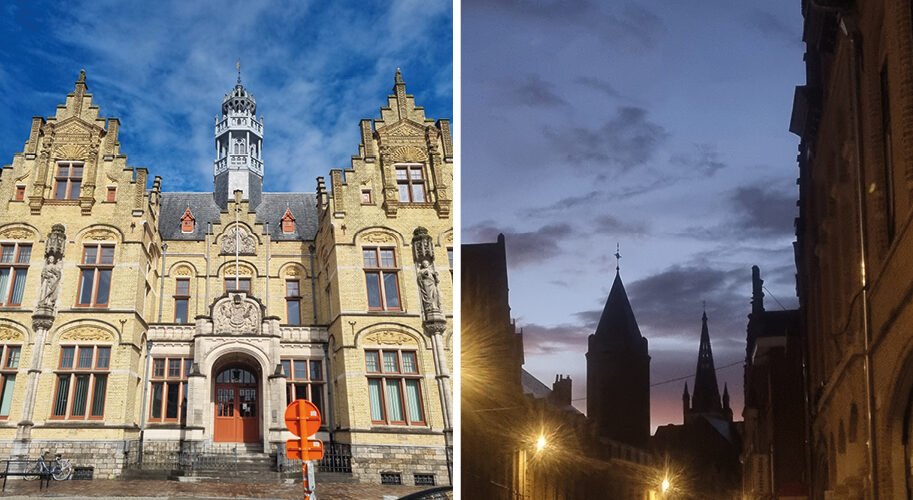
Ypres is my first proper stop. I mean, I know I’ve stopped and looked around at St Pancras, Lille Europe, Brussels and Ghent, but they weren’t proper stops, just little wanders. Tiny impromptu detours I could do because the Interrail app lets me change plans at the very last minute. I’m surprised as I walk to my hotel, having expected boring post-war buildings, not a vibrant city square with romantic renaissance and medieval architecture, and I guess I must have been wrong.

The super-accessible Flanders Fields Museum starts with a screening of Belle Époque splendour, wealth and optimism. The same screen’s back shows the era’s shadier side. My bracelet’s chip has matched me to four historical individuals; from my own region, of the opposite sex, of a different age and a ‘random’. I ‘meet’ them chronologically as I travel through the museum. One says the Tommies called this place Wipers! At the end of the hall is a row of long, simple banners. Each carries sequential lists of the wars we’ve had since the Great War, once expressed as the ‘war to end all wars’. They’re a lot.

In the same building (the Cloth Hall, rebuilt better post World-War-One onslaught) is the Yper Museum (yes, yet another spelling). As I learn about 11 centuries of rather eventful (and very accessible) history, I discover I was wrong about being wrong. While some wanted to rebuild their bombed city into something modern with clean 1920s architectural lines, those who wanted to rebuild in Flemish medieval and renaissance styles won. Unsurprising, since one of the latter was King Albert. Like with us and AI, their scope magically expanded, so the new Ypres (or Ieper, or Yper… whatever) holds medieval architecture where it never existed before. Inspired by local traditions and Bruges’ past, the highly planned new old Ypres was built back more medieval, more detailed, prettier and more creatively coherent than any real medieval city would be.

On the short walk back to my hotel (via the mandatory World War One themed coffee shop), I think of what I’ve seen. Of the interlaced history of the area, of the beauty of the architecture, of what I’ve learned of the city’s history, and the number of people with my surname who died in the Great War (not telling). I think of Ukraine-Russia, Palestine-Israel, America-Iran, Sudan, Myanmar, the Sahel, Eastern Congo-Rwanda, Somalia, Ethiopia-Eritrea, Cambodia-Thailand, Afghanistan-Pakistan, what’s happening to the Kurds, the Yazidis, in Colombia, Haiti, the Lebanon and South Sudan. Wars and insurgencies, genocides and betrayals… By the time I’ve been to the Menin Gate for the daily 8pm Last Post ceremony, I’m in tears.

That’s as it should be, I reflect, at far-too-early the next morning. Time to get up, get dressed, and move on.


For links to the places and to listen to Carole’s podcast, visit wnstd.com/rail

Features

Trial & Error

WVD-JUL-2026-eds

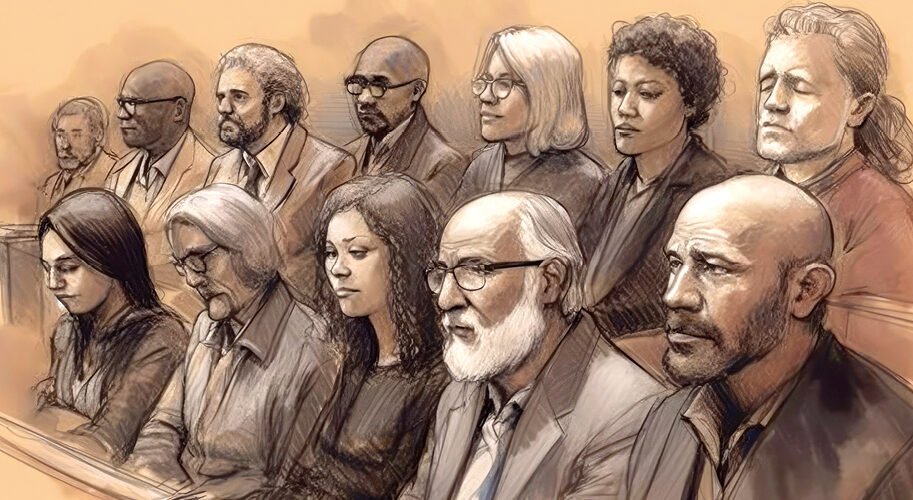
The government’s plans to restrict the right to trial by jury to tackle the Crown Court backlog amounts to the quiet dismantling of British justice, says Stephen Davies of local solicitors Edwards Duthie Shamash

The Crown Court backlog stands at a record 80,000-plus cases, more than double the pre-pandemic level of around 38,000 (2019). Trials are now being listed as far as December 2030, and soon it will be beyond that. Victims wait years for justice. Defendants languish on bail or in custody, unable to get on with their lives. Yet instead of fixing the root causes, Lord Chancellor David Lammy MP is pressing ahead with proposals to curtail trial by jury for most ‘either-way’ offences (offences that can be tried either in the Crown Court or Magistrates Court). This is a dangerous distraction.

In 2021, the government falsely claimed the pandemic caused the backlog. The crisis was already exploding before COVID. Court closures and savage austerity cuts, particularly to criminal legal aid, resulted in the justice budget being slashed. In 2010, there were 923 courts. By 2019, just 628 remained, with most of those court buildings in disrepair. Crown Court sitting days (the number of days the Crown Courts are funded to hear cases) had fallen from 110,000 to 86,000. The backlog was rising fast.

Reports from the Crown Prosecution Service Inspectorate, Crest Advisory, the Institute for Government and the Public Accounts Committee all warned of the same thing: years of underinvestment had left the system on the brink. The pandemic simply poured fuel on the fire by suspending jury trials. Post-pandemic, a slump in court productivity has made it worse still and new cases continue to outpace disposals.

Scrapping or restricting jury trials for most cases will deliver statistically negligible relief. Leveson suggested a 20% time-saving without any evidence to back it up. In reality, it would free up only a fraction of hearing days while the real drivers – insufficient court capacity, crumbling buildings, lawyer shortages and endless new cases – remain untouched. The Institute for Government and legal experts have repeatedly said the same: this is not a solution to the backlog; it is window-dressing. What it will do is destroy public confidence. Jury trials are not a luxury. They are a constitutional safeguard that put ordinary citizens, not the state, at the heart of justice. Most people will only recognise the value of a jury trial when they have been wrongly accused of a crime. Karl Turner MP has warned the proposal to restrict them is undemocratic, unnecessary and ineffective.

Once you surrender jury trials, you will never get them back. This is not ‘modernisation’. It is the permanent weakening of the one institution that has protected liberty for eight centuries. The backlog demands more courts and more judges, not the quiet dismantling of British justice.


Edwards Duthie Shamash is located at 149 High Street, Wanstead, E11 2RL. For more information, call 020 8514 9000 or visit edwardsduthieshamash.co.uk

Features

Photo and story

WVD-JUL-2026-p2All images © Hank Bishop

In the ninth of a series of articles featuring images by the Woodford and Wanstead Photographic Society, Anuraj Theivendram introduces well-travelled, long-distance member Hank Bishop

This month, the Woodford and Wanstead Photographic Society (WWPS) is delighted to spotlight a remarkable photographer who, despite living thousands of miles away in the USA, has become an enthusiastic and valued contributor to our community: Hank Bishop.

Hank’s photographic journey is anything but ordinary. Before turning his eye to the wider world, he spent his career as a cardiologist, interpreting echocardiograms and performing cardiac catheterisations (or ‘catheterizations’ as Hank would spell it). This line of work demanded precision, close observation and an ability to read the stories hidden within images. As Hank explains, this lifelong habit of “looking closely, noticing details and appreciating the stories that images can reveal” naturally evolved into a passion for photography.

Travel has long been central to Hank’s life. Together with his wife, he has explored an extraordinary 56 countries, each journey deepening his appreciation for the diversity of landscapes, cultures and wildlife encountered along the way. Photography became the perfect companion to these travels; a way not only to document beauty, but to preserve the human warmth, fleeting moments and natural majesty that give each place its meaning.

Hank’s portfolio reflects this breadth of experience. His landscapes celebrate the scale and serenity of the natural world; his portraits capture the character and dignity of people whose stories might otherwise go untold; and his wildlife images reveal both the power and vulnerability of the animals he encounters. His work is thoughtful, observant and deeply connected to the environments he photographs, a continuation of the same sensitivity that shaped his medical career.

We are proud that Hank is part of our WWPS family, and we look forward to sharing more of his work with our members. If you would like to learn more about WWPS and what we do, please visit our website for details.


For more information on the Woodford and Wanstead Photographic Society, visit wnstd.com/wwps

Features

Listening for the Climate

WVD-JUL-2026-climate

Climate anxiety can feel overwhelming, but Wanstead’s Climate Café Listening Circles offer a calm, supportive space to share feelings and build resilience around the climate and nature crisis, says Liz Bodycote

How can we face the seriousness of the climate and nature crisis without feeling overwhelmed by helplessness, anxiety for our children and grandchildren or anger at political inaction? Daily life is already demanding enough: there’s always more to do than time allows and the cost of simply getting by seems to rise every day. To consider the wider picture of our planet can feel like tipping into a sea of doom, when all we want is to keep our heads above water and remain positive for those we love.

Perhaps you are in a more comfortable position. You’ve worked hard to build a secure life for yourself and your family and you’re thankful not to have constant financial worry. There’s room now for more of life’s pleasures than when you were younger, and thinking about the state of the planet might feel like an unwanted burden.

Being in touch with the costs of our way of life on the Earth is profoundly difficult, maybe even impossible. As humans, we cope in many different ways. Some deny the science or turn a blind eye; others take bold action, sometimes to the point of exhaustion. There can be many staging posts along the way: experiences of shock, grief, anxiety, anger, despair, cynicism or hope; the wish for repair, resilience, collaboration, change.

The Climate Café Listening Circle offers a simple structure for expressing and hearing these complex responses to the climate and nature crisis in a supportive, collaborative setting. Inspired by Death Cafés, which provide a space to share feelings around bereavement, the Climate Psychology Alliance (CPA) and other organisations have adapted the model for climate concerns.

In a Climate Café Listening Circle, there are no speakers or action plans; just a warm, welcoming atmosphere where individuals can speak from the heart about what’s on their minds and be listened to.

Sharing in this way can bring relief, enable conversation and reduce the sense of taboo around discussing climate and nature in daily life. In this way, it can nurture both personal and, for some, political agency.

Two of us trained in the CPA approach began hosting Climate Café Listening Circles last year at Wanstead Quaker Meeting House, generously provided rent-free by Wanstead Quakers. Words that have emerged from participants about their experience include: gratitude, community, inspiration, solace, rejuvenation and balance. If you’d like to find out more or attend a future Climate Café Listening Circle, please get in touch.


Climate Café Listening Circles will take place on 25 July, 3 October, and 5 December at Wanstead Quaker Meeting House, Bush Road, E11 3AU (10.30am; free; booking required). For more information, email liz.bodycote@googlemail.com

Features

Stitches in time

_DSC1354

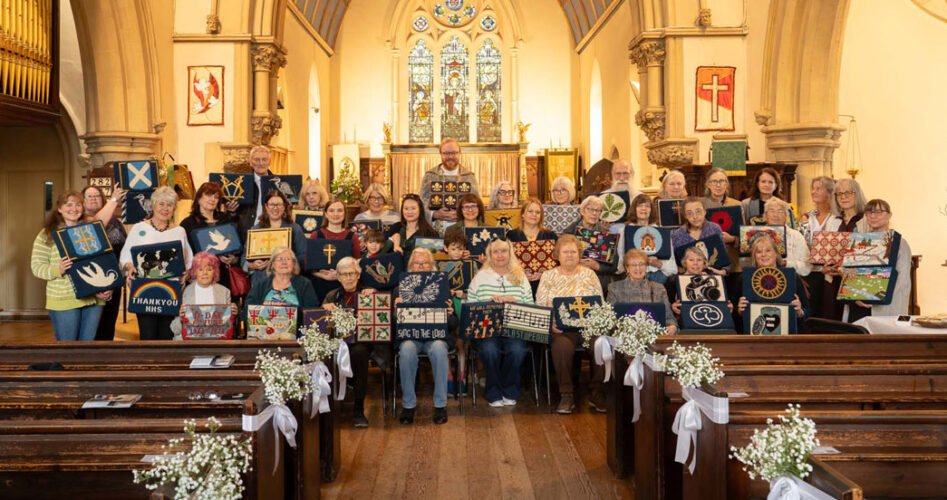
In the fourth of a series of articles, Susan Allison reflects on a community project which created nearly 50 kneelers for Christ Church, each with a story to tell and each recording a snapshot of present-day Wanstead

This community project got underway at the Wanstead Festival in September 2024, when stitching began on the first kneeler (known as the Community Kneeler). Over the following 12 months, another 40-plus kneelers were stitched by numerous members of the community, celebrating the diversity of people and experiences in our village. The kneelers were presented to the church in October 2025.

We are now preparing a celebration event to mark the formal end of the project, which will be at this year’s Wanstead Festival on 13 September, so please make a note in your diary.

Alongside a display and exhibition showing the backstories of some of the kneelers, there will be a ‘bake a kneeler’ cake competition with their sale by silent auction; friendship bracelet packs and mini sewing kits using yarns from the kneelers; a ‘Where is it?’ photo trail of Christ Church features for children; and, most excitingly, a ‘come and sing’, all-voices-welcome session to learn the joyous Kneelers song written especially for the project by Tina Lloyd-Morris, as well as the Kneeler Guidebook (£5), with all sales and voluntary donations going to the church tower restoration fund.

All project documents and ephemera will then be collated and archived.


Camera
Sewn by: Jan Andrews
Dedicated to:
Woodford and Wanstead Photographic Society

The Woodford and Wanstead Photographic Society was started in 1893 when seven local residents met in the Coffee Tavern next to George Lane station, Woodford. From a membership of 15 at the end of that first year, the club grew, reaching a high point of 104 in 1906. For the first 105 years of the club’s existence, it met in a variety of locations across Woodford. In 1998, it began meeting in Wanstead, and since 2014 has found a home at Wanstead House. It therefore made sense to add ‘Wanstead’ to the club’s name. When the club was founded, it had three aims: the advancement of photography, technically and artistically; for the society to take its place amongst the foremost in the kingdom; and to do something of value for the community. This third aim is one of the reasons the club responded to social media posts about the kneelers project and its legacy, and the club hopes to make use of the space in the church for displays in the future.


Barn Owl
Sewn by: Claire Metcalfe
Dedicated to:
Gwen Hamilton

Gwen Hamilton (1926–2021) grew up in Walthamstow. During World War Two, Gwen was evacuated to Wellingborough, where she spent school holidays helping on a farm. She moved to Wanstead in 1952 with her husband, Bert, and become a devoted member of Christ Church. Gwen had a generous spirit, supporting many charities and volunteering for years at the Corner House lunch centre. Alongside Bert, she helped organise and lead holidays for the elderly, both in the UK and across Europe. A lifelong nature enthusiast, Gwen loved watching the birds in her garden and supported a nesting box through the Hawk and Owl Trust. Her fondness for owls was evident in the many owl-themed pictures and trinkets that decorated her home.


For more information on the project and the event on 13 September, email kneelers4cc@gmail.com


News

Michael Jackson and Ed Sheeran tributes to entertain festival crowds

disabilityDisability Festival in the Park 2025

A disability awareness festival will take place on Christ Church Green on 22 July, featuring a wide range of accessible entertainment.

“The stage will be packed with crowd‑pleasers, including Joseph Doran as Ed Sheeran, a powerhouse Tina Turner tribute and the electrifying David Boakes as Michael Jackson,” said a spokesperson for One Place East, lead organiser of the annual Disability Festival in the Park. Visitors can also explore arts, crafts, sports and a comedy tent at the free festival (12 noon to 7pm).

Visit wnstd.com/dfitp

Features

Miles of smiles

WVD-JUL-2026-run©Manji Gami

Wanstead is home to one of London’s most welcoming running communities, says Jacob Stevens, chair of the East London Runners, which all started during a marathon-running boom in the early 1980s

East London Runners was formed in 1982 – following the success of the inaugural 1981 London Marathon – when an informal group of fewer than 20 novices began meeting for training runs at decorated athlete Roger Mills’ sports shop on Wanstead High Street. By 1985, the group had grown to 120 runners competing in the London, New York, Berlin and Amsterdam marathons, and the Hyde Park Fun Run and Great North Run, among others. Members soon elected to register as an affiliated club, choosing their signature red kit (beating yellow by a single vote!).

Today, East London Runners prides itself on being a welcoming community that opens its doors to runners of all levels, whether on the road, track or trail. No matter the pace or running goals, joggers and runners can find an activity to suit them, along with support and camaraderie from the club’s 250 members, whose ages range from 20 to 80-plus.

Casual and competitive runners alike come together to enjoy the sociable, weekly club run, meeting at Eton Manor Rugby Club on Wednesday evenings at 7pm. Runners join a group at a pace and distance based on their ability, exploring local streets through the winter and making use of a wide array of green spaces in the lighter months, from Wanstead Flats and the bluebells of Chalet Wood in Wanstead Park through to various parts of Epping Forest, which is also a popular destination for Sunday group runs.

Monday night’s track run at Ashton Playing Fields in Woodford is another popular session led by the club’s qualified coaches. Many of these leaders originally joined as regular runners or beginners whom the club proudly supported along their journeys.

The club’s members hail from all corners of Redbridge and neighbouring boroughs, and include athletes capable of winning long-distance trail running events, as well as extraordinary fundraisers and campaigners championing good causes. A strong contingent of members are also highly dedicated parkrunners, regularly running or volunteering on Saturday mornings at an array of local parks, including the ever-popular Wanstead Flats parkrun.

A highlight of the club’s calendar is its summer charity 5km race at Valentines Park, hosted as part of the East London Five Interclub Series (known locally as ELVIS!). In June, 280 runners from 17 different clubs took part. It proved to be a race of two halves: changeable weather meant runners started in calm, dry conditions, only to finish under cold, lashing rain while splashing through deep puddles before the finish line. All profits from the race and cake stall go to the Magpie Project, a local charity supporting women and young children.


New members are welcome and can try out the club’s Monday and Wednesday sessions for free. For more information, visit eastlondonrunners.org.uk

Features

Local lessons

WVD-JUL-2026-pc

Having been a local councillor since 2010, Wanstead resident Paul Canal has learned a thing or two about the qualities that make Wanstead a special place

After 16 years as a local councillor, one of the questions I am most often asked is: “What have you learned?” People sometimes expect the answer to involve politics or government. In truth, the most valuable lessons came not from council meetings, but from thousands of conversations on doorsteps, in shops, at community events and simply walking around Wanstead.

The first lesson is that people’s concerns are remarkably similar. Regardless of age, ethnicity, background or political views, most people want broadly the same things: a safe place to live, good schools, access to healthcare and the confidence that their family and neighbours are secure. While headlines often focus on what divides us, my experience has been that we have far more in common than we sometimes realise.

The second lesson is that communities are built from the ground up. Strong communities depend on ordinary people getting involved. Over the years, I have met volunteers who run clubs, support charities, help at churches, coach sports teams and look after vulnerable neighbours. Most do so quietly, seeking no recognition, yet they are the people who hold communities together. Nowhere was this more evident than during the pandemic. As many of us became isolated from family and friends, local residents stepped forward to help others. I have seen that same spirit through projects I have been privileged to support, such as the Haven House Children’s Hospice Christmas Cake Appeal.

The third lesson is that good neighbours matter more than we think. Modern life is busy and increasingly online, but there is still enormous value in knowing the people who live around us. A strong neighbourhood is not just a collection of houses; it is a network of relationships, strengthened by initiatives such as the Wanstead Community Hub and dedicated local volunteers.

Perhaps the most important lesson is that small acts of kindness matter. During my years as a councillor, I saw countless examples of kindness that never appeared in reports or statistics yet often had a greater impact on people’s lives than any decision made at the Town Hall. Looking back, it is these acts of neighbourliness and community spirit that I will remember most. They are the qualities that make Wanstead such a special place.

We cannot all change the world, but we can all make a difference to someone’s day. A helping hand, a friendly word or a small act of kindness can have a greater impact than we realise. If Wanstead continues to be the community I have come to know and love, it will be because people continue to look out for one another. That, more than anything else, is what 16 years of listening has taught me.


Paul Canal was a Conservative councillor for Bridge ward from 2010 to 2026.

News

Wanstead’s remote workers invited to join new community group

remotelyA recent Remotely meetup at The Wagon, Wanstead

A group has been established for people who work from home in Wanstead and the surrounding areas.

“The group is called Remotely and will benefit anyone who would welcome a bit more connection during the working week. Expect coffee meets, lunchtime walks and after-work drinks. The focus will be on friendship and helping people connect,” said group founder Haz Anwar, who works for an AI company based in San Francisco.

Meetups will take place in Wanstead and South Woodford.

Visit wnstd.com/remote

Features

Signs of recovery

WVD-JUL-2026-cbCalvin and Whipps Cross staff opening the hospital’s new Emergency Department facilities

Despite mixed experiences by some, there have been positive developments at Whipps Cross Hospital over the past few months, says Leyton and Wanstead MP Calvin Bailey MBE

The long-standing need for redevelopment at Whipps Cross remains, but we are beginning to see real progress, not only in improvements to service provision, but also in growing recognition of the vital work the hospital does for our community.

I have been working closely with the hospital to highlight progress where change is happening. I was pleased to be invited to open the newly upgraded Emergency Department, where changes to ambulance handover and a layout redesign to better manage patient flow are already making a real difference. Around 75% of patients are now seen within four hours, and corridor care has been significantly reduced from a high of over 30 patients two years ago to single figures or none today. This comes hot on the heels of their new paediatric clinical decision unit to support faster and safer care for children, and the addition of clinical space to expand capacity during busier periods.

These are all important steps forward in improving our local healthcare provision, and I continue to be impressed by the dedication and ambition of Whipps staff, who come from, and care for, people of every background.

A key part of my role is bringing decision-makers into our community, and I was delighted to welcome Skills Minister Jacqui Smith to Whipps Cross. During her visit, she met staff and students involved in DFN Project SEARCH, a supported internship programme designed to offer transformative employment opportunities to young people with special education needs and disabilities (SEND). This reflects one of my core priorities: ensuring young people, particularly those who are Not in Education, Employment or Training (NEET), have clear pathways into secure, long-term employment. For students with additional needs, the barriers to employment are often doubly restrictive, which is why the hospital’s engagement on this is so important.

Funded by the Department for Education, the programme equips young people with the skills, confidence and experience they need to succeed, through three 10-week placements across the hospital. Whipps leadership in this area shows how our local NHS can play a vital role, not just in healthcare, but in creating opportunities for our young people.

Although I can see welcome change happening at Whipps, from my inbox, I know constituents continue to have mixed experiences, particularly in maternity and women’s health services. I know these concerns must be taken seriously and addressed as part of the hospital’s ongoing improvement. I will continue working closely with Whipps’ staff, the Department for Health and ministerial colleagues to push for the investments and opportunities our community needs and deserves.


To contact Calvin Bailey MP, email calvin.bailey.mp@parliament.uk

Features

Inspire Wanstead

a(A)-DSC_2216©Geoff Wilkinson

The Parish of Wanstead has launched Inspire Wanstead, a campaign to restore Christ Church and increase community use, although Revd James Gilder insists some parts of the building remain untouched

June was an exciting month for Christ Church, as the Parish launched its Inspire Wanstead campaign to restore the church building and make it more user-friendly for you, the local community. 

After much campaigning and work behind the scenes, we are delighted to say we were successful in achieving a grant from the National Lottery Heritage Fund (NLHF) to develop our project. The NLHF is the largest grant-making body for heritage buildings in the UK and has chosen to provide initial funding for us to engage architects and project managers to take this project forward to the point where it is ‘ready to go’. In late 2027, the NLHF will make the final decision as to whether to fund the whole project, the cost of which is a staggering £3.6m (for which we must raise at least 10% ourselves).

Unfortunately, the Victorians didn’t do a great job of building Christ Church’s tower; its supports and buttresses aren’t big enough to hold its weight and they are gradually slipping away from the building. So, we need to make sure that this, and various other elements of the building’s exterior, are made secure to withstand the next century.

Christ Church is presently a somewhat dark and cold building, so the first thing we need to do inside is to install some better heating and lighting. We would also like to level the sinking floor and install proper toilets and a kitchen at the back of the church. Much like our friends at Wanstead United Reformed Church did some years ago, we would like to make the space in Christ Church usable by community groups during times when we are not holding services, so we need flexible but beautiful furniture to allow us to do that. However, much will also not be changing. The chancel and its wonderful oak choir stalls and pulpit, and the beautiful and unique English altar, are all gems – remove them over my dead body! As our esteemed architect (who is also architect for three English cathedrals) said at the project launch in early June, change is always a part of historic buildings; it’s about preserving the good and improving the rest. And we’ll be working closely with English Heritage, obtaining all the necessary permissions to ensure everything is done with the utmost care for the historic fabric of the church.

In addition to the above, we’ll be running a range of heritage activities and workshops for people to get involved in over the next few years. There’ll be lots going on and I’m excited at the opportunity to bring you further news as it happens. Thanks to those of you who’ve helped us thus far, and thanks too if you play the National Lottery! As a vicar, I shouldn’t endorse gambling, but even if you haven’t won the jackpot, you have at least helped preserve Wanstead’s heritage.


For more information on Christ Church and the Inspire Wanstead project, visit wansteadparish.org

News

Redbridge Pride returns to Town Hall for second annual celebration

pride

Redbridge Town Hall will host the borough’s second annual Pride event on 11 July.

“We’ll be celebrating our lesbian, gay, bi, trans and queer community, as well as our families, friends and allies. There will be activities and entertainment for all ages, information, market stalls and more,” said a spokesperson for Redbridge Rainbow Community. The free event (donations welcome) will run from 12.30pm to 6pm.

A short film documenting last year’s first-ever Redbridge Pride is available to view online.

Visit wnstd.com/pride26